REVIEW · NEW YORK CITY
Central Park Pedicab Tour ( starting – Natural History Museum )
Book on Viator →Operated by NYC Park Tours™ | Central Park Tours · Bookable on Viator
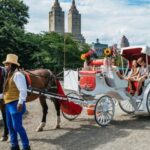
Central Park looks simple, until you try crossing it on foot. This private pedicab tour gives you a guided, sit-back-and-ride way to hit a lot of iconic sights without turning your day into an endurance test. I particularly like the friendly, story-filled guiding and the fact that it’s truly just your group on the pedicab. The one drawback to factor in is that this is a multi-stop ride, so you won’t spend as long lingering at any single location as you might if you were walking free-form.
You’ll start at the American Museum of Natural History and cruise through Central Park with frequent photo moments, plus extra comfort in cooler months thanks to blankets. The tour is built for flexibility too, with numerous departure times, so it’s easier to fit around your other plans. Best of all, you’re not hunting for viewpoints alone; you get a guided route that keeps you moving in the right direction.
If your goal is to see Central Park’s highlights efficiently, this is a very practical use of your time. It’s also a good choice when your group includes kids, older adults, or anyone who just wants a break from constant walking.
In This Review
- Key things I’d watch for on this Central Park pedicab tour
- Getting Set Off at the American Museum of Natural History
- Why a Private Pedicab Works for Central Park
- Central Park’s guided ride: your “see it all” hour
- Wollman Rink and the carousel stops that feel like movie sets
- Gapstow Bridge and Gar Pond: iconic views in brief stops
- Conservatory Water, Alice in Wonderland, and the Boathouse
- Bethesda Fountain and Terrace tiles: where your photos look like postcards
- The Mall, Cherry Hill, and Bow Bridge: straight lines and classic crossings
- The Lake, Strawberry Fields, and finishing near the Plaza Hotel area
- Price and value: what you’re really paying for
- Tips for getting the most out of your pedicab ride
- Should you book this Central Park pedicab tour?
- FAQ
- How long is the Central Park pedicab tour?
- Where does the tour start and end?
- Is this tour private?
- Does the tour include blankets and photography?
- Is the tour offered in English and do I need an admission ticket?
- Can I cancel and get a full refund?
Key things I’d watch for on this Central Park pedicab tour
- Private ride means just your group on the pedicab, not a shared scramble with strangers
- Pro guide + lots of stop-and-look photo moments, rather than a fast drive-by
- Blankets in winter so you’re not just surviving the cold to get a few photos
- Admission at stops is free during the included photo/brief visits, so you’re not hit with extra entry fees
- Movie and pop-culture landmarks woven into the stops, including Home Alone and King Kong locations
Getting Set Off at the American Museum of Natural History
Your tour starts at the American Museum of Natural History, at 200 Central Park West. It’s a sensible meeting spot because it’s on the park’s edge, right where you can roll into Central Park without burning time on transit.
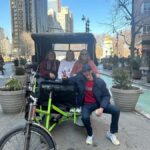
From there, the pedicab format changes how you experience the park. On foot, you’re constantly thinking about where the next turn is, how far it is, and whether you’re going to make it before your next ticket. On a pedicab, that stress drops away. Your focus becomes the sights: statues, bridges, fountains, and those instantly recognizable park corners.
The route also ends at 6 Central Park South, with the provided meeting-map note pointing you toward the Plaza Hotel area. Translation: it helps you finish on the south side of Central Park, where it’s often easier to connect to dinner plans or a later stop across Midtown.
Other pedicab tours we've reviewed in Central Park & NYC
Why a Private Pedicab Works for Central Park
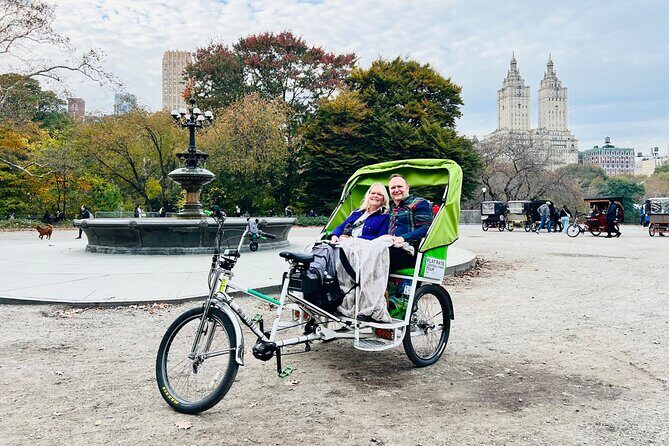
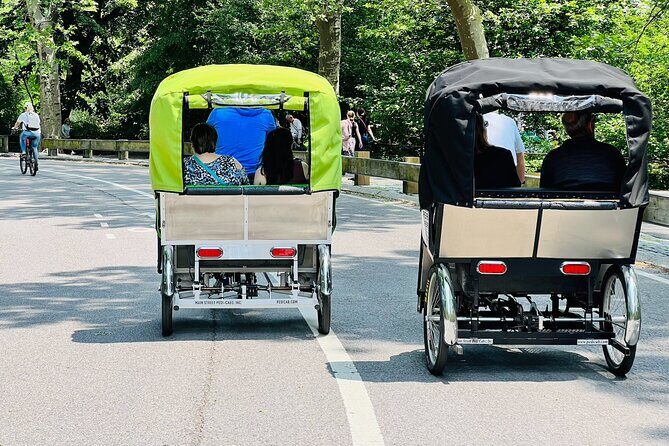
Central Park is big. Even if you’re in good walking shape, it’s easy to spend your energy just moving between landmarks. This tour is built around guided pedicab travel and professional guides, so you’re spending your time looking, not measuring.
Two things really matter for value here:
- You cover more ground than walking, especially if your schedule is tight. A guided ride through Central Park’s most famous sections can turn a half-day into something that feels complete.
- You get explanations in a story format. The guiding approach is praised for being thorough and friendly, with drivers who share pictures and stories to make the park’s landmarks easier to remember later.
The other practical advantage: during winter, you’ll get blankets. That small comfort can be the difference between enjoying the ride and trying to rush through it.
One more note: because this is a multi-stop tour, the time at each place is short. You’ll get a taste and photos, but if you want to sit for 30 minutes at one fountain or read every plaque, you might prefer adding independent time after the tour.
Central Park’s guided ride: your “see it all” hour
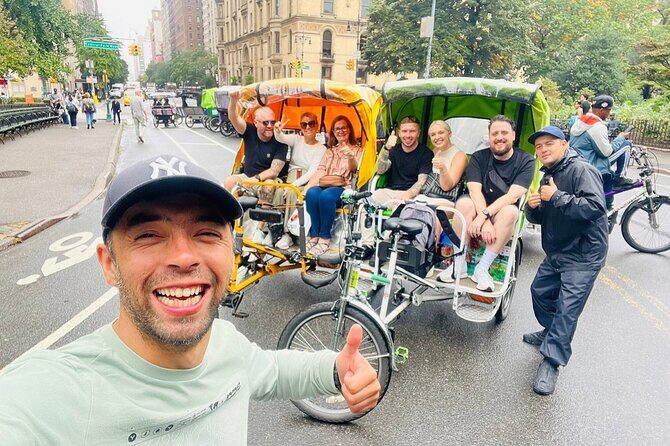
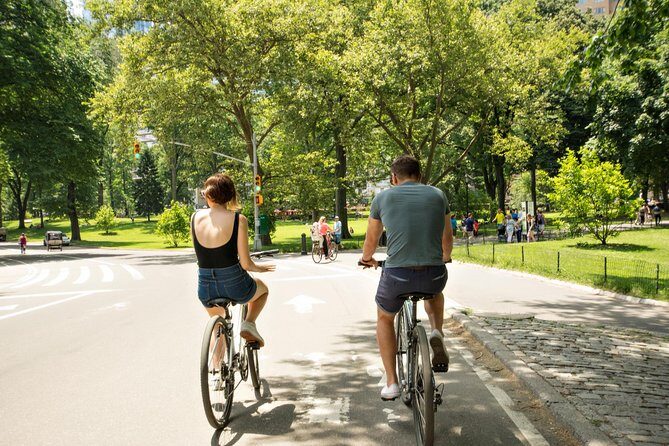
The tour’s first main block is a guided Central Park segment lasting about an hour. This is where the whole experience comes together: a driver-guide helps you orient yourself, points out what you’re looking at, and keeps you moving through the park’s signature areas.
This is also where the tour is most different from a casual walk. Instead of picking a random route, you follow a path that’s designed to stack recognizable highlights close together. It’s a good way to understand how Central Park is laid out—especially if it’s your first time in the park or your first time in New York.
A small but real bonus: the tour includes photographing. That means you’re not stuck doing the classic awkward arm-length photo while trying to hold your place in a crowd.
Wollman Rink and the carousel stops that feel like movie sets
After the initial Central Park ride, you’ll hit Wollman Rink for about five minutes. It’s a quick stop, but it’s a classic. The rink opened in 1949, and it shifts seasons: amusement park vibes in summer, ice rink in winter. If you recognize the space from movies like Home Alone and Serendipity, this is one of those moments where the screen-to-street connection becomes real.
Next comes a photo stop connected to the Central Park Carousel, which appears in films such as Up the Sandbox, I’m Not Rappaport, The Spanish Prisoner, and The Producers. Even if you don’t care about movie trivia, it’s still a fun landmark because it’s visually distinctive and very Central Park.
Then you’ll encounter the Dairy House, described as about 145 years old. It began as an Irish Church and picked up its nickname during the depression years. This kind of stop is why a guided pedicab tour works: you get context that you’d likely miss if you were just passing by.
Time-saver reality check: these are short stops. You’ll come away with photos and key facts, but you won’t get a long, slow museum-style explanation at each site.
Gapstow Bridge and Gar Pond: iconic views in brief stops

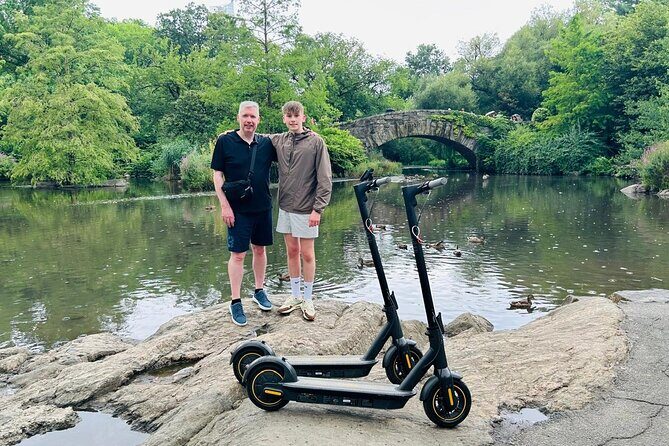
Gapstow Bridge is one of those Central Park spots you’ll recognize quickly. It appears in movies like Home Alone, King Kong, and Jersey Girl. The stop is brief—around five minutes—but it’s perfectly sized for a couple photos, a quick look at the water and surrounding views, and then back on the pedicab.
From there, you’ll move toward Gar Pond for about three minutes. You’re set up for a view toward the Plaza Hotel and Billionaires Road. This is the kind of stop that helps you see the park’s edges—how the greenery sits beside major Manhattan energy.
A short extra photo stop is mentioned with movie ties including Madagascar and Mr Popper’s Penguins. The tour also includes a mention of Balto, the Siberian Husky dog, born in 1919, who became famous in 1925 during the Serum Run. There’s also a movie tie-in with Balto. Even if you’ve never heard the story, it gives you one more memorable anchor point beyond the usual bridge-and-fountain photos.
Other Central Park combo tours with the Met & Natural History
Conservatory Water, Alice in Wonderland, and the Boathouse
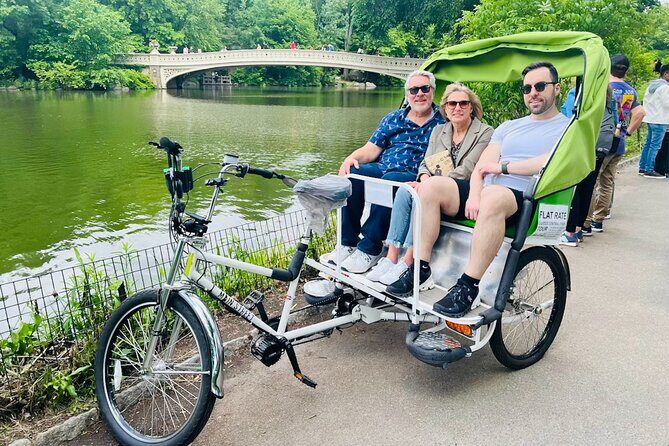
Next up: Conservatory Water, one of the park’s man-made lakes. It’s listed as being on the east side of the park, and the stop is about a minute. It’s short, but water stops tend to feel refreshing—especially because they break up the denser clusters of buildings and statues.
Right after that, you’ll see the Alice in Wonderland Statue, which arrived in the park in 1959 and was donated by George Delacorte. It’s a perfect example of Central Park being both whimsical and historic at the same time. In a brief stop, it’s also easy to photograph without needing to “perform” for other people’s time.
Then comes the Boathouse Outdoor Bar, which is tied to movies like 27 Dresses and Sex and the City. It’s listed as a very short stop, but it’s visually useful: you get a quick sense of the park’s social spaces and the places where people gather.
Bethesda Fountain and Terrace tiles: where your photos look like postcards
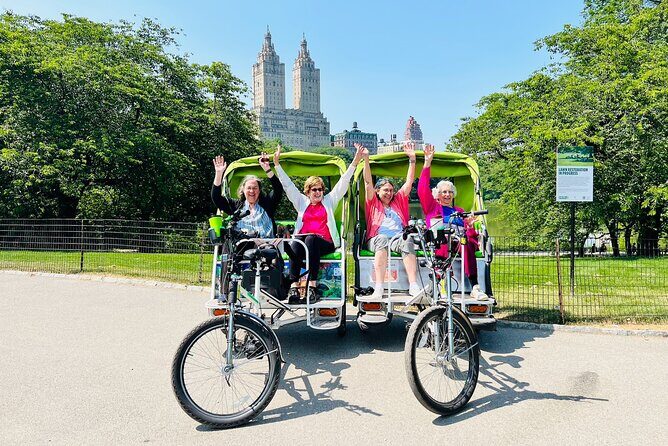
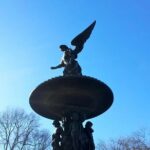
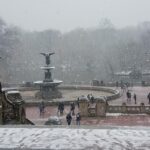
Now you’re heading into Central Park’s most postcard-friendly area. Bethesda Fountain is next, with a stop around five minutes. The construction is listed as 1864, and it’s credited to Emma Stabins—described as one of the first big jobs commissioned to a lady. This kind of detail matters because it makes the statue feel less like random architecture and more like a real project with real people behind it.
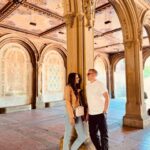
After Bethesda comes Bethesda Terrace, praised here for its beautiful tilework from the Minton Tile Corp. The stop is short—about a minute—but the terrace is built for quick wow moments. It’s also the sort of spot where your guide’s explanation helps you notice the design instead of just admiring the surface.
Movie connections are mentioned for this area too, including John Wick and Home Alone. Even if you don’t watch those particular films, it gives you a mental label to remember what you saw and where.
The Mall, Cherry Hill, and Bow Bridge: straight lines and classic crossings
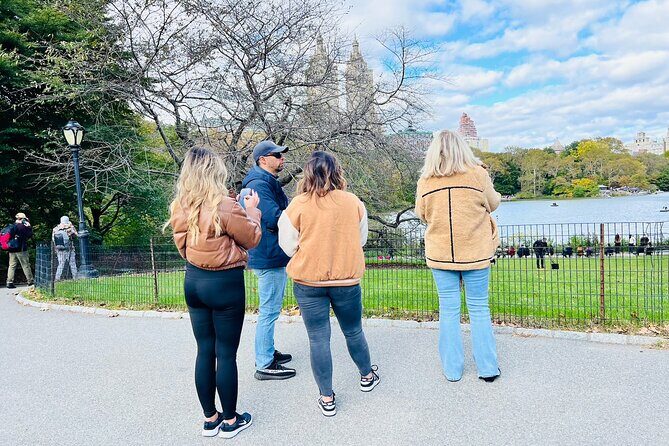
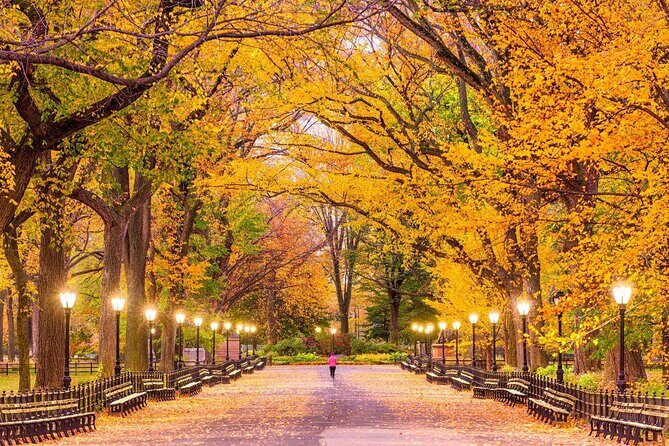
The Mall is next, described as one of the straight lines in the park, lined with elm trees on both sides. It’s also tied to Made in Manhattan. This stop is listed as about a minute, but it’s useful because the Mall gives you a sense of Central Park’s geometry. It’s a different vibe than curving paths and bridges.
Then you’ll visit Cherry Hill, described as a former parking area for horses in earlier days. It’s also connected to shows and movies like Friends, Jersey Girl, and Big Daddy. This is one of those stops where a quick historical note makes the area feel less like a generic green patch and more like a former working part of the park.
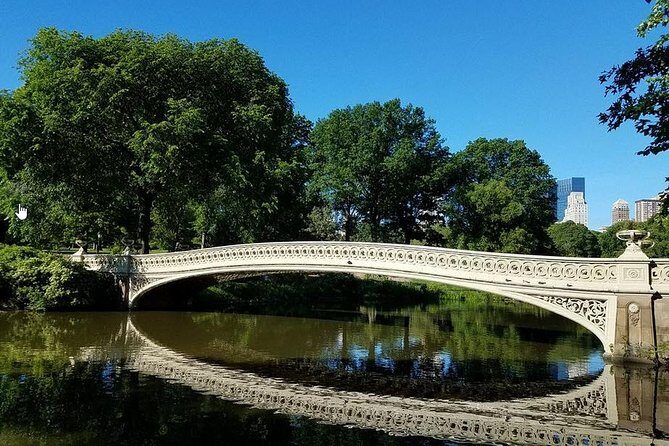
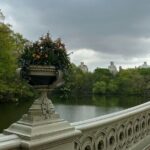
Bow Bridge follows. It’s described as the first and longest bridge in the park, with construction dated to 1959. Movie ties include Elf and Spider-Man. Again, this is a short stop, but it’s exactly what you want from a pedicab tour: see the iconic thing, get your photos, learn one or two memorable context points, then move on.
The Lake, Strawberry Fields, and finishing near the Plaza Hotel area
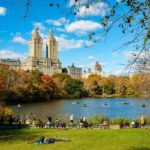
The tour includes The Lake, listed as 22 acres. It also notes that in the past it was one of the biggest outdoor ice skating rinks in the city. Movie ties are included with Big Daddy. The stop here is short, but it’s one of the park’s best “scale” moments. Even if you don’t hang around, you get the sense that Central Park is more than just pretty paths—it’s a full outdoor system.
Then you’ll hit Strawberry Fields, the John Lennon Memorial. It’s said to have been designed by Yoko Ono in 1985 and described as having the shape of a tear drop. This is also the sort of stop where a guide’s pacing helps you take it in respectfully, even if you only have a couple minutes before moving to your next landmark.
Next comes The Dakota, described as one of the first buildings on the Upper West Side, with construction dated 1884. It’s a short stop, but it’s a good shift from parkland into the surrounding city—Central Park as a pocket of calm beside some serious Manhattan architecture.
Finally, the ride includes Tavern on the Green, with movie ties like Ghostbusters and Mr Popper’s Penguins. The tour is structured so that you finish in a practical location on Central Park South, with the map note directing you toward the Plaza Hotel area.
Price and value: what you’re really paying for
At $45.12 per person, this isn’t a budget “just do it” option like a public bus or a free walking route. But it often pencils out well when you factor in what’s included and what you’re saving.
Here’s the value equation that matters:
- Private transportation + a professional guide means your time isn’t spent figuring things out or walking between stops.
- Admission ticket is listed as free at the included stops, so you’re not paying extra for the privilege of seeing the landmarks.
- Blankets in winter and photographing included are small add-ons that can make the experience more comfortable and easier to capture.
The best match is a group that wants the highlight reel without sacrificing hours. If you’ve only got a morning or afternoon, or your group includes anyone who doesn’t want to do a long walk, this pedicab approach can feel like a smart buy.
The one thing to keep realistic: because the tour is built around many well-known sites, it’s not a slow, deep stay at every spot. If you’re the type who loves to linger, plan some extra unstructured time before or after.
Tips for getting the most out of your pedicab ride
I’d go into this with one simple mindset: treat it like a guided highlight sampler, then choose whether you want to go back on foot afterward.
A few practical moves:
- Wear comfortable walking shoes anyway. You may still need short spurts of walking at stops.
- Bring a phone with a charged battery and free storage. With included photographing and lots of iconic views, you’ll likely take more pictures than you expect.
- If it’s cold out, use the blanket immediately rather than waiting until you feel chilled. It’s easier to settle in from the start.
- If you’re hoping for a specific vibe from the guide, know that names like Joseph and Omar come up in the tour experience notes for being especially friendly and informative. You can’t control the assignment, but it’s encouraging to know the guiding style is a big part of why people rate this highly.
Should you book this Central Park pedicab tour?
Book it if you want a private, guided way to see Central Park’s most famous spots in a time-efficient format, especially if your schedule is tight or your group includes people who’d rather sit than march.
Skip it if you’re happy walking at your own pace for hours and you’d rather pay your time with your legs than with a set tour price. Also consider that the experience is weather-dependent in general, so if the forecast looks rough, you may want to be ready to adjust your plans.
If you want Central Park to feel fun instead of exhausting, this is one of the more practical ways to do it. You’ll ride, learn, get photos at recognizable landmarks, and still feel like you had a real Central Park day.
FAQ
How long is the Central Park pedicab tour?
The tour duration is listed as approximately 1 to 3 hours, depending on the schedule and how your ride is timed.
Where does the tour start and end?
It starts at the American Museum of Natural History (200 Central Park W, New York, NY 10024). The end point is listed as 6 Central Park S, New York, NY 10019, with a Google Maps note pointing to in front of the Plaza Hotel.
Is this tour private?
Yes. It’s listed as a private tour/activity, meaning only your group participates.
Does the tour include blankets and photography?
Yes. Blankets are included during winter, and photographing is included.
Is the tour offered in English and do I need an admission ticket?
The tour is offered in English, and the included stops show admission ticket free for the sites listed on the route.
Can I cancel and get a full refund?
Free cancellation is available. You can cancel up to 24 hours in advance for a full refund, and if cancellation is less than 24 hours before the start time, the amount paid will not be refunded.