REVIEW · NEW YORK CITY
Central Park Pedicab Tour / Photo Stops
Book on Viator →Operated by NYC Park Tours™ | Central Park Tours · Bookable on Viator
Central Park, but faster and photo-ready. This private pedicab tour is built for time-tight days: you’re guided on a route that keeps the park’s big-name stops close together, and you skip the stress of plotting your own path. Guides like Sam, Josh, AJ, and Omar have been praised for mixing park history with real-world tips, so the ride feels fun and focused.
My favorite part is the combo of photo stops and story-driven sightseeing. You’ll get time at landmarks you’d otherwise rush past on foot, including famous filming locations, fountains, bridges, and gardens. The one thing to plan around is that the experience requires good weather, and there’s also a minimum of 2 travelers for the tour to run.
In This Review
- Key things I’d plan around
- The pedicab rhythm: how you actually see Central Park
- Your “Central Park highlights” hour: famous spots and easy photo wins
- Carousel horses and chess tables: small pauses that feel big
- Central Park Carousel
- Chess & Checkers House Visitor Center
- The pond-and-bridge sequence: Gapstow, the Pond, and Bow Bridge views
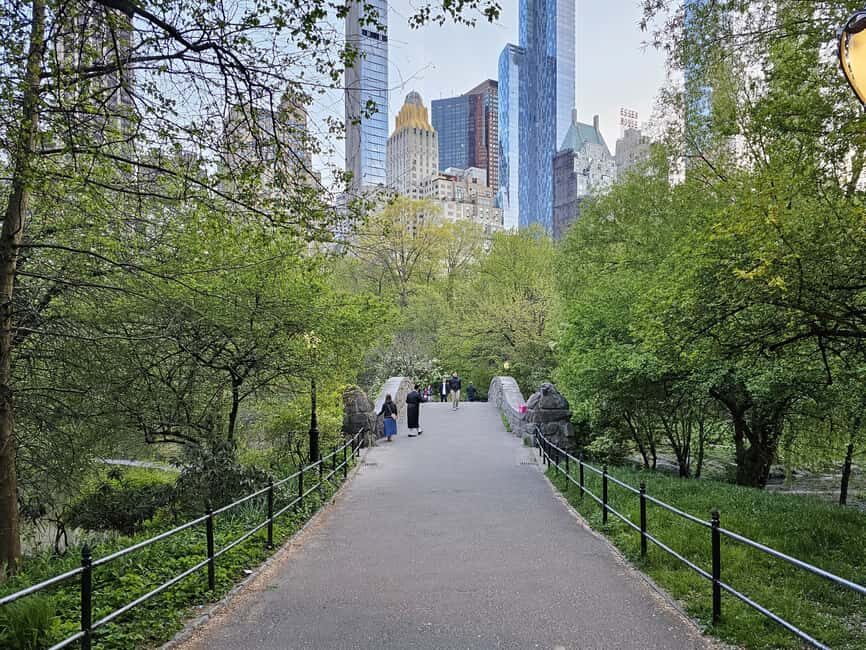
- Gapstow Bridge
- The Pond at Central Park
- Conservatory Water and the model boat world
- Bow Bridge
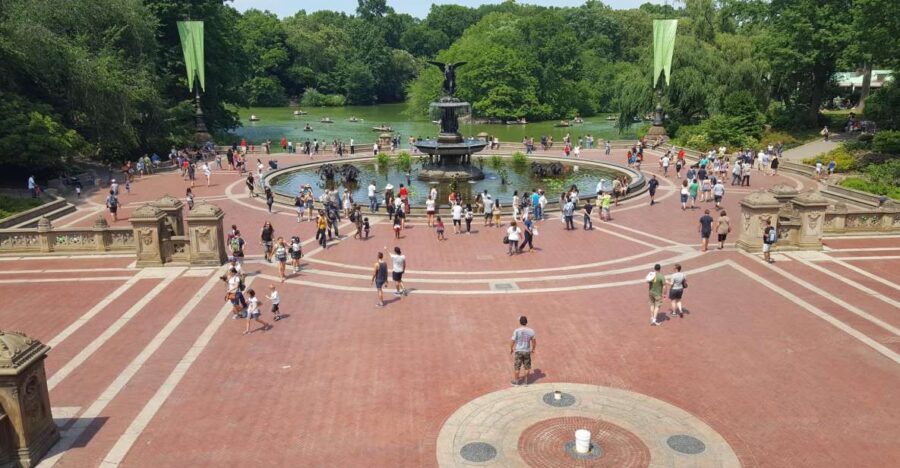
- Bethesda Fountain and Bethesda Terrace: Central Park’s most cinematic core
- Bethesda Terrace: those tile details you won’t notice unless someone tells you
- Cherry Hill Fountain: the calmer companion stop
- John Lennon corner: Strawberry Fields and the Dakota
- Animals, zoos, and classic character: Central Park Zoo and Balto
- Central Park Zoo
- Balto statue
- Playgrounds and everyday Central Park life
- Rumsey Playfield and SummerStage vibes
- The biggest playground: Heckscher Playground
- Woolman Rink (seasonal)
- If you choose the longer option: Met area, Cleopatra’s Needle, and Belvedere Castle
- Cleopatra’s Needle and Alice in Wonderland
- The Metropolitan Museum of Art area stop
- Jacqueline Kennedy Onassis Reservoir and Belvedere Castle
- Price and value: why $39.90 can work (or not)
- Practical tips for your day (so it feels easy)
- Should you book this Central Park pedicab tour?
- FAQ
- How long is the Central Park pedicab tour?
- Is this a private tour?
- What language is the tour guide?
- Are admission tickets included?
- Do we need to follow a map?
- What happens if the weather is bad?
- FAQ
- How far does the tour start from public transportation?
- Where does the tour start and end?
Key things I’d plan around
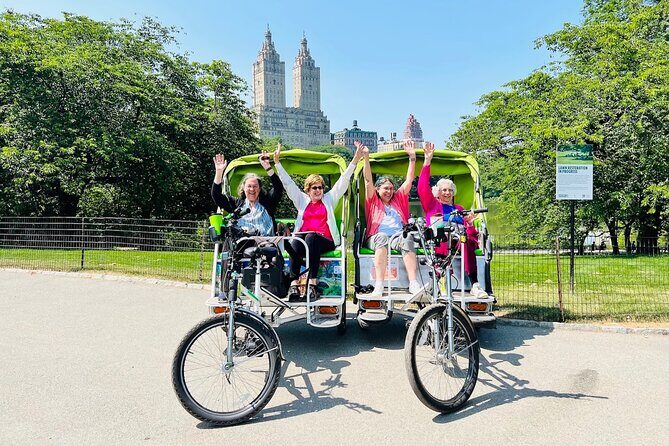
- Private ride for your group so you’re not squeezed into a big crowd rhythm
- No map needed: the guide handles the route and the pacing
- Photo-first stops with help getting good shots at iconic spots
- Central Park classics in quick reach like the Carousel, Bethesda, Bow Bridge, and Strawberry Fields
- Most attractions are free here (Met Museum is the notable exception)
- Longer option adds big “NYC bucket list” hits like the Met area, Cleopatra’s Needle, and Belvedere Castle
The pedicab rhythm: how you actually see Central Park
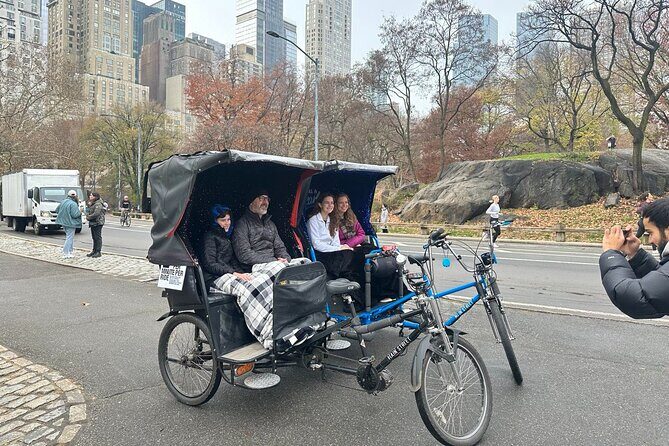
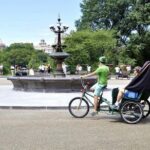
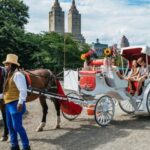
This tour works because it respects your time. Central Park is huge, and walking from one famous point to the next can turn into a stamina test. By contrast, a pedicab ride keeps you moving while still letting you stop often enough to enjoy the views and grab photos.
You also get the calm benefit of a guide-led flow. The route is designed so you’re not staring at your phone trying to connect the dots. Instead, you’re told where to go next, what to look for, and why the spot matters—whether it’s for its design, its history, or its role on screen.
It’s also private. That means your group sets the tone. If your crew wants more photo time at a bridge or fewer stops at a quieter area, the ride is built around staying flexible within the overall plan.
Other pedicab tours we've reviewed in Central Park & NYC

Your “Central Park highlights” hour: famous spots and easy photo wins
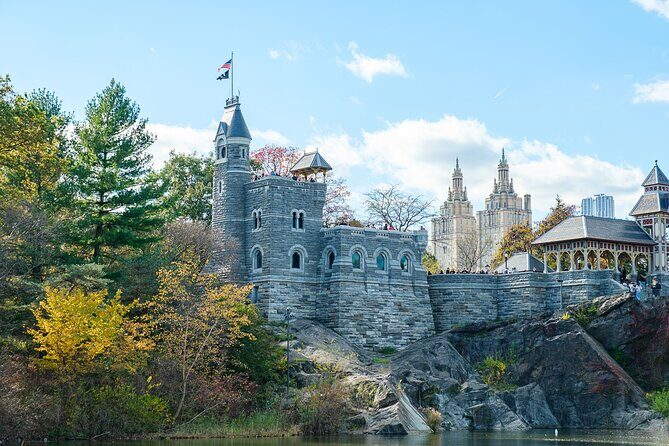
At the heart of the experience is an hour-long Central Park pedicab segment packed with the park’s most recognizable features. Expect a guided loop through multiple zones, with photo opportunities along the way. This is where you get the real value if you’re visiting for the first time or you only have a slice of time.
Here are the kinds of stops you can expect during that core circuit, all specifically chosen because they’re both beautiful and instantly recognizable:
- Victorian Garden and its seasonal ice-skating world in winter
- Chess and checkers house (a classic play-and-chat stop)
- The oldest carousel in the city vibe, with a real feel for why it’s such a landmark
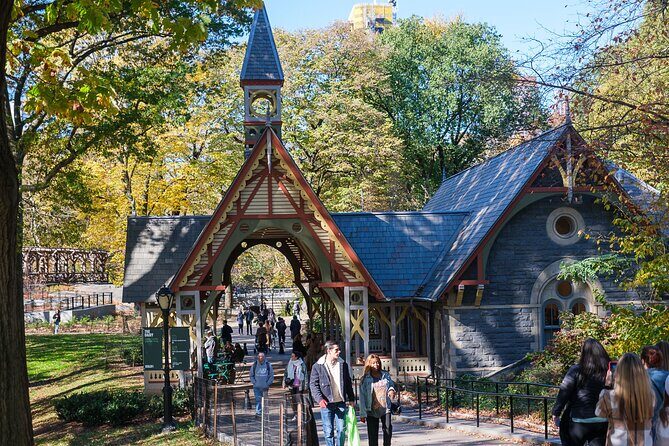
- The Dairy tied to the Great Depression era
- Central Park Mall with its American elm promenade style
- Balto the Siberian husky statue (a national-hero moment in bronze)
- Upper East Side history and even “Gossip Girl” filming locations
- SummerStage connections tied to Good Morning America
- Stuart Little-style remote control boats at the model boat pond area
- Bethesda Fountain and its surrounding terrace view
- Turtle Lake and the Boathouse area, plus gondola-style scenery
- Bow Bridge and nearby “Elf” photo angles
- Strawberry Fields and the Dakota building outside of the park’s gates
- Sheep Meadow as that classic stretch for picnics and skyline contrast
- Big play energy at the park’s largest playground area
This is a smart approach if you want a “greatest hits” introduction without losing an afternoon to transit and wandering. The guide also helps with what to photograph, not just where to stop.
Carousel horses and chess tables: small pauses that feel big
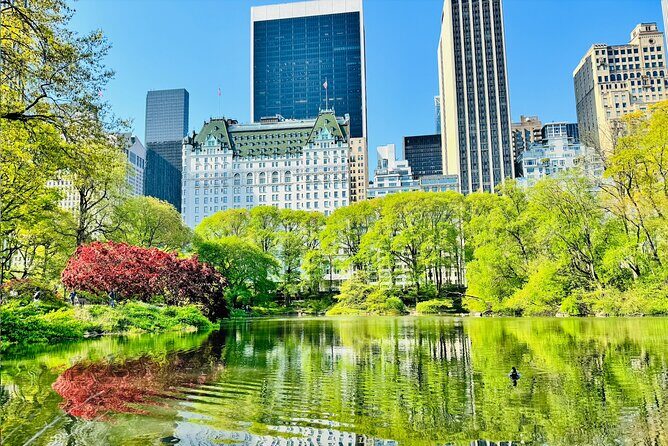
Some parts of Central Park are famous in a way that’s hard to understand until you see them up close. Two of those are the Carousel and the Chess & Checkers House area.
Central Park Carousel
This carousel traces back to 1908, created by Solomon Stein and Harry Goldstein. The current ride has 57 hand-carved horses plus two decorative chariots. It’s been operating for over a century, and it’s also gone through repair and maintenance over time. You can treat this stop as both a photo moment and a “how did this survive” curiosity stop.
The admission here is free, so you’re not paying extra to get the full experience.
Chess & Checkers House Visitor Center
This is an easy win for families and for anyone who enjoys places that feel designed for real people. Built in 1952, it’s set up for game tables all around the octagonal structure. Admission is free, and the shaded trellis setup makes it feel like a calm pocket inside the action.
Other Central Park photography tours and sessions



The pond-and-bridge sequence: Gapstow, the Pond, and Bow Bridge views
Central Park looks different depending on whether you’re near water. This tour leans into that, with classic bridge angles and pond scenes that show up constantly in movies and TV.
Gapstow Bridge
Gapstow Bridge is that rustic stone-and-vine look that fits the park’s romance on film. It crosses the narrow neck of the pond and is widely used as a photo spot. You’ll also hear about how often it appears in entertainment like Home Alone 2, Gossip Girls, Jersey Girl, and King Kong.
The Pond at Central Park
The Pond is a 3.8-acre lake with a carefully planned feel in the original design. It’s known from Home Alone 2 for the pigeon-lady angle, but it’s also worth seeing simply because it changes the whole mood of the park when you’re standing near it.
Conservatory Water and the model boat world
Later in the route, you reach Conservatory Water, also called the Model Boat Pond. This is where kids and hobbyists launch miniature sailboats and yachts, with storage and rentals near Kerbs Boathouse. If it’s open and you’re there at the right moment, watching boats glide and race gives you a relaxed break during a busy sightseeing day.
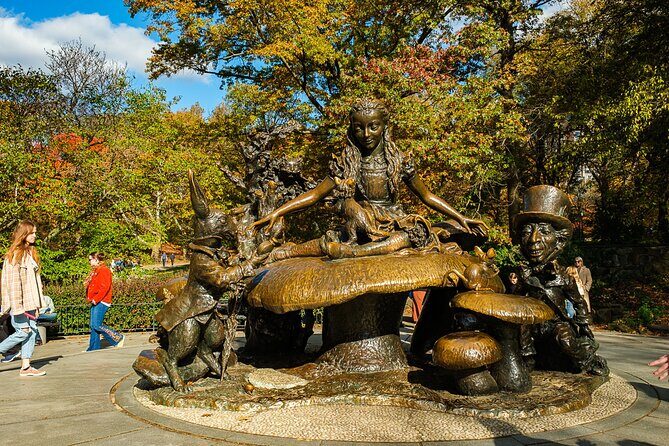
Nearby, you’ll also be in the zone for Alice in Wonderland sculpture and the monument to author Hans Christian Andersen. In the winter, if the water freezes all the way through, it’s used for ice skating.
Bow Bridge
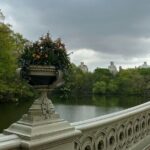
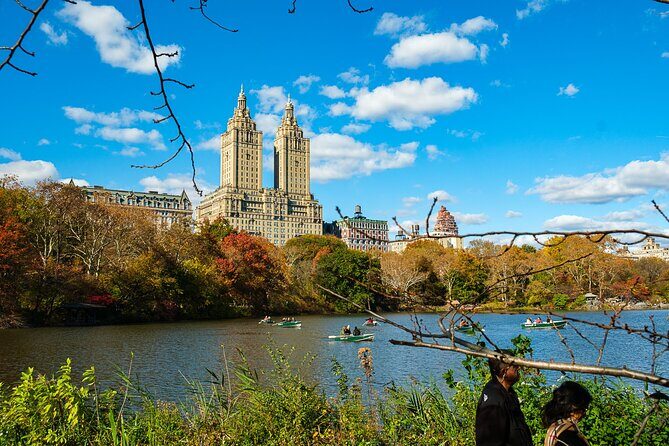
Bow Bridge is a design classic completed in 1862, restored in 1974, and closed briefly for renovation in late 2023 for a short window. It’s one of those places where the angle matters: stand where you can see the surrounding water-and-park geometry, and you’ll understand why it shows up across so many productions.
Bethesda Fountain and Bethesda Terrace: Central Park’s most cinematic core
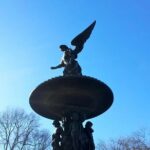
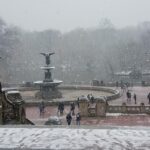
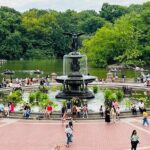
If Central Park had a movie poster, it would probably be this area. Bethesda Fountain is the central piece on the lower terrace level, framed around the fountain sculpture by Emma Stebbins, unveiled in 1873. People often connect to the statue as the Angel of the Waters, tied to the Gospel of John healing story.
What I appreciate here is that you’re not just looking at something pretty. You’re learning the human details too: Stebbins was the first woman to receive a public commission for a major artwork in New York City.
Bethesda Terrace: those tile details you won’t notice unless someone tells you
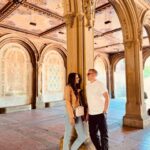
Bethesda Terrace is a big deal for its arcade ceiling tiles. They were removed in the 1980s renovation due to cost concerns, tiles were stored for years, and then a restoration effort got rolling again later. The Conservancy restored the tiles starting in 2004 and reinstalled them in 2007—with 14,000 tiles involved in the original design plan.
If you’re the kind of person who loves “wait, that’s the original ceiling,” this is that moment.
Cherry Hill Fountain: the calmer companion stop
Just west of Bethesda Fountain is Cherry Hill, including a fountain dedicated in the 1860s by Jacob Wrey Mould. It originally served as a watering trough for horses in the 19th century. It’s enclosed in a circular plaza, so it feels like a quieter photo stop once you’ve soaked in the big Bethesda views.
John Lennon corner: Strawberry Fields and the Dakota
This part of the park hits differently. Strawberry Fields is a 2.5-acre area dedicated to John Lennon, named after the Beatles song Strawberry Fields Forever. The name links back to a children’s home in Liverpool, so the symbolism is bigger than one statue.
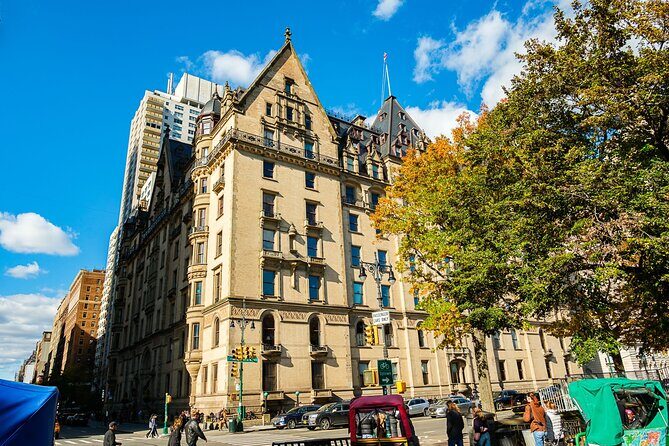
Nearby is the Dakota, a historic building tied to John Lennon’s story outside the park. The Dakota has long housed artists, actors, and musicians, and it remains a housing cooperative.
This isn’t the kind of stop you rush through. Even if you’re not a Beatles superfan, it’s one of those spots where a photo feels like a memory, not just a souvenir.
Animals, zoos, and classic character: Central Park Zoo and Balto
Central Park has a surprising number of “character anchors,” and this tour hits two of them.
Central Park Zoo
The Central Park Zoo sits at the southeast corner of the park, spread over 6.5 acres. It’s part of an integrated network of four zoos and one aquarium managed by the Wildlife Conservation Society. Admission is free on this tour’s plan.
Balto statue
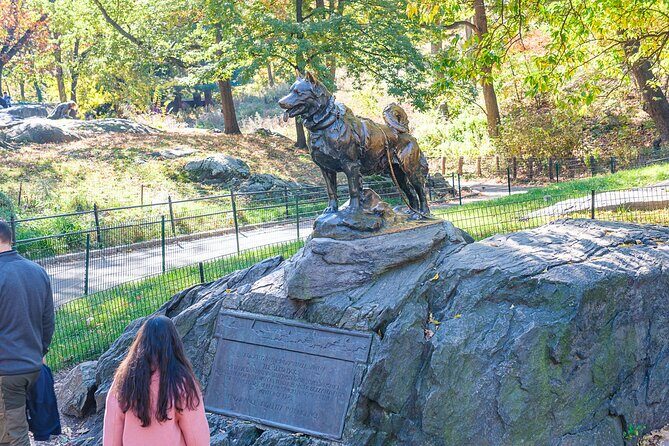
Balto is a bronze statue installed in 1925, sculpted by Frederick Roth. Balto was a Siberian husky sled dog connected to musher and breeder Leonhard Seppala. If you’re traveling with kids, this stop often lands well because it’s vivid and easy to photograph.
Playgrounds and everyday Central Park life
A Central Park tour shouldn’t only chase the grand “fountain and bridge” images. This one also respects the park’s daily-energy side.
Rumsey Playfield and SummerStage vibes
Rumsey Playfield has a layered backstory. It replaced an older building site that had become run-down, and the playground was created and later adapted by the Central Park Conservancy for older children. It’s also tied to SummerStage being moved there in 1990.
The biggest playground: Heckscher Playground
Heckscher Playground is the oldest and largest of the park’s 22 playgrounds, opened in 1926 and located near Central Park South between Sixth Avenue and Seventh Avenue. It’s a quick stop, but it’s a useful reminder that the park isn’t frozen in time—it’s still used.
Woolman Rink (seasonal)
If you’re in the right months, Wollman Rink is a major cinematic-feeling stop. It’s a public ice rink in Central Park and typically runs from late October to early April. Admission is free on this plan.
If you choose the longer option: Met area, Cleopatra’s Needle, and Belvedere Castle
Some people buy this tour because they want the highlights. Others buy it because they want the “one more big thing” payoff. The longer option is built for that.
Cleopatra’s Needle and Alice in Wonderland
Cleopatra’s Needle (the obelisk, also called Cleopatra’s Needle) was dedicated in Central Park in 1881. It’s described as the oldest outdoor monument in NYC, and it stands between the Great Lawn and the Met area.
You also hit Alice in Wonderland, which is part of a longer tour experience. It’s a gift by George Delacorte as a memorial and for the city’s children.
The Metropolitan Museum of Art area stop
The Met Museum is included for a short look in the longer option, but admission is not included. The key point for you: this is a fast “see the building and orient yourself” stop, not a substitute for a museum day.
Jacqueline Kennedy Onassis Reservoir and Belvedere Castle
The Jacqueline Kennedy Onassis Reservoir adds an impressive scale break. It holds over a billion gallons of water, spans 106 acres, and was built between 1858 and 1862 with a curving footprint meant to fit the park’s design.
Then comes Belvedere Castle, a folly designed by Calvert Vaux and Jacob Wrey Mould in 1867. It includes exhibit rooms and an observation deck, and since 1919 it has housed Central Park’s official weather station.
Price and value: why $39.90 can work (or not)
At $39.90 per person, this tour has a clear goal: help you see more of Central Park with less walking and less map work. That’s valuable if you’re juggling jet lag, kids, limited time, or just don’t want your day to be a grind.
A big part of the value is how many stops are effectively low-friction. Many of the listed attractions here have admission ticket free status for the tour’s plan, and you’re getting guided context along the way. The main “watch this” item is the Met Museum, since its admission isn’t included.
Also, because it’s private, your cost supports a group experience rather than competing for spots in a large bus-style tour. Just know the booking runs with a minimum of 2 travelers, so solo travelers will need to confirm they can meet that requirement.
Practical tips for your day (so it feels easy)
Central Park on a pedicab feels simple, but a few habits make it even better:
- Bring a layer. One recent rider noted they froze but had a blast in winter, which is basically your reminder to dress for the season, not the forecast you wish for.
- Charge your phone and keep a small snack plan. Stops are short, and you’ll want your camera ready at bridges and fountains.
- If you care about movie locations, tell your guide what you recognize. The tour is built around those pop-culture connections, and the guide can steer you toward spots that match your interests.
Should you book this Central Park pedicab tour?
Yes, if you want the fastest path to the park’s most photographed scenes, with a guide handling the route and stories. This is especially strong for first-timers, families, and couples who want a “Central Park highlights” day without burning hours walking.
I’d skip it if you want a long, slow stroll with zero stops, or if you’d rather spend your time on one deep museum visit. The tour is designed for seeing lots of iconic points, not for staying put for hours in one area.
If you’re thinking about it, choose the option length that matches your stamina. The longer version adds major landmarks like Belvedere Castle, the Reservoir, Cleopatra’s Needle, and a short Met area look. If you only have one solid window, the shorter tour still hits the park’s biggest names and sets you up with a mental map for the rest of your day.
FAQ
How long is the Central Park pedicab tour?
The tour runs about 1 to 3 hours depending on the option you book, with confirmation provided at the time of booking.
Is this a private tour?
Yes. It’s a private experience for your group only, and there is a minimum of 2 travelers required.
What language is the tour guide?
The tour is offered in English.
Are admission tickets included?
Many stops are marked as admission free on this tour plan. The Metropolitan Museum of Art admission is not included.
Do we need to follow a map?
No. The guide shows you around and handles the route, so you don’t need to map out the stops yourself.
What happens if the weather is bad?
The experience requires good weather. If it’s canceled due to poor weather, you’ll be offered a different date or a full refund.
FAQ
How far does the tour start from public transportation?
The tour is listed as being near public transportation.
Where does the tour start and end?
It starts at 1411 6th Ave, New York, NY 10019 and ends back at the meeting point.