REVIEW · NEW YORK CITY
NYC Horse and Carriage Central Park Tours
Book on Viator →Operated by NYC Central Park Pedicab Tours · Bookable on Viator
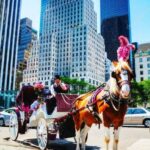
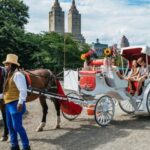
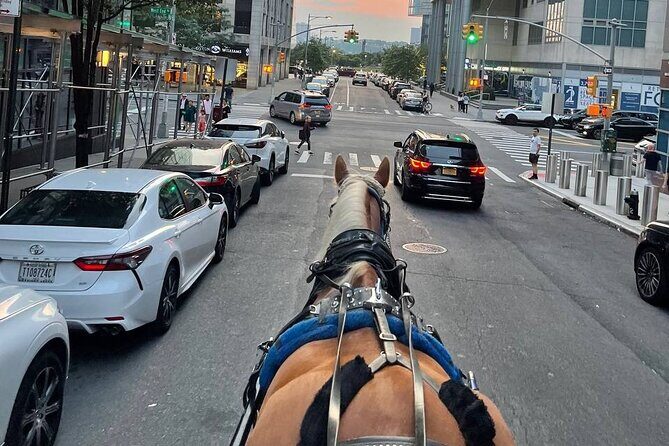
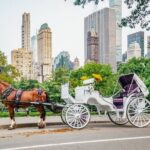
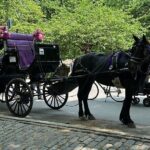
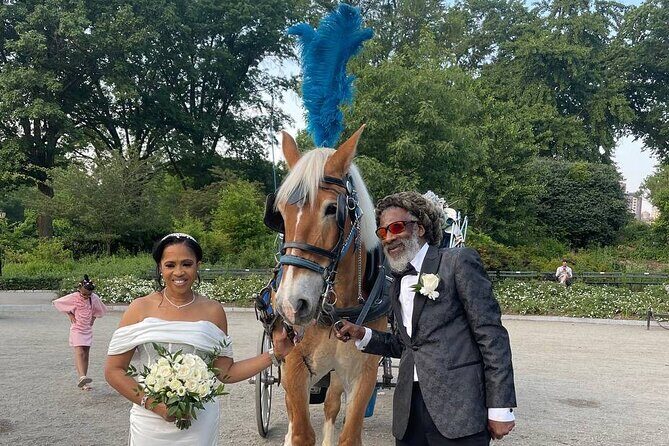
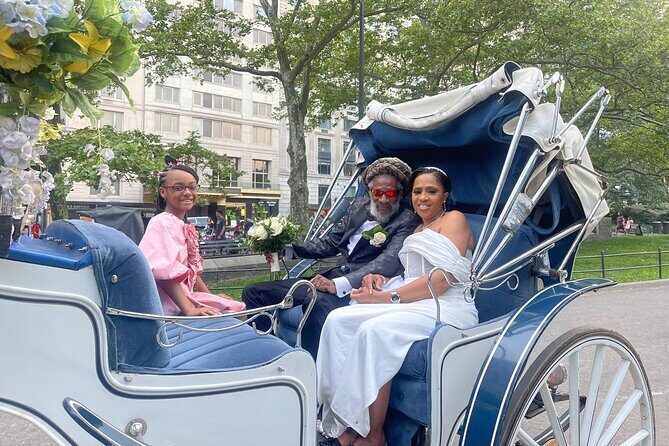
Central Park looks different from a horse-drawn carriage. This private ride slows you down fast, so you can take in major sights without doing the whole park on foot. You also pick the time of day, which helps you match the mood of the park to your schedule.
I love the photo-friendly route. You get quick, high-value stops at big hitters like Bethesda Fountain, Cherry Hill, and Strawberry Fields. I also like the driver commentary, where your guide points out what you’re looking at and gives you the kind of context that makes pictures more meaningful.
One possible drawback: the ride is only 40 to 45 minutes, so in peak crowds you might get fewer chances to pull aside for photos. If your timing hits a busy day, the end of the tour can feel a bit rushed.
In This Review
- Key things I’d bank on before you go
- Hopping on in front of the Ritz-Carlton (and why that start matters)
- The ride length that keeps Central Park fun, not exhausting
- Driver commentary turns the “same views” into stories you can remember
- Photo stops: great when timing is right, trickier on peak days
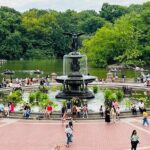
- Bethesda Fountain: the Angel of the Waters and a quick, satisfying stop
- Cherry Hill Fountain at the carriage concourse
- That Ramble-to-terrace style view, plus Daniel Webster’s monument
- Strawberry Fields: the Imagine mosaic and a calm, meaningful pause
- Wollman Rink and the Central Park Carousel: the park in “season modes”
- Chess & Checkers House and the Children’s District: play built into the park
- Balto’s heroic route and why that statue hits harder in person
- Rumsey Playfield: the Model Boat Pond vibe and the old Casino name
- Loeb Boathouse: lake time without extra planning
- Sheep Meadow: the retreat feeling you came for
- Pinebank Arch, Tavern on the Green, and the parade-route area
- Is this carriage tour good value?
- Should you book this Central Park carriage ride?
- FAQ
- How long is the NYC Horse and Carriage Central Park tour?
- Is this a private tour?
- Where do we meet for the tour?
- Do I need a printed ticket?
- Are there admission-free stops included?
- Does the tour require good weather?
- Can I cancel for a full refund?
Key things I’d bank on before you go
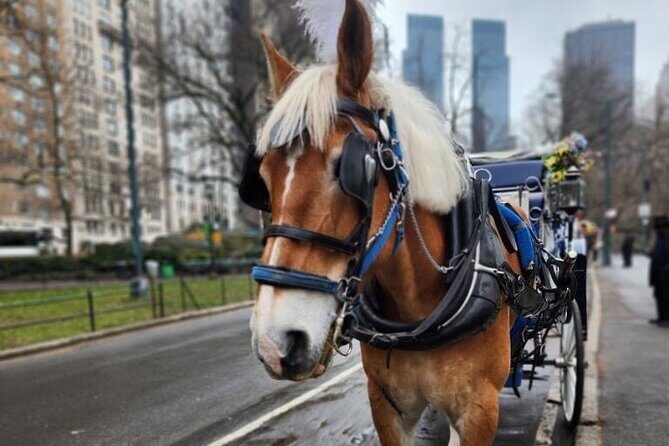
- Private means just your group: no mixing with strangers on the carriage.
- 40 to 45 minutes gives you highlights without turning it into a long day.
- Mobile ticket keeps you from hunting for paper at the last second.
- Driver-led stops help you focus on the sights, not logistics.
- Good weather matters since the experience requires it.
Hopping on in front of the Ritz-Carlton (and why that start matters)
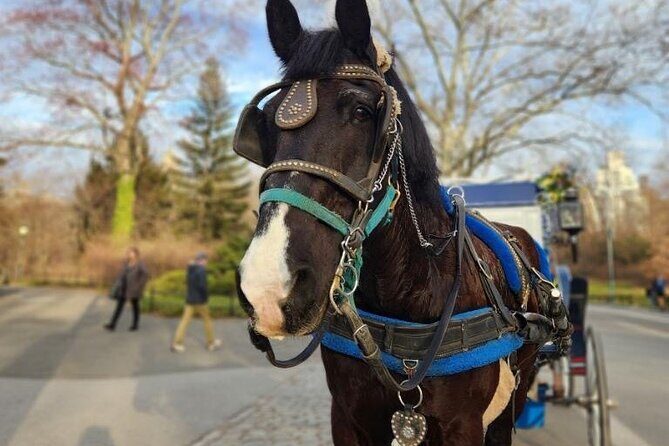
Your ride starts and ends back at the Ritz-Carlton New York, Central Park, at 50 Central Park South. That’s a practical choice: it’s a clear, easy-to-refer-to meeting point, and it puts you right at the edge of the park where most first-time visitors want to be anyway.
Because it’s a private tour, you’ll want to be ready when you arrive. On hectic days, a few minutes can turn into a lot of waiting, and you’ll lose prime daylight (or prime skyline glow) if you start late. If you can, arrive a little early and take a quick lap outside so you don’t get flustered when your driver finds you.
Other horse carriage rides we've reviewed in Central Park & NYC
The ride length that keeps Central Park fun, not exhausting
This is a short tour: about 40 to 45 minutes. That might sound brief, but it’s exactly why this style works. Central Park can feel endless if you’re walking with a plan, and a carriage ride compresses the “greatest hits” into something you can actually fit into a busy day.
You’re also choosing your time of day, which changes the whole vibe. A daytime slot gives you clean sightlines for photos. An early evening slot can add that classic New York feeling—city lights, longer shadows, and a calmer rhythm on the paths (when crowds behave).
Most people can do this comfortably, since you’re not covering miles on foot. The one “watch-out” is that the ride still moves with the flow of the park, so you’ll feel the pace of Central Park itself.
Driver commentary turns the “same views” into stories you can remember
The best part of this experience is how much you get out of the ride when your driver narrates. I like that you’re not just sitting there with a camera—you’re learning what you’re seeing as you go.
From the feedback pattern, the guides often bring energy and humor. Names like LEO, Peter, and Pharvis show up as drivers who were especially engaging. One account even mentioned LEO introducing his horse, Lily, right at the start—small moment, but it sets the tone immediately.
If you want the experience to feel personal, this is where you can “drive” the ride. Pay attention when your driver points out landmarks, and if you have a specific focus—history, architecture, or just the best photo spots—ask when you first get on board.
Photo stops: great when timing is right, trickier on peak days
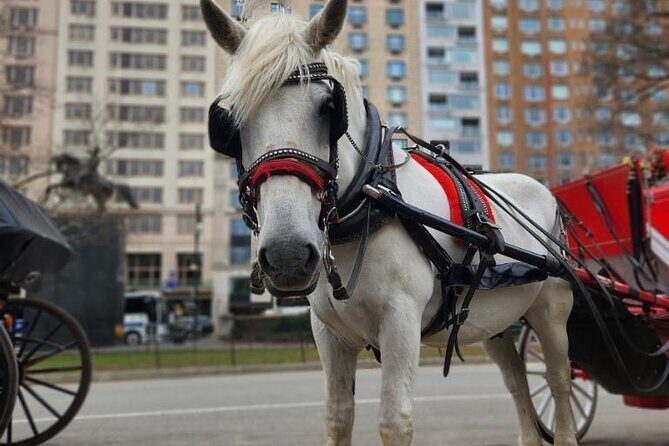
I come to Central Park with one goal: good photos without running around like it’s an obstacle course. This carriage format helps, because you’re already moving slowly and your driver can pause at classic viewpoints.
Big photo-friendly targets include places like Bethesda Fountain and Cherry Hill, where you can frame the details quickly. Strawberry Fields also tends to be a strong stop since it’s a well-known memorial space with lots to capture.
Still, here’s the practical note. In heavy crowds (like major holidays), photo timing can get limited. One experience included only a bathroom stop besides a single break for pictures offered at the end, and the ride ended quickly to keep the next carriage moving. Your best bet is to schedule earlier in the day when possible, and to have realistic expectations about how many pull-offs you’ll get.
Bethesda Fountain: the Angel of the Waters and a quick, satisfying stop
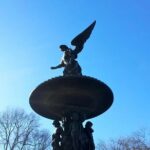
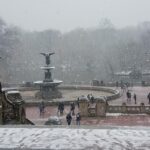
Bethesda Fountain is the kind of Central Park landmark that looks good even when you’re not trying. At the top is the Angel of the Waters, a bronze figure with raised wings stepping on a stone that spouts water. The water then cascades down into basins and fills a large circular pool.
This stop is short—about 5 minutes—and that’s enough if you use it right. Get your wide shots first (so you don’t rush later), then come back for close-ups of the water and the statue details. Even if you’ve seen photos before, seeing the fountain in motion makes a difference.
It’s also listed as admission ticket free for this experience, so there’s no added cost to soak up the view while you’re there.
A few more New York City tours and Central Park experiences worth a look
Cherry Hill Fountain at the carriage concourse
Cherry Hill Fountain sits near the center of the carriage concourse at the top of Cherry Hill. It’s ornate, but in a way that’s still easy to photograph quickly—good for a ride that doesn’t include long stops.
The design is distinctive: a stone base topped by a finial that combines small saucers for birds and a light fixture with eight globes. Water drips down through that layered structure into a granite and tile base, then spills into a bluestone basin.
Like Bethesda, this is around 5 minutes. I’d treat it as a “detail moment.” If you’re here with kids or with someone who loves fountains, this stop can feel oddly special because it’s so close to the action of the park.
That Ramble-to-terrace style view, plus Daniel Webster’s monument
As you move through the park, you’ll come across a section designed as a major entrance to the Ramble, with a path connection toward Bethesda Terrace. This is one of the spots Central Park does best: sweeping views that feel a little romantic even when you’re surrounded by tourists.
Right along the West Drive near 72nd Street, you’ll also see the Daniel Webster monument. The bronze figure depicts Webster gazing into the distance as if about to speak, with his right hand tucked into his coat and books at his feet. It’s a good stop to notice how Central Park mixes people, monuments, and straight-on sightlines.
I like pairing these moments together in my head: one is the scenic pull, the other is the “who is this statue and why is it here” payoff.
Strawberry Fields: the Imagine mosaic and a calm, meaningful pause
Strawberry Fields is a memorial to John Lennon, the British rock musician and peace activist. It’s set in a five-acre area near the West 72nd Street entrance and includes the Imagine mosaic, where people come to pay tribute.
This stop is about 3 minutes and it’s admission ticket free for this experience. It’s not long, so treat it like a quick reset. Take one photo that captures the vibe of the area, then spend a few seconds reading the space and letting it sink in. The memorial’s name references Lennon’s 1967 song Strawberry Fields Forever, so if you associate the song with the message, the place lands harder than you expect.
Wollman Rink and the Central Park Carousel: the park in “season modes”
If your schedule is right (or wrong in a fun way), you’ll get to see Central Park attractions that change what the park feels like.
Wollman Rink opened in 1949 and has been a Central Park favorite for decades. In fall and winter, ice skating is one of the most popular things to do, and the rink’s setting—skating with Manhattan’s skyline in view—is part of what makes it feel like Central Park does “movie scene” without trying.
You may also pass the Central Park Carousel. It’s a favorite for families and photo lovers, with a popularity rate of about 250,000 rides per year. The original attraction dates to 1871, which is a reminder that Central Park has always been about public fun, not just quiet walks.
Chess & Checkers House and the Children’s District: play built into the park
Central Park doesn’t only decorate itself. It planned for play.
Chess & Checkers House was built in 1952 to give visitors of all ages a place to play games. The octagonal brick structure holds 24 game tables shaded by a wooden trellis. Even if you don’t sit down and play, the setup makes you understand the park as a community space.
Then there’s the Children’s District, home to the Dairy. It was originally conceived as an area to meet children’s needs, and it’s worth knowing that playgrounds as we think of them today didn’t exist until the early 20th century. The Children’s District was completed in 1872, and it was the only part of the park dedicated specifically to its youngest visitors. That historical “why” helps you see the area as more than just a cute zone—it’s a design choice.
Balto’s heroic route and why that statue hits harder in person
Balto became famous after a heroic journey across Alaska. In January 1925, an outbreak of diphtheria threatened the population of Nome, Alaska. Weather prevented transporting vaccines by plane from Anchorage, so a relay of dog-sled teams and mushers carried the vaccine nearly 700 miles in blizzard conditions.
The trip took five days and seven hours, and the teams braved minus 30-degree Fahrenheit temperatures, ice floes, and 5,000-foot mountain peaks. It’s a lot of drama for a single statue—but standing near Balto, the story makes the moment feel bigger than Central Park.
If you like when a tourist attraction also delivers real-world stakes, this stop is a standout.
Rumsey Playfield: the Model Boat Pond vibe and the old Casino name
Rumsey Playfield has changed over the years, but it’s still anchored by its views and its relationship to recreation. Located on a hill overlooking the Concert Ground, the site once featured a restaurant created by park co-designer Calvert Vaux. That earlier restaurant was known as the Casino, and the name didn’t mean gambling—it was described as meaning little house in Italian.
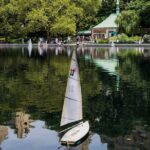
Today, Rumsey Playfield’s main feature is the ornamental pond—also called the Model Boat Pond—where children and hobbyists launch and race miniature sailboats and yachts. Boats are stored and rented at the nearby Kerbs Boathouse, which also houses a cafe.
I like this stop because it shows Central Park as a place where people do small, specific things. Not just stroll and pose—actual activities, right where you’d least expect them.
Loeb Boathouse: lake time without extra planning
Loeb Boathouse sits on the eastern edge of the Lake and is known as a launch point for rowboats. If you love the idea of Central Park as water-and-sky, this is one of the spots where that landscape feeling becomes real.
This part of the ride can be especially nice if you’re trying to picture the park from the water perspective. Even if you’re not rowing yourself during the tour, seeing the launch point makes the lake feel usable, not just scenic.
Sheep Meadow: the retreat feeling you came for
Sheep Meadow is one of Central Park’s most well-known landscapes and it’s described as the upmost expression of the park’s purpose as a retreat from urban life. Even from a carriage, you can feel why people treat it like a “pause button.”
Think of it as open space that lets the rest of the day breathe. If you’ve been stuck in tight city streets, the expanse matters. It’s also a great area for photos that show scale—Central Park looks like a park, not a sketch on a map.
Pinebank Arch, Tavern on the Green, and the parade-route area
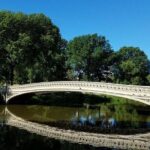
Pinebank Arch is an elegant cast-iron bridge spanning the bridle path. It’s a clean, architectural stop that works well for photos because it gives you lines to work with.
Tavern on the Green is nearby, in the historic building once known as the Sheepfold. It’s been a dining destination in Central Park since the 1930s. Even if you’re not eating during the ride, the building reinforces how Central Park has always balanced nature with city life.
And if you’re curious about the park’s role as a stage, keep an eye out for the shopping area where the Macy’s parade goes through each year. It’s a reminder that Central Park is both retreat and spotlight—depending on the day and the season.
Is this carriage tour good value?
This tour is great value when you want high-impact Central Park sights without committing a whole day to walking. You get a private ride, driver commentary, and quick photo stops built around major landmarks—Bethesda Fountain, Cherry Hill, Strawberry Fields, and more.
I especially like that the time is controlled. About 40 to 45 minutes means you can add Central Park without wrecking your itinerary. And because it’s a mobile ticket with a clear start/end point, you’re not doing a day-long logistics puzzle.
The main “value risk” is crowd timing. When it’s packed, the ride still moves, and your photo opportunities can shrink. If you’re the type who wants long scenic pauses, this may feel tight. If you’re the type who wants the best highlights in a compact window, it’s a smart choice.
Should you book this Central Park carriage ride?
Book it if you want an easier Central Park experience with fewer crowds, clear landmark stops, and a driver who helps you see more than you would by walking alone. It’s a strong fit for couples, first-timers, families, and anyone with limited time who still wants memorable photos.
Skip it (or pick a calmer time) if you hate tight schedules or you’re hoping for long stops at every major spot. In peak moments, the ride can feel more like a quick tour loop than a slow, lingering photo session.
If the weather is good and you can start early or avoid the worst crunch times, this is a fun way to get your bearings and see Central Park at a pace that actually feels like a vacation.
FAQ
How long is the NYC Horse and Carriage Central Park tour?
The ride lasts about 40 to 45 minutes.
Is this a private tour?
Yes. It’s a private tour/activity, and only your group participates.
Where do we meet for the tour?
You meet at the Ritz-Carlton New York, Central Park, at 50 Central Park South, New York, NY 10019, and the tour ends back at the meeting point.
Do I need a printed ticket?
No. The tour includes a mobile ticket.
Are there admission-free stops included?
Yes. Bethesda Fountain, Cherry Hill, and Strawberry Fields are listed as admission ticket free for this experience.
Does the tour require good weather?
Yes. This experience requires good weather. If it’s canceled due to poor weather, you’ll be offered a different date or a full refund.
Can I cancel for a full refund?
Yes. You can cancel up to 24 hours in advance for a full refund. If you cancel less than 24 hours before, the amount paid is not refunded.