REVIEW · NEW YORK CITY
NYC Central Park Pedicab Tours
Book on Viator →Operated by NYC Central Park Pedicab Tours · Bookable on Viator
A Central Park shortcut on pedals.
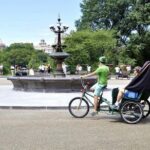
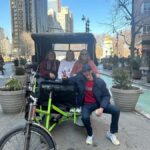
A 1 to 2 hour guided pedicab tour helps you cover more ground than walking, while still hearing stories behind famous landmarks. The pedicabs are motorized, so you keep your energy for the photos and the stops that matter.
What I like most is the combination of guide narration and frequent photo moments. The ride keeps moving, but you still pause at key spots like Bethesda Fountain and Bow Bridge, instead of doing a rushed walk-by.
One thing to consider: the start can feel a bit tricky if you’re arriving at the meeting point without a clear plan. Getting there on time and spotting your exact pedicab matters, since the tour runs like a smooth loop once you’re underway.
In This Review
- Key things to know before you go
- Why Central Park feels easier from a pedicab
- The meeting point at 50 Central Park S: the place to nail timing
- How the 1–2 hour loop works (and why it’s the sweet spot)
- Wollman Rink in winter, pickleball in summer (plus the carousel’s 1908 charm)
- Shakespeare promenade and the tango on Saturdays
- Balto and Rumsey Playfield: from sled-dog hero to stage lights
- Conservatory Water and a lakeside American restaurant moment
- Bethesda Fountain: the movie icon you can actually see up close
- The Mall and the Literary Walk: elm trees and a straight shot to wonder
- Cherry Hill and Bow Bridge: Friends Fountain to the proposal bridge
- The Lake, rowboats, and a quick Daniel Webster stop
- Strawberry Fields and The Dakota: John Lennon’s memorial and home-life history
- Tavern on the Green and Sheep Meadow: park time for food lovers and picnic people
- Pinebank Arch and Columbus Circle: the final photo targets in the loop
- What’s included (and why it changes the experience)
- Guides who set the tone: humor, pacing, and real answers
- Who this Central Park pedicab tour is best for
- Should you book NYC Central Park Pedicab Tours?
- FAQ
- How long is the NYC Central Park Pedicab tour?
- Is the tour offered in English?
- What’s included in the tour?
- Where does the tour start and end?
- Is this tour private?
- Are tips included?
- Is hotel pickup or drop-off provided?
- What if the weather is poor?
Key things to know before you go
- Motorized pedicab comfort: less walking fatigue, great on hot or cold days
- Photo help included: your guide takes pictures as you stop at major sights
- Story-first route: you get commentary across the park’s most recognizable locations
- Seasonal variety: Wollman Rink changes vibe in winter vs summer
- Film-fame connections: many stops include pop-culture references alongside the real sights
- Wi‑Fi on board: useful for mapping, messaging, or sharing right away
Why Central Park feels easier from a pedicab
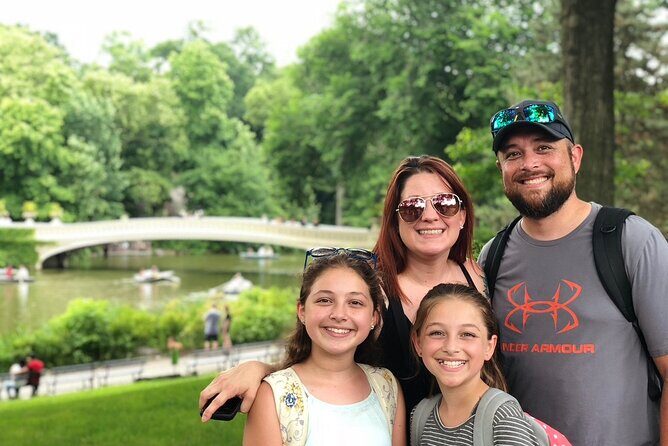
Central Park is big. Even if you love walking, your feet can do that thing where they start bargaining for a nap around the middle of the day. A pedicab gives you a practical trade: speed and comfort for time and views, so you can actually see a lot without paying for it afterward.
This tour is built around a guided ride, not just transportation. You’re not left to wander and guess. You get a commentary flow that connects sights in a way that helps your brain “click” the park into a single map, instead of 20 separate stops.
And yes, it’s motorized. That’s a big deal in Central Park weather swings, when wind off the lake or a summer sun session can drain you faster than you expect.
Other pedicab tours we've reviewed in Central Park & NYC
The meeting point at 50 Central Park S: the place to nail timing
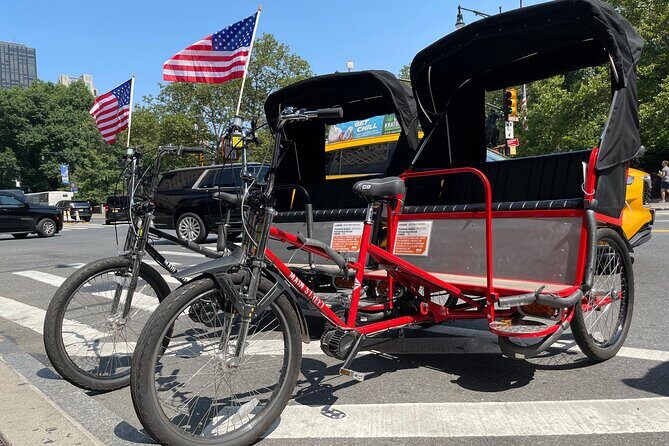
The tour starts at 50 Central Park S, New York, NY 10019, and it also ends back at the same meeting point. That’s good news: no complicated drop-off puzzle.
But it also means you should treat the start like the opening scene. If you arrive late or unsure where the pedicabs are lining up, you can lose momentum fast. I’d plan to arrive a little early and keep your phone confirmation handy so you can match your group to the right operator quickly.
If you’re visiting solo or with a friend and you’re trying to beat the crowds, this start location is part of the value. You can choose a time that fits your day—early for a calmer park, later if you want more action.
How the 1–2 hour loop works (and why it’s the sweet spot)
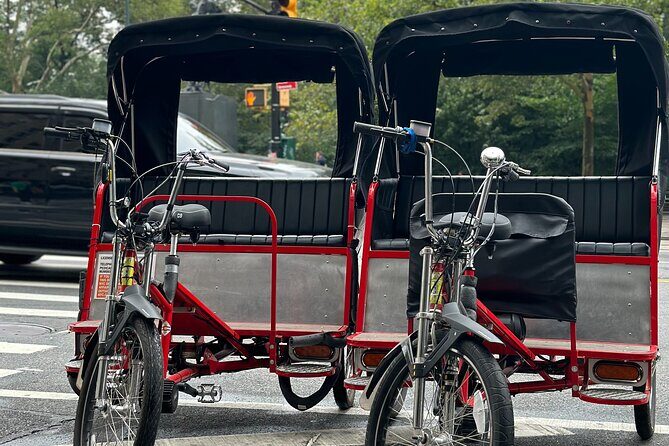
Expect a 1 to 2 hour experience with stops that include photo moments and guide commentary. The rhythm is simple: pause, look, listen, take a picture, then roll to the next sight.
That timing matters because Central Park can eat your day. This format helps you focus. You get a “great hits” overview without needing stamina for long back-and-forth wandering.
Also, since this is listed as a private tour/activity, it’s only your group in the pedicab. That tends to make the ride feel less like a cattle-line overview and more like a tailored sightseeing session, especially when it’s hot or you want extra time at a particular spot.
Wollman Rink in winter, pickleball in summer (plus the carousel’s 1908 charm)
Your route kicks off around Wollman Rink, and the mood depends on the season. In winter, it’s an ice-skating scene. In summer, the rink vibe shifts to pickleball, bringing a different energy to the same location.
From there, the tour works in a cluster of classic Central Park “hang out” spots. One of the most photographed stops is the iconic carousel built in 1908, featuring over 50 hand-carved horses. If you like historic details, that’s the kind of stop that gives your tour photos a sense of age and character.
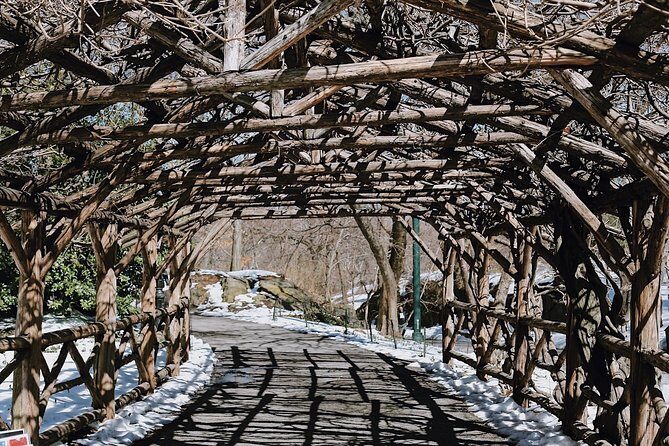
Then you move past the game tables shaded by wooden trellis structures built in 1952. It’s a fun break from staring at fountains and statues—more casual, more playful, more Central Park as a lived-in place.
The Dairy also fits this early zone. It’s now a visitor center and gift shop, but its original role was as a place where children could get fresh milk. That tiny bit of context makes the stop feel less like a random building and more like part of the park’s family-history design.
Shakespeare promenade and the tango on Saturdays
The route includes the wide promenade with statues of Shakespeare, Robert Burns, and other writers under elm trees. These statues are placed like markers across the park’s storytelling path—so even if you don’t know every writer, you still feel the “literary walkway” idea.
In summer, there’s an extra layer: free tango classes are available every Saturday evening near the Shakespeare statue. That’s a practical win if your timing lands on a Saturday and you want the park to feel like a stage, not just a museum.
One small caution: because tango classes depend on the season and schedule, you shouldn’t count on seeing them unless your date matches that Saturday evening window.


Balto and Rumsey Playfield: from sled-dog hero to stage lights
Next up is the Balto statue. Balto was a lead sled dog credited with delivering medicine to save children from diphtheria in 1925 in Alaska. It’s one of those monuments that packs emotion into a short stop, and it changes how you see the park for the rest of the ride.
Right after that, Rumsey Playfield (also called the Summer Stage area) comes into view. It’s known for music, dance, spoken word, and film tied to the popular Summer Stage series. In summer, there’s also a note about filming Good Morning America on Friday mornings.
If you’re a “what’s happening right now?” person, this stop makes the park feel current. If you prefer quiet sightseeing, it’s worth pacing yourself there—Rumsey Playfield can be energetic depending on events.
Conservatory Water and a lakeside American restaurant moment
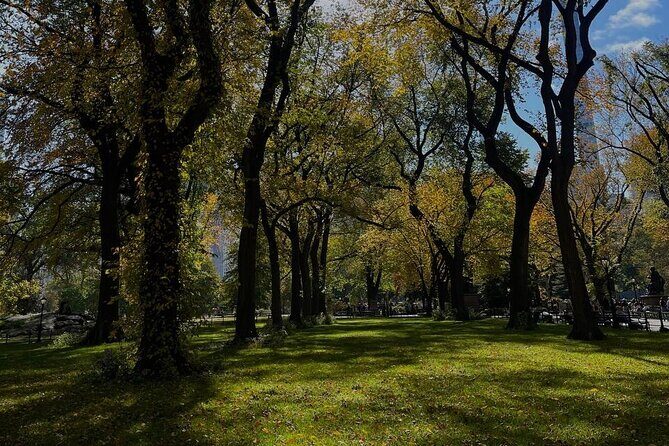
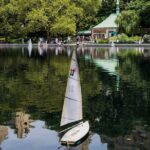
The route includes Conservatory Water, a man-made pond where you can rent and use remote control model boats. It’s tied to the film Stuart Little, which is a fun way to get kids (and adults) to look harder at what they might otherwise pass.
From there, the tour includes a stop at an American restaurant and bar known for its lakeside view. Movies filmed there include When Harry Met Sally, 27 Dresses, and Date Night, which makes it a popular “recognize this” point even if you don’t plan to eat.
Value tip: if you’re hungry, this is a reasonable moment to decide whether to grab something now or later. The tour itself doesn’t include meals, so use this stop to read the vibe and plan your next bite.
Bethesda Fountain: the movie icon you can actually see up close
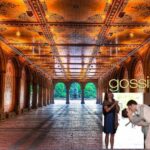
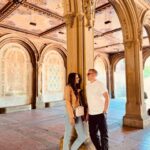
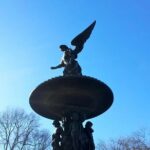
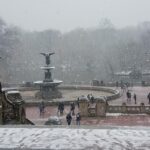
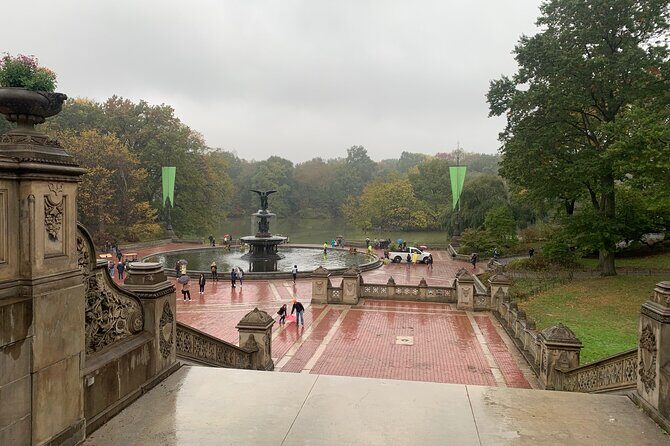
Then comes one of the big ones: Bethesda Fountain, including the Bethesda Terrace fountain setting. It’s one of the park’s most iconic landmarks and appears in lots of films and TV.
You’ll also see it in the context of other classic routes, since the day keeps linking you from one famous photo to the next. If your goal is to get those postcard shots without walking all day, Bethesda is a key payoff stop.
Movies tied to the area include Home Alone 2, John Wick, Sex and the City, Gossip Girl, and Enchanted. Even if you don’t know those titles, the real structure is impressive. The fountain area gives you a clear “Central Park moment” in under a half-block of sight lines.
The Mall and the Literary Walk: elm trees and a straight shot to wonder
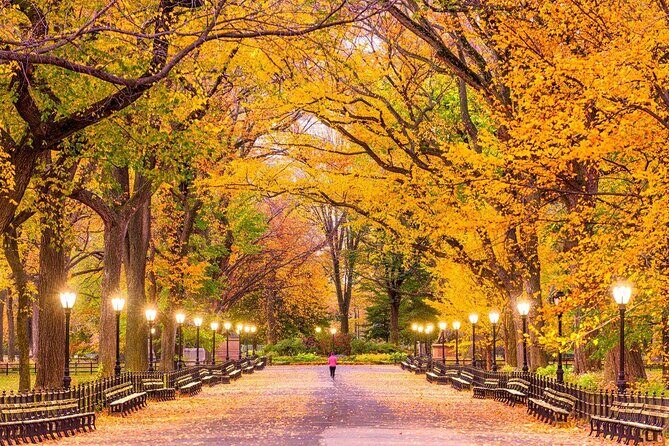
The tour continues to The Mall and the Literary Walk, a section known for the biggest collection of American elm trees and the walkway leading to Bethesda Terrace. In other words: it’s where the park feels most designed and most photogenic.
This stretch also shows up in film locations connected to Maid in Manhattan, Night at the Museum, and Autumn in New York. That film tie-in works best as a memory hook—it helps you understand why people keep returning to the same angles.
One practical note: the Mall is a walkway. If you’re riding and expecting a super “hands-on” stop, you’ll mostly use this time for photos, soaking in the sight lines, and letting your guide point out what you might miss on foot.
Cherry Hill and Bow Bridge: Friends Fountain to the proposal bridge
Next comes Cherry Hill, named for the cherry trees that bloom there in spring. It overlooks the lake, and it’s also called the Friends Fountain, which is a neat extra layer if you enjoy TV reference points.
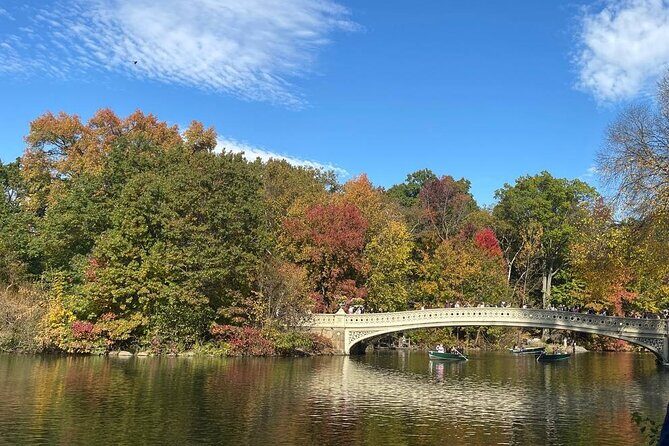
After that, the route heads to Bow Bridge, built in 1862 and spanning 60 feet across Central Park Lake. It connects Cherry Hill and the Ramble and is known as the Romantic Bridge and Proposal Bridge, plus it appears in films like You’ve Got Mail, Enchanted, and Spider-man 3.
For photos, Bow Bridge is one of the best “shape” moments in the park—long enough to frame, pretty enough to hold attention, and famous enough that you’ll feel like you’re capturing something recognizable even if it’s your first time in Central Park.
The Lake, rowboats, and a quick Daniel Webster stop
The tour includes a brief look at The Lake, described as the second largest man-made body of water in Central Park, with rowboats available for rent. Even if you don’t plan to rent one, it’s a strong visual stop because the water adds depth to everything around it.
Then there’s a small but meaningful moment: the monument to American lawyer and statesman Daniel Webster (1782–1852). This is the kind of stop that adds substance. You’re not just collecting scenery; you’re also picking up facts that make the park feel intentional.
If you like walking history but don’t want to spend hours reading plaques, a quick monument stop is a good middle ground.
Strawberry Fields and The Dakota: John Lennon’s memorial and home-life history
Two of the most emotionally resonant stops come close together.
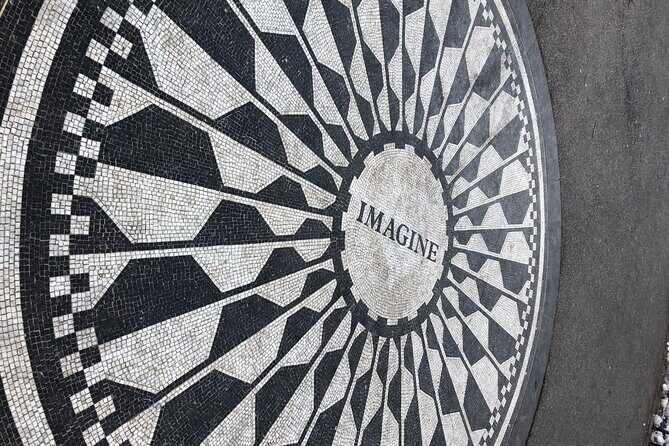
First is Strawberry Fields, a memorial to John Lennon with the Imagine mosaic where many people come to pay tribute. If your tour date gives you even a few minutes of quiet, this is where Central Park feels human and reflective, not just scenic.
Next is The Dakota building. It’s the first building on the Upper West side, built in 1884, and it’s famously linked to John Lennon and Yoko Ono living there. Even if you don’t know the building’s full story, it’s one of those “the name means something” locations.
This pair of stops is ideal if you’re the type of traveler who likes to mix the famous park with famous people tied to the city.
Tavern on the Green and Sheep Meadow: park time for food lovers and picnic people
Tavern on the Green is an American restaurant and bar that opened in 1934. It shows up in movies like Ghostbusters and Mr. Popper’s Penguins, which makes it another place where pop culture points you toward an actual Central Park landmark.
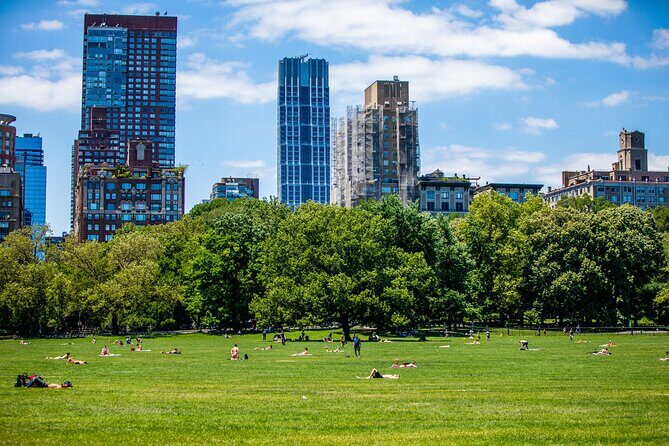
Then your route includes the park’s largest lawn, originally home to a flock of pure bred sheep from 1864 until 1934. Today, it’s used for family picnics, which changes the vibe from historic livestock story to real-life relaxation.
If you’re traveling with kids, or you want a break that feels less like sightseeing and more like being in a park, this is a useful stop. You can take in views, watch people, and decide if you want to snack nearby on your own time.
Pinebank Arch and Columbus Circle: the final photo targets in the loop
Near the end, you’ll see Pinebank Arch, an elegant cast-iron bridge that spans the bridle path. It’s linked in film to Elf (the snowball fight moment), which again shows the tour’s style: factual stops plus movie recognition.
Finally, you pass through the area around a busy traffic circle with a small park and a towering Christopher Columbus monument. Movies tied to the area include Morning Glory, Crocodile Dundee, and The Other Guys.
This closing stretch matters because it caps your tour with big visual anchors before you return to the meeting point.
What’s included (and why it changes the experience)
This tour includes guided tour, Wi‑Fi on board, and taking pictures. That last part is more valuable than it sounds. When you’re in Central Park, you’re often juggling directions, lighting, and timing. Having your guide take photos at stops means you don’t have to disappear into phone-cam mode just to get a good shot.
It’s also helpful if your group includes people who don’t want to keep stopping to switch positions. A guide-led photo routine can keep the flow moving without you feeling rushed.
One more practical point: tips are listed as optional. Since they’re not included, you can decide based on how your guide handles pacing, photos, and questions.
Guides who set the tone: humor, pacing, and real answers
The strongest part of the experience is usually the human element: the guide’s comfort driving the story and keeping the ride fun.
Names that show up as memorable tour hosts include Ali, Max, Sadid, Amin, John, Harry, and Johnny Cash. Across those guides, the common thread is being friendly, telling stories in a way that sticks, and making time for pictures and questions without turning the ride into a speed run.
If you want humor mixed with history, you’re likely to enjoy the tone. If you want straight park facts without any film cross-references, you might want to steer your guide with questions—these tours often mix the two, because movies are one of the quickest ways to help people visualize a spot.
Who this Central Park pedicab tour is best for
This is a great fit if you’re a first-timer who wants quick orientation and strong photo stops. It also works well for groups that don’t want to spend hours walking: families with kids, older travelers, or anyone traveling with a day schedule that’s already packed.
It’s also described as suitable for most travelers, and service animals are allowed. If you value comfort and control over pace, a guided ride beats DIY routes in a park that’s easy to get turned around in.
If you’re the type of traveler who wants long, quiet, self-guided exploration, this might feel short. That’s not a bad thing—it just means you’ll use it as a highlight reel, then pick a neighborhood to return to on foot.
Should you book NYC Central Park Pedicab Tours?
I’d book it if you want a high-effort sightseeing day without the foot punishment. The tour’s structure—guide commentary, included photo help, and a loop through the park’s best-known sights—offers clear value for time-stretched visitors.
Book it especially if you’re smart about timing. Early slots can help you enjoy a calmer park. Warm-day riders will also appreciate having a motorized option that keeps you moving while you see major landmarks.
Skip it if your top goal is deep, slow, pure park-study with minimal pop-culture references. This is more of a guided highlights ride than a lecture. And do one simple thing before you go: pick your start time, show up early enough to find your pedicab at 50 Central Park S, and you’ll get the smooth loop the experience is built around.
FAQ
How long is the NYC Central Park Pedicab tour?
The duration is approximately 1 to 2 hours.
Is the tour offered in English?
Yes, it’s offered in English.
What’s included in the tour?
It includes a guided tour, experience tour guide, Wi‑Fi on board, and taking pictures.
Where does the tour start and end?
It starts at 50 Central Park S, New York, NY 10019, USA and ends back at the same meeting point.
Is this tour private?
Yes. It’s listed as a private tour/activity, meaning only your group participates.
Are tips included?
No. Tips are optional.
Is hotel pickup or drop-off provided?
Hotel pickup and drop-off in other places are not included.
What if the weather is poor?
This experience requires good weather. If it’s canceled due to poor weather, you’ll be offered a different date or a full refund.