REVIEW · NEW YORK CITY
New York’s Iconic Central Park: A Self-Guided Audio Tour
Book on Viator →Operated by VoiceMap Audio Tours · Bookable on Viator
A park this big can feel like a maze. This self-guided Central Park audio tour uses VoiceMap so you can walk at your pace while an Emmy-nominated storyteller connects famous sights to the stories behind them. I especially like the offline audio and maps, because Central Park reception can be hit-or-miss.
Your day also gets more personal than a typical group tour: it’s limited to just your group, and you can pause and replay as you want. The main thing to consider is that Central Park paths can be confusing, and one guest reported getting routed in circles—so take a minute to get your bearings before you rely on directions.
In This Review
- Key highlights at a glance
- Why a Central Park audio tour fits better than a rushed walking group
- Entering at Grand Army Plaza by the Plaza Hotel
- Pulitzer Fountain (1916) and Sherman’s Shiloh connection
- Gapstow Bridge, TV and film fame, and the Central Park Zoo story
- Balto, the Indian Hunter statue, and why some “history” isn’t what it sounds like
- The Mall, Cathedral Walk, and the real meaning of a park that changed
- Bethesda Terrace and Bethesda Fountain: views and design you can actually notice
- Bow Bridge shadows, Strawberry Fields, and the Dakota ending
- Price and value: what $14.99 buys in a 90-minute park walk
- Making VoiceMap work in Central Park without getting turned around
- Who this self-guided Central Park audio tour is best for
- Should you book this Central Park audio tour?
- FAQ
- How long is the Central Park self-guided audio tour?
- Where does the tour start and where does it end?
- What is the price?
- Is the tour in English?
- Do I need an internet connection during the tour?
- What do I need to bring?
- Does this include museum tickets or entrance fees?
- Is it private or shared with other people?
- Are there any restrictions on service animals?
- Can I cancel for a refund?
Key highlights at a glance

- VoiceMap on your smartphone with audio you can start, pause, and restart
- Offline access to audio, maps, and geodata so you’re not stuck mid-walk
- Emmy-nominated storyteller guiding you through major Central Park landmarks
- Limited to your group for a calmer, less rushed experience than many tours
- A clear route from Grand Army Plaza to the Dakota Hotel with stops you can actually find
Why a Central Park audio tour fits better than a rushed walking group

Central Park is famous for one reason: it’s huge. And when you’re following a live guide, you’re often stuck in a pace you didn’t choose. With this setup, you’re in charge of timing. You can linger by a fountain, cut across a path if you’re short on time, or replay a segment if the story matters to you.
The other practical win is how the tour is built: you download the content to your phone and rely on offline materials (audio, maps, and geodata). That means you’re less dependent on cell service, which can be inconsistent around large parks and city blocks. For me, that’s the difference between a “tour you almost miss” and a tour you actually finish.
Finally, the narration is aimed at making the park feel understandable. It doesn’t just list sights. It ties them to people, events, and design choices—so when you see something, you have a reason it’s there.
Other guided tours in New York City


Entering at Grand Army Plaza by the Plaza Hotel

You start at 768 5th Ave, in front of the Plaza Hotel, at Grand Army Plaza. This is a smart starting point because it’s a major landmark area, not a hidden entrance. You’ll begin with an intro to how VoiceMap works, so you can get comfortable with the controls before you walk deeper into the park.
From there, you’re walking into a famous part of the park’s “public face.” Expect a classic Midtown-New York transition: city energy outside, park pathways inside. If you want your first minutes to go smoothly, I suggest you spend a moment outside Central Park to confirm your headphones and phone audio are working, and check that your download completed.
Pulitzer Fountain (1916) and Sherman’s Shiloh connection
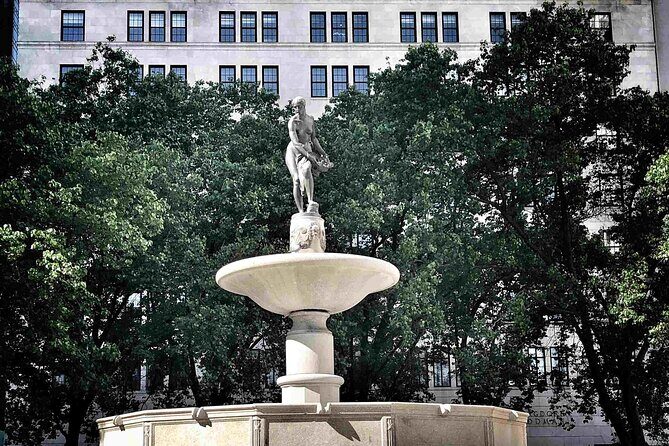
One of the first memorable stops is the Pulitzer Fountain, designed in 1916 by Thomas Hastings—the same firm associated with the New York Public Library. That combination matters. You’re not just looking at a pretty feature; you’re seeing how the city’s landmark design world overlaps.
Hastings is also a useful anchor for the rest of your walk. If you pay attention to the design, you’ll notice the park is full of elements that look like they belong to the same “serious architecture” conversation as major Manhattan buildings.
Next comes the statue of William Tecumseh Sherman. The story you’ll hear connects him to the Civil War battle of Shiloh, including the detail that his horse was shot out from under him. That kind of specific anecdote does two things: it makes the statue feel less like a distant monument and more like a real moment in history you can visualize.
Gapstow Bridge, TV and film fame, and the Central Park Zoo story
As you head deeper, you’ll pass Gapstow Bridge, a spot that has shown up in films and TV shows like Home Alone 2, The Devil Wears Prada, Gossip Girl, and Enchanted. That pop-culture nod is fun, but it also helps you locate the bridge confidently when you’re walking. When you know you’re near a recognizable “screen” location, it’s easier to stay oriented in a park with many choices.
Right around this area, you’ll also pass Central Park Zoo. Here, the audio focuses on the Great Zoo Escape of 1874. Even if you don’t plan to visit the zoo, this story turns a building-and-fences area into something with tension and character. It’s the kind of narrative that makes you look up at the surroundings instead of just stepping past.
Balto, the Indian Hunter statue, and why some “history” isn’t what it sounds like
The tour includes a stop for the Balto statue. You’ll hear about the legendary dog who saved Nome, Alaska—and a key detail: Balto isn’t actually what the dog was called. This is a good example of why an audio tour can be better than reading a plaque for two seconds. You get the correction, and suddenly the statue is less “branding” and more a story that changed as it moved into public memory.
Then you’ll pass John Quincy Adams Ward’s Indian Hunter statue. You’ll hear about the statue and the artist while you walk past. The value here is simple: you’re not just noticing the sculpture. You’re learning enough about the creator’s role to understand why the piece looks the way it does.
A few more New York City tours and Central Park experiences worth a look


The Mall, Cathedral Walk, and the real meaning of a park that changed

One of the route beats is the Central Park Mall—often referred to as cathedral walk. That name gives you permission to slow down. The path shape, sightlines, and the way the park “feels framed” can make it more than just a crossing route. As you walk, the audio explains why the name is used, and it helps you understand the park’s deliberate design.
A particularly striking segment comes later: you’ll hear why, until August of 2020, there wasn’t a single statue in Central Park honoring a real woman. The audio ties this moment to the 100th anniversary of the 19th amendment, the one that gave women the right to vote. Even if you’re not the type who thinks about monuments, this part lands. It turns the park into a living record of what society chooses to celebrate.
This is also where a self-guided format has an advantage over a group rush. You can stop and take it in without feeling like you have to keep up.
Bethesda Terrace and Bethesda Fountain: views and design you can actually notice
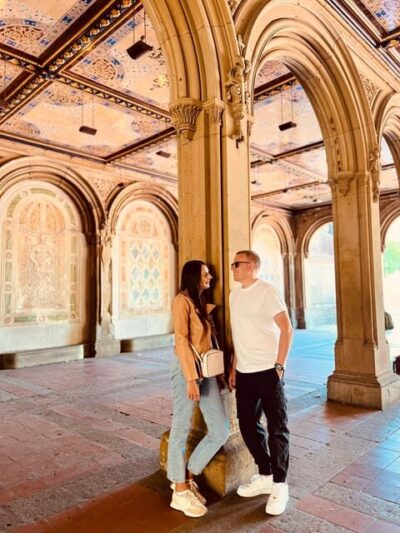
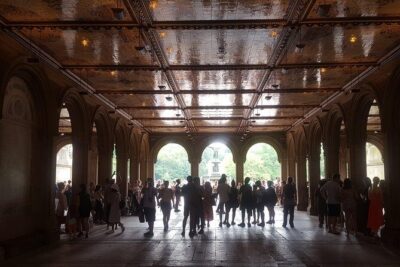
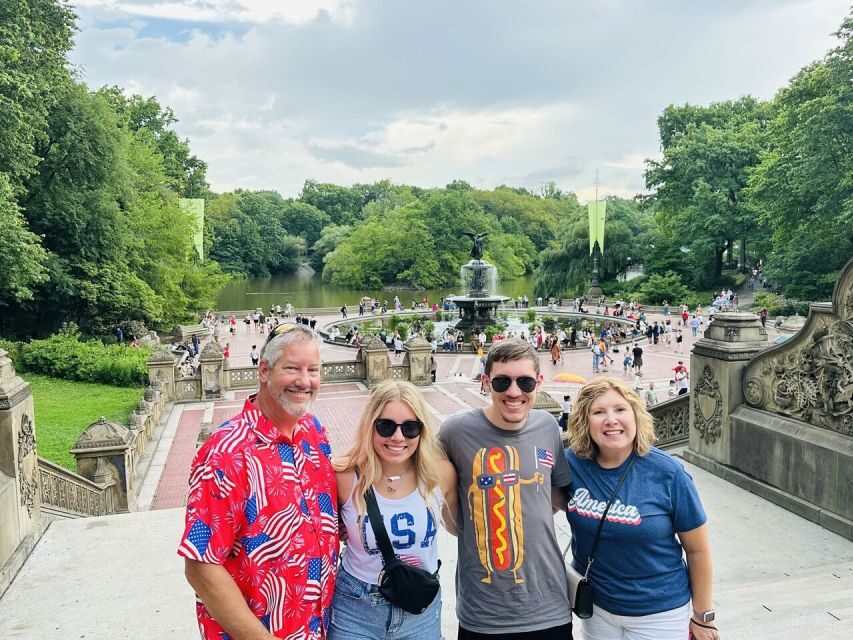
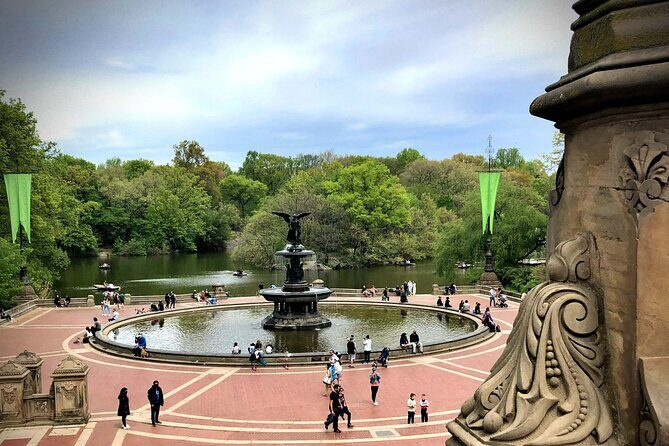
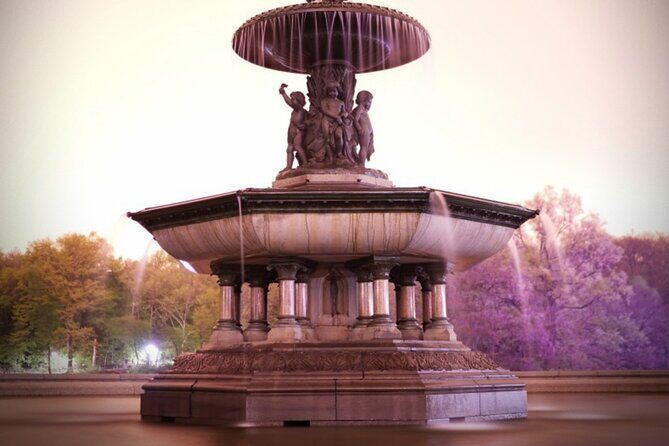
As you approach the Bethesda area, you’ll have time to take in views from Bethesda Terrace and hear about the terrace’s history. Even without turning this into a museum-style stop, you’ll likely find yourself pausing more than usual—because terrace design is built to hold attention.
Then you’ll walk past Bethesda Fountain, with the audio covering its history. The main benefit of having the story here is that you can connect your surroundings to the intent behind them. You’ll know what you’re looking at, and you won’t have to guess what the fountain is “supposed” to represent.
If you want a practical tip: keep your phone brightness moderate and use headphones comfortably. Bethesda is a place where you might want to step aside from the flow so you can hear clearly.
Bow Bridge shadows, Strawberry Fields, and the Dakota ending
Next comes Bow Bridge. The audio talks about the horrors that have unfolded in its shadows. I won’t spell out details that aren’t provided here, but the approach is clear: you’re guided to see a familiar romantic landmark through a darker narrative lens. That contrast is one of the reasons Central Park stories stick with you.
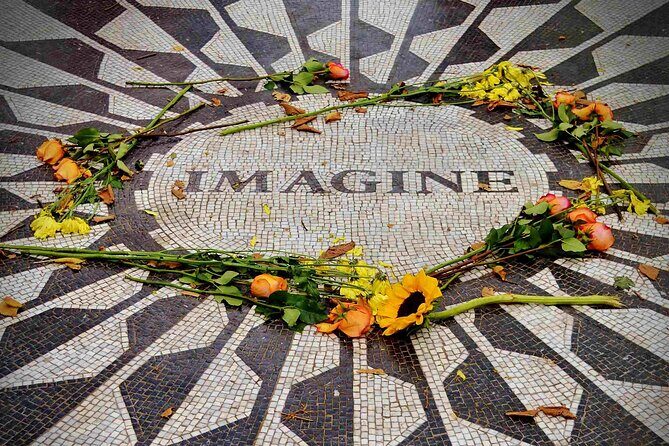
Then you’ll reach Strawberry Fields, where you’ll hear about John Lennon’s murder. This is the kind of moment where the audio format helps because you can lower your pace instantly. You don’t need to be “in the know” ahead of time; the narration gives you context while you’re standing near the place.
Finally, the tour ends in front of the Dakota Hotel. The audio includes how the hotel came to be, bringing your walk to a major, story-rich finishing point. Ending at the Dakota is convenient too: you’re exiting onto a recognizable stretch of the Upper West Side, rather than stopping in the middle of nowhere.
Price and value: what $14.99 buys in a 90-minute park walk
At $14.99 per person, this tour is priced like a budget-friendly add-on to your NYC trip rather than an expensive guided experience. Here’s where the value calculation makes sense:
- You get lifetime access to the self-guided tour content in English, not just a one-time ticket.
- You get offline access to audio and maps, which can save time and frustration if your phone struggles with service.
- The narration is designed to be usable on demand: you can stop and start when you want, which is ideal for families, solo walkers, and anyone who plans to make photo stops.
The main “cost” isn’t money—it’s attention. If you walk fast without checking the map and controls, you’ll miss the payoff. But if you’re willing to slow down just a bit, you’re likely to feel the value quickly.
Also keep in mind what’s not included: you’ll need your smartphone and headphones. Food, drinks, and any admission tickets are not included because this is built around the outdoor walking route.
Making VoiceMap work in Central Park without getting turned around
Central Park is huge, and it has plenty of similar-looking paths. One guest reported that the directions felt hard to follow and that the route kept sending them in circles, and the provider later processed a refund. That doesn’t mean the tour is “broken,” but it does tell you something important: you should treat the first few minutes like a practice run.
Here’s how I’d handle it to reduce the odds of frustration:
- Start with your phone already set: downloaded audio, headphones connected, and volume tested before you enter.
- Check your position early: after you begin from Grand Army Plaza, take a moment to confirm the map view matches where you are.
- If you’re confused, pause the story and re-orient. You’re allowed to stop and start. Use that freedom.
- Don’t race between stops. The park turns into a blur if you sprint from one landmark to the next.
Because the tour is limited to just your group and is self-paced, you’re not stuck with a fixed schedule. That flexibility is a real advantage—especially if you stop for photos or want extra time around fountains and bridges.
Who this self-guided Central Park audio tour is best for
This experience is a strong match if you want Central Park stories without committing to a live guide schedule. It also fits well if you:
- like to wander and decide when to pause
- want offline support so your trip stays smooth even with spotty service
- prefer learning through narration while you naturally move from sight to sight
It may feel less ideal if you:
- dislike smartphone navigation
- strongly prefer very clear, turn-by-turn directions that never involve interpretation
- want an indoor museum-style day (this tour is strictly outdoors and doesn’t include any entrance tickets)
Should you book this Central Park audio tour?
I’d book it if you’re heading to Central Park and you want more meaning than postcard sightseeing. The combination of offline VoiceMap access, an Emmy-nominated storyteller, and a route that takes you past major landmarks—ending at the Dakota Hotel—makes it a good value for a 90-minute walk.
If you’ve got a low tolerance for app-based directions, do a careful setup before you start. The one negative usability story in the dataset is your reminder to take a minute to orient yourself at the beginning. If you do that, you’re set up for a calmer, more interesting Central Park experience.
FAQ
How long is the Central Park self-guided audio tour?
It runs about 90 minutes, with an approximate range of 1 hour 30 minutes to 2 hours.
Where does the tour start and where does it end?
It starts at the Plaza Hotel area on 5th Ave at Grand Army Plaza and ends in front of the Dakota Hotel.
What is the price?
The tour costs $14.99 per person.
Is the tour in English?
Yes, it’s offered in English.
Do I need an internet connection during the tour?
You’ll have offline access to audio, maps, and geodata, which helps if you have limited connectivity in the park.
What do I need to bring?
You’ll need a smartphone and headphones. Food and drinks are not included.
Does this include museum tickets or entrance fees?
No. It doesn’t include tickets or entrance fees to any museums or attractions along the route.
Is it private or shared with other people?
It’s private in the sense that only your group participates.
Are there any restrictions on service animals?
Service animals are allowed.
Can I cancel for a refund?
This experience is non-refundable and cannot be changed for any reason.