REVIEW · NEW YORK CITY
NYC Central Park Self-Guided Walking Tour
Book on Viator →Operated by Drive with Action · Bookable on Viator
Central Park talks back as you walk. This self-guided audio tour uses GPS to start stories near major landmarks, so your visit feels like a guided stroll without the group shuffle. You can move at your pace and still cover the park’s biggest hits.
I love the offline setup, because the app is designed to work without cellular or Wi‑Fi once you download it. I also love the flexibility: you can start, pause, and stop whenever your feet (or your coffee) need a reset.
The only real drawback to plan for is simple: the narration is built around walking paths. If you’re on a scooter or anything that can’t follow the park’s walking routes, some key stops may be out of audio range.
In This Review
- Key things to know before you go
- How GPS audio makes Central Park feel easier
- Price and walking math: is $14.99 good value?
- Getting started at Doris C. Freedman Place (and launching on your phone)
- The route in plain language: where the stories actually happen
- Grand Army Plaza and the zoo area: start strong near 5th and 59th
- The Mall and bandshell section: statues, speeches, and a calmer pace
- Bethesda Terrace and Fountain: the park’s most memorable photo moment
- From the Boathouse to Andersen and Alice: stories that turn sights into characters
- The big monuments: an obelisk, Hamilton, and the Kennedy reservoir pause
- Pinetum, Great Lawn, and free outdoor theater: Central Park at full personality
- Belvedere Castle and the Shakespeare Garden: views plus themed plants
- Strawberry Fields and Sheep Meadow: a pause that feels like breathing
- Umpire Rock to Columbus Circle: the last mile of stories
- What to do if audio triggers miss due to detours
- Who should book this Central Park audio tour
- Should you book this Central Park self-guided audio walk?
- FAQ
- Is this tour self-guided?
- How long is the Central Park walk?
- Does it work offline?
- Do I need a ticket for the zoo or the museum stops?
- What language is the audio in?
- Where does the tour start and end?
- How do I start the audio on-site?
- Do I need headphones?
- Can I use it on future trips?
- What if I have trouble with audio triggers?
- Can I cancel for a refund?
Key things to know before you go

- GPS-triggered audio: the stories start on their own when you reach each location.
- Works offline: download first on strong connectivity, then keep walking without data.
- Over 4 miles, 1–2 hours: plan it as a solid loop through Central Park highlights.
- Headphones help a lot: the tour is hands-free, but you’ll hear much more clearly with earbuds.
- Some big attractions aren’t included: tickets for the zoo and museum are not part of the purchase.
How GPS audio makes Central Park feel easier
Central Park is huge. A map helps, but it still doesn’t tell you what you’re looking at or why it matters. This tour solves that problem with location-based audio, so you’re not constantly checking your phone while trying to enjoy the view.
You’ll walk a set route from one end of the park’s famous “must-see” areas to the other. At each stop, the app gives you a story and context tied to what you’re standing near. It’s not just facts—it’s the kind of detail that helps Central Park stick in your brain after you leave.
And because it’s self-guided, you don’t have to wait for anyone else to move. If you want a slower stroll for photos, or you want to cut ahead when you’re pressed for time, you can.
Other walking tours we've reviewed in Central Park & NYC



Price and walking math: is $14.99 good value?

At $14.99 per person, this is priced like an inexpensive “guide in your pocket.” The value mostly comes from two things: the number of audio segments and the fact that you can reuse the tour on future trips.
The tour is listed as about 1–2 hours and over 4 miles long, with more than 40 audio stories. That’s a lot of spoken content for a low price—especially in a park where you can otherwise spend the day just wandering without learning much.
Also, you don’t have to buy entry tickets for the included stories. Most stops are free to view, and the audio works whether you’re just sightseeing or you decide to pay for a specific attraction nearby.
Getting started at Doris C. Freedman Place (and launching on your phone)

There’s no staff member meeting you. You’ll go to the starting area and begin when the first audio trigger starts.
Your booking info comes with a password by email and text. You’ll use that inside the separate Action audio app (download the app after booking). Do the download while you have strong Wi‑Fi or cellular signal, since the tour is designed to work offline after that.
For the best experience, the tour recommends a GPS-capable iPhone (iOS 15+), Android (version 9+), or an iPad/tablet. And yes—bringing headphones/earbuds is worth it. The audio is hands-free, but clear listening makes the stories feel way more rewarding.
The tour runs during the general Central Park hours listed as 6:00 AM to 9:00 PM, Monday through Sunday. If you start later in the day, you might want to give yourself a bit of extra time for walking and photo stops.
The route in plain language: where the stories actually happen

The tour is built around stop-to-stop landmarks, with audio starting automatically when you get close enough. The path is meant for walking routes inside the park, not for vehicles staying on outer roads.
A quick practical tip: plan to keep your route moving. If you detour for a while, the audio may not trigger for the stops you miss. You can still continue your day, but if you want the full experience, try to follow the main route at a steady walking pace.
Now, here’s what you’ll hit along the way, and why each stop is worth your attention.
Grand Army Plaza and the zoo area: start strong near 5th and 59th

Stop 1: Grand Army Plaza
Your tour begins at Grand Army Plaza, on the corner of 5th and 59th. From here, you’ll walk through a big loop-style route that brings you past the park’s biggest icons, then back out toward the finish near Columbus Circle.
This start matters because it puts you in the center of the park’s main “headline” corridor fast. You’ll be oriented early, and you’ll spend the rest of the walk feeling like you’re moving through recognizable sections.
Stop 2: Central Park Zoo
The audio shifts you to the Central Park Zoo, a 6.5-acre space known for rare and endangered animals. The narration calls out animals like Antarctic penguins and a snow leopard.
Tickets aren’t included, so treat this as either a photo-and-story stop or a true add-on if you decide to enter. Even if you skip the admission, it’s a lively change of pace within the park.
Stop 3: Delacorte Clock
Next is the Delacorte Clock, decorated with playful animal scenes. The examples are specific and fun: a bear playing a tambourine, and a kangaroo with a horn.
It’s a quick stop, but it’s also a Central Park flavor check. You’ll start noticing that the park loves whimsy as much as it loves monuments.
Stop 4: Balto Statue
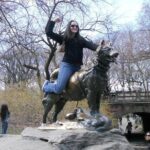
Then comes the Balto statue, honoring the husky famous for bringing lifesaving medicine through blinding blizzards and extreme cold. The audio also notes something extra: the dog was actually present at the unveiling.
If you’re the kind of person who likes stories behind statues, this is a satisfying moment that turns a quick bronze figure into a real tale.
Other walking tours we've reviewed in Central Park & NYC




The Mall and bandshell section: statues, speeches, and a calmer pace
Stop 5: The Mall and Literary Walk
This is one of Central Park’s most picturesque walking stretches. You’ll learn what the Mall is and why statues of figures ended up there, including both Shakespeare and Christopher Columbus.
What I like about this section is that it slows you down just enough to look around. Instead of rushing landmark to landmark, you get a path that’s built for strolling.
Stop 6: Naumburg Bandshell
The Naumburg Bandshell was built in 1923 and has hosted notable speakers. The audio calls out Martin Luther King, Jr. and Fidel Castro, and it also notes that it’s still in use for events like free classical and jazz concerts.
This stop is short, but it adds weight to what can otherwise feel like a pretty park moment. You’re reminded this place has held public voices, not just tourists with cameras.
Bethesda Terrace and Fountain: the park’s most memorable photo moment
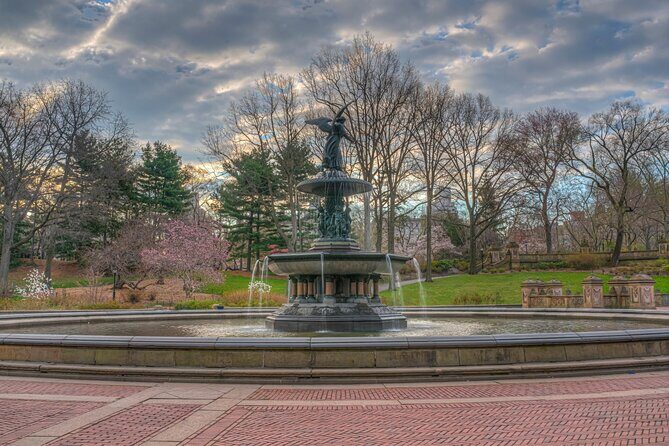
Stop 7: Bethesda Terrace
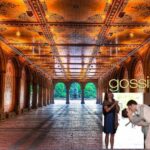
The narration focuses on the Italian-style Bethesda Terrace as a key heart of Central Park. It’s described as having both an upper and a lower section, which is part of why the views feel so grand.
If you like architecture, this is where you’ll pause without needing a reason. Even if you keep moving, take a minute to look back and down the way you came.
Stop 8: Bethesda Fountain
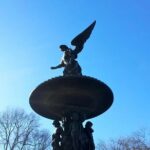
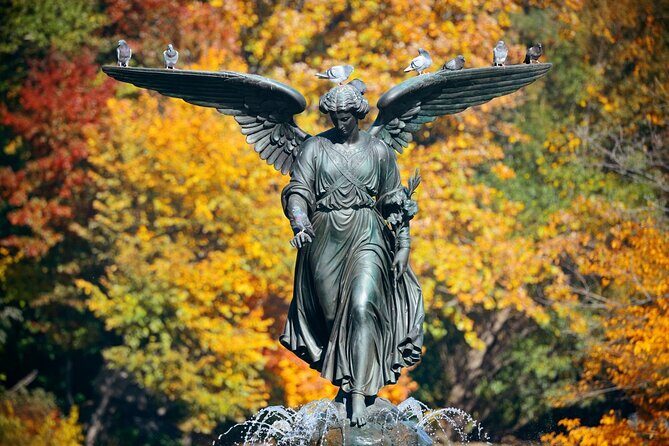
Next is Bethesda Fountain, which the audio describes as 26 feet tall and nearly 100 feet across. It’s topped by the Angel of the Waters, noted as the only statue included in the original Central Park design.
The story also points to Central Park’s cinematic connections, giving you a “wait, I’ve seen that” feeling if you recognize the look from movies. This stop is a great place to slow down, since the fountain is visible from lots of angles.
From the Boathouse to Andersen and Alice: stories that turn sights into characters
Stop 9: Central Park Boathouse
This is the Loeb Boathouse area, which the narration describes as both dining and a working boathouse. It also calls out that the location appears in scenes from When Harry Met Sally and Manchurian Candidate.
Even if you don’t go inside a restaurant, this is worth it for the water setting and the sense that Central Park is also a film location. It makes the park feel bigger than just a city park.
Stop 10: Hans Christian Andersen Monument
Then you’ll find the Hans Christian Andersen monument connected to The Little Mermaid and The Ugly Duckling. The audio also hints you might see model sailboats on the water when weather allows.
This stop is a nice bridge between the “storybook” style of Central Park and the more serious monuments you’ll hit later. It’s also a good photo spot, since statues work well when you can see them against greenery and water.
Stop 11: Alice in Wonderland Statue
The Alice in Wonderland stop features Alice, the Mad Hatter, and the White Rabbit. The narration notes a detail that makes this statue feel extra interactive: it was designed to be climbed on, and the bronze has become shiny from use.
If you’re visiting with kids, this is an obvious win. If you’re visiting solo, it still has charm—you’ll likely feel like you’re in a storybook even while standing in the middle of Manhattan.
Stop 12: The Metropolitan Museum of Art
The tour finishes this stretch at the Met, describing it as a museum with 5,000 years of art from around the world. The examples include European artists like Monet and ancient Egyptian artifacts.
Admission tickets aren’t included. But even outside the museum, the stop helps you understand why this area sits where it does and why Central Park is so linked to culture and institutions.
The big monuments: an obelisk, Hamilton, and the Kennedy reservoir pause
Stop 13: The Obelisk
Central Park has an Egyptian-scale surprise: a huge obelisk moved here in 1881. The audio calls it not a replica and estimates it at around 3,500 years old, originally commissioned by a pharaoh.
This stop is powerful because it’s unusual for a city park. You’re standing in New York, but the story pulls you toward ancient history without needing a museum ticket.
Stop 14: Alexander Hamilton Monument
Next is the Alexander Hamilton monument. The narration points out Hamilton’s Broadway fame, but also emphasizes the monument was there well before the stage version.
It also mentions Hamilton as one of the Founding Fathers and highlights his role as George Washington’s right-hand man during the American Revolution. It’s a quick lesson that makes the statue feel like part of a larger American story.
Stop 15: Jacqueline Kennedy Onassis Reservoir
Now you’ll come to the Jacqueline Kennedy Onassis Reservoir, described as holding about a billion gallons of water. The audio says it was once intended to supply the city with clean water and today functions as a beautiful centerpiece with skyline views.
This is an excellent “catch your breath” moment. You’ll see more of the city around you here than earlier in the walk.
Pinetum, Great Lawn, and free outdoor theater: Central Park at full personality
Stop 16: Arthur Ross Pinetum
The Arthur Ross Pinetum is designed to add greenery during Central Park winters. If you’re visiting after most leaves fall, this stop can feel like a relief—green when everything else turns brown.
It’s a smart design idea, and the audio explains it clearly enough that you’ll understand the purpose, not just the scenery.
Stop 17: The Great Lawn
Then comes The Great Lawn, described as a 55-acre space that once hosted huge concerts, including artists like Elton John. The narration also notes how crowds and activity affected the lawn over time, then frames how it’s back to being an ideal picnic spot today.
Even if you don’t picnic, pause here. It’s open, it gives your body a reset, and it’s one of the easiest places to feel how big Central Park really is.
Stop 18: Delacorte Theater
At Delacorte Theater, the audio connects you to the Public Theater and notes that it hosts regular performances like Shakespeare. The standout detail is that the productions are free, with visitors needing to stand in line to get in.
This stop is a reminder that Central Park is more than views. It’s a place where you can actually sit down and watch something for free.
Belvedere Castle and the Shakespeare Garden: views plus themed plants
Stop 19: Belvedere Castle
Next is Belvedere Castle, known for views over the park and surrounding city. The audio also describes a fairytale whimsy that makes it fun to linger near.
If you like viewpoints, this is one you’ll remember. It’s also a good moment to check the skyline and figure out where you are in the day.
Stop 20: Shakespeare Garden
Then you’ll reach Shakespeare Garden, where the plants are tied to William Shakespeare’s works. The audio says the goal was to recreate the spirit of the English countryside connected to the Bard.
This stop is short but thoughtful. It turns the garden into a living script, so you’re not just looking at flowers—you’re looking for references.
Strawberry Fields and Sheep Meadow: a pause that feels like breathing
Stop 21: Strawberry Fields
Strawberry Fields honors John Lennon. The narration includes a key story detail: Yoko Ono didn’t want another statue in Central Park, so the sculptor created a striking mosaic instead.
This stop works well if you like music history and public memorials. It also helps break the walk up emotionally, not just physically.
Stop 22: Sheep Meadow
Finally in this stretch, you’ll find Sheep Meadow, described as embodying Central Park’s original idea: a place to relax away from city noise. It’s the kind of open green space that makes you understand why people come back again and again.
If you want a real rest stop, this is it. Bring a snack if you can, or at least take a sit-down minute.
Umpire Rock to Columbus Circle: the last mile of stories
Stop 23: Umpire Rock
Umpire Rock is described as over 500 million years old, one of the oldest things in Central Park. The audio says workers couldn’t remove it during clearing, so it remains as a landmark.
It’s an easy stop to overlook if you’re tired, but it’s also a surprising reminder that the park holds geologic time, not only human stories.
Stop 24: Columbus Circle
Your tour ends at Columbus Circle, at 8th and 59th. The audio frames it as the boundary of a vibrant neighborhood you can explore next.
This is a clean finish because it drops you right where it’s easy to orient yourself for the rest of your New York day.
What to do if audio triggers miss due to detours
This tour depends on GPS and your position along the walking routes. If Central Park has construction or you get rerouted, you might find that some triggers don’t activate the way they should.
You can fix that by slowing down, checking your position, and continuing along the main route when possible. The tour is still flexible—if you miss one story, you haven’t ruined the day. You just get a slightly shorter soundtrack.
Also, if you’re choosing wheels like electric scooters, keep expectations realistic. If your ride can’t access the same walking paths, you may miss stops that trigger near foot-friendly routes.
Who should book this Central Park audio tour
I think this is a strong fit if you want three things at the same time: flexibility, storytelling, and a walking route that covers a lot without decision fatigue.
It’s especially good if you:
- Like learning while you walk, but don’t want a rigid schedule
- Want offline help in a place where you’d rather not stare at your screen
- Plan to spend a full morning or afternoon in Central Park anyway
You might want to skip (or at least plan differently) if you don’t walk long distances, or if your mobility setup can’t follow the park’s pedestrian paths. In that case, you may not reach every stop in time for the audio cues.
Should you book this Central Park self-guided audio walk?
Yes, if you’re heading to Central Park for the first time or you want a smarter second visit. For $14.99, you’re paying for a walk-length guide effect, with offline audio and GPS cues that keep you moving through the park’s most famous stories.
Book it if you like the idea of hearing why places matter while you’re already out exploring. Skip it if you’re expecting a vehicle-friendly route or if you only want a short sampler walk. This tour is at its best when you’re ready to take the long, scenic stroll.
FAQ
Is this tour self-guided?
Yes. There’s no one meeting you at the start. You’ll download the app, enter your password, go to the starting point, and the audio begins as you reach the first story location.
How long is the Central Park walk?
It’s listed as about 1 to 2 hours, and the route is over 4 miles long.
Does it work offline?
Yes. The app includes offline maps and is designed to work without cellular or Wi‑Fi after you download it.
Do I need a ticket for the zoo or the museum stops?
No. Admission tickets are not included for the zoo, the Met, the boathouse, and a few other stops listed as not included. The tour itself is audio-based, and viewing is mostly free unless you choose to enter an attraction.
What language is the audio in?
The tour is offered in English.
Where does the tour start and end?
Start: Doris C Freedman Place, New York, NY.
End: Columbus Circle, 848 Columbus Cir, New York, NY 10019.
How do I start the audio on-site?
Open the Action audio tour guide app once you’re onsite, launch the correct tour version if needed, enter the password, and then follow the location-based story triggers.
Do I need headphones?
Headphones/earbuds are recommended for the best experience.
Can I use it on future trips?
It’s described as new, lifetime access with no expiry, and you can use it anytime on any trip as many times as you want.
What if I have trouble with audio triggers?
If you face audio issues, contact support. Also, for the best experience, follow the tour route at a reasonable walking pace so you stay close enough for each GPS trigger.
Can I cancel for a refund?
Free cancellation is available. You can cancel up to 24 hours in advance for a full refund; if you cancel less than 24 hours before the start time, the amount paid is not refunded.