REVIEW · NEW YORK CITY
New York Central Park Guided Pedicab Tour
Book on Viator →Operated by Central Park Attractions · Bookable on Viator
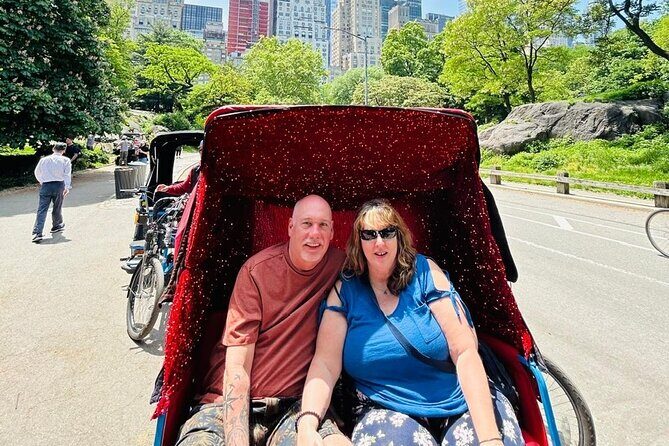
Pedicabs make Central Park feel surprisingly easy. You get an eco-friendly ride plus a guided loop that hits major sights without the leg-burn you’d get doing it solo. It’s a private experience in a small pedicab (up to three adults), with multiple departures so you can actually match it to your day.
I especially like how the best guides turn famous spots into something you can picture instantly. Guides such as Barry, Columbus, Ibrahim, Schade, and Sched are mentioned for using short video or movie-clip references, and for helping with photos at the exact places you want.
One drawback to plan for: you’re moving from stop to stop, so this is not a slow, “linger anywhere” stroll. Think photo breaks and short look-arounds more than deep wandering.
In This Review
- Key highlights worth your time
- Pedicabs and Central Park: how this ride saves your energy
- Columbus Circle start: the park’s northwestern entrance and a big landmark lesson
- Carousel, Chess & Checkers, and The Dairy: classic Central Park without the busy stress
- Umpire Rock to Gapstow Bridge: small stops, big viewpoints
- Zoo, Balto, and SummerStage: wildlife and culture inside the same hour
- Bethesda Fountain to Bow Bridge: when Central Park turns into movie-like scenery
- Strawberry Fields to The Dakota: pop culture and power apartments on Park West
- Pinebank Arch and the Upper East Side: ending with graceful views and Museum Mile energy
- Comfort, timing, and who should take this pedicab loop
- Price and value: is $44 per person a smart buy?
- Should you book this Central Park guided pedicab tour?
- FAQ
- FAQ
- How long is the New York Central Park Guided Pedicab Tour?
- What does the tour cost?
- Where is the meeting point?
- Is the tour private?
- Is the tour offered in English?
- Do the stops inside Central Park require paid admission?
- Is there free cancellation?
Key highlights worth your time
- Small-group, private pedicab setup (up to three adults per ride)
- Low-effort sightseeing across a big park, with lots of landmark variety
- Movie-clip style references that help you spot where famous scenes were filmed
- Real photo guidance, including where to stop and when to grab the shot
- Comfort help in cold weather, with blankets mentioned in multiple experiences
- Free admission at every listed stop, so your money goes to the guiding, not ticket fees
Pedicabs and Central Park: how this ride saves your energy
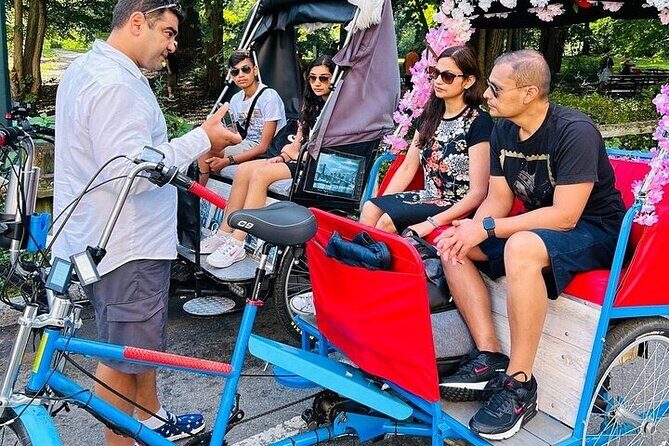
Central Park is huge. Even if you’re in great shape, walking it “properly” can eat a full day. This tour keeps you moving while still slowing down at the places that matter most—so you get the big Central Park hits without turning your vacation into a footrace.
The pedicab part is also the point. It’s an outdoor, human-powered way to travel through the park’s bends and viewpoints. Your driver can pause when a scene is photogenic, and you can hop on and off when it’s time to look closer. Multiple tour lengths are offered (1 hour, 1.5 hours, and an extended 2 hours), which is handy if you only have a slice of time between museums, dinner, or another tour.
One more practical note: this is booked as a private activity for your group. That usually means less waiting around and more control over how the ride feels—especially when you’re traveling as a couple, with family, or with a small group of friends.
Other pedicab tours we've reviewed in Central Park & NYC


Columbus Circle start: the park’s northwestern entrance and a big landmark lesson
You begin at 1794 Broadway, New York, NY 10019, then roll into the park area at Columbus Circle. This is where the famous Columbus statue dominates the view: a colossal figure on a column, with three boats—Niña, Pinta, and Santa María—and commemorative inscriptions around the base.
Why this matters: it gives you context before you start spotting the park’s design tricks. Central Park doesn’t feel random. The paths, the bridges, the plazas, and the sightlines were planned to create moments—like a series of scenes in a film. Starting at Columbus Circle is like getting the opening credits.
If you’re sensitive to motion, you’ll probably appreciate that the first stop helps you orient quickly. You’re still getting sightseeing while the tour “sets the story” for what comes next.
Carousel, Chess & Checkers, and The Dairy: classic Central Park without the busy stress
Early in the loop you’ll hit Central Park Carousel, first launched in 1871. It’s one of those old-school New York pleasures. Even if you’re not riding it, seeing it in context inside Central Park makes the park feel timeless—like it has always belonged to families.
Next is the Chess & Checkers House Visitor Center. The historic octagonal brick building sits amid 24 game tables shaded by a wooden trellis. This stop is great if you like “people-watching” moments. It’s also a reminder that Central Park is not only for views—it’s for play.
Then comes The Dairy, positioned mid-park at 65th Street. It functions as a gift shop and a convenient pit stop. The special angle here is that purchases support the Central Park Conservancy, so you’re not just buying a souvenir—you’re helping care for the park itself.
Quick reality check: the carousel and the game tables are free to enjoy, but if it’s busy you might have less space to linger. Still, the pedicab format helps because you’re not forced to navigate the crowds on foot the whole time.
Umpire Rock to Gapstow Bridge: small stops, big viewpoints
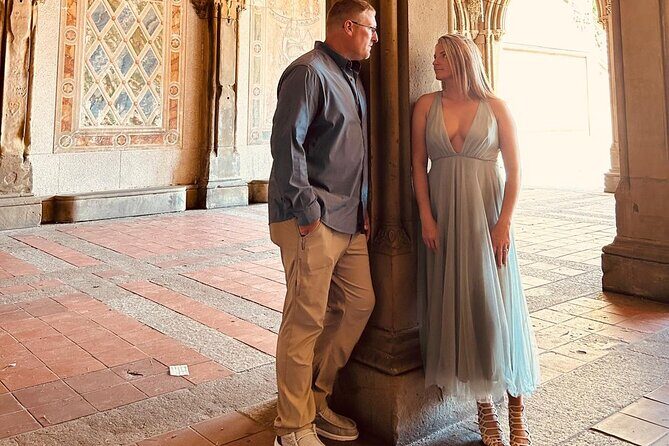
In the southwest corner you’ll stop at Umpire Rock, named for its connection to Central Park’s earliest playground area. Even if you don’t know that background yet, the park’s layout becomes clearer once you’ve seen this kind of “action-space” feature.
The tour continues toward the Plaza, the historic area tied to old-school New York prestige. It’s also widely known for being used in the 1990s movie Home Alone. If you like snapping photos, this area gives you that classic “street-to-park” vibe.
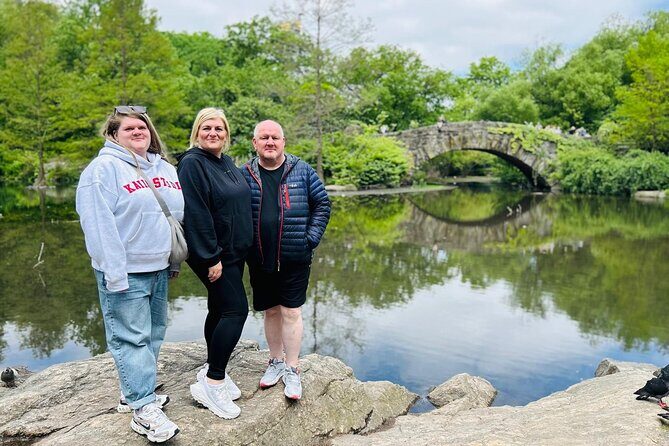
After that, you’ll reach Gapstow Bridge, which crosses over the narrow neck of the pond. It’s a popular viewpoint, and the stop time is short but focused—ideal if your goal is photos and quick perspective rather than extended sightseeing.
These stops work because they’re visually distinct. You go from a rock-and-play history feel to an architectural and film-famous plaza moment, then straight into bridge-and-water scenery. That variety keeps the ride from feeling like a checklist.
Zoo, Balto, and SummerStage: wildlife and culture inside the same hour
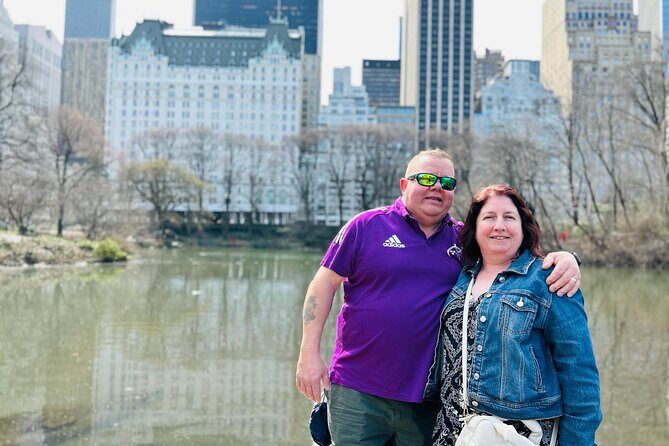
Central Park’s zoo is one of the park’s most surprising attractions. The Central Park Zoo area includes animals from tropical, temperate, and polar regions. One standout mentioned is the sea lion pool, which you can see from outside the zoo courtyard. Other exhibits include snow leopards, grizzly bears, and penguins.
You may not spend long inside the zoo itself during a 1.5-hour-style loop, but even a brief look at the setting helps you understand why the zoo belongs so naturally inside Central Park.
Then you’ll stop at the Balto statue, one of the park’s most beloved monuments. Balto’s story is tied to an emergency: in January 1925, diphtheria threatened the town of Nome, Alaska, and a chain of dog-sled teams helped deliver supplies after weather blocked a plane route. It’s a small moment of emotion inside a park that otherwise feels playful.
Finally, SummerStage shows the park as an active arts venue. It’s the outdoor concert and performance series hosted on Rumsey Playfield. Even if there’s no event happening when you go, seeing where performances take place makes the park feel lived-in, not just scenic.
Other guided tours in New York City




Bethesda Fountain to Bow Bridge: when Central Park turns into movie-like scenery

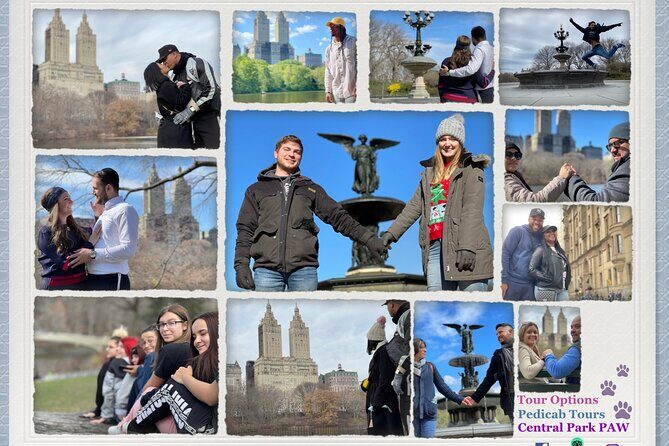
If you want the “wow” portion of Central Park, you’ll find it around Bethesda Fountain. It’s a multi-level plaza with an arcade and fountain area. People go for the people-watching and the architecture, but the centerpiece is the Bethesda Fountain, also known as the Angel of the Waters.
From there, you’ll glide toward The Mall and Literary Walk. The Mall is a long, straight path lined with American elms, and the southern section is called Literary Walk because of statues added in the 19th century. This is one of those scenes that instantly feels designed. Even from a distance, you can sense how the park creators wanted long views and strong lines.
Next is Cherry Hill, known for blooming cherry trees in spring and for the sloping lawn with lake views. It’s a great place to pause for a breath if you’re tired from earlier walking elsewhere in the city. If you’re there in blooming season, it’s also one of the prettiest “cover photos” you’ll get in the park.
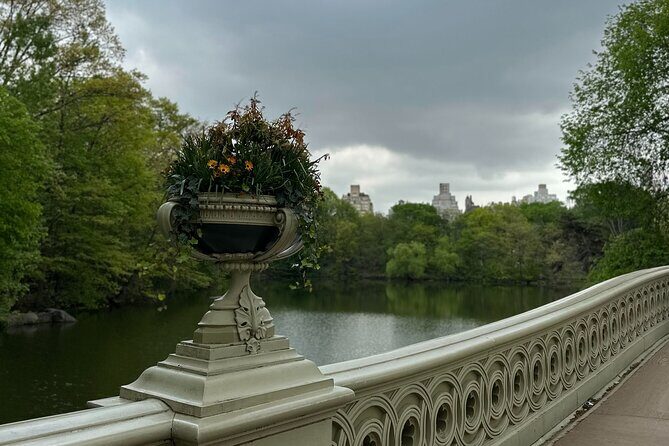
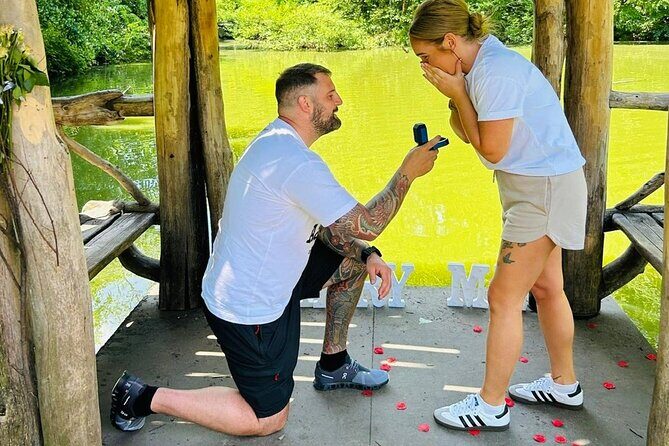
Then comes Bow Bridge, named for its graceful curve. It’s a major photography spot and also associated with romance and proposals. Even if you’re not there for a proposal, Bow Bridge is one of those places that makes your phone camera feel smarter.
These stops together do something clever: they take you from fountain grandeur to straight-path elegance to cherry-tree serenity to lake-and-bridge icon status.
Strawberry Fields to The Dakota: pop culture and power apartments on Park West
A key stop is Strawberry Fields, the memorial to John Lennon and peace activist John Lennon (1940–1980). It includes the Imagine mosaic, and the memorial name links directly to Lennon’s song Strawberry Fields Forever.
This is a meaningful stop if you like music history, but it also works visually—because the area gives you a different tone than the rest of the park’s greenery. It feels reflective. Quiet. People often approach it like a shrine.
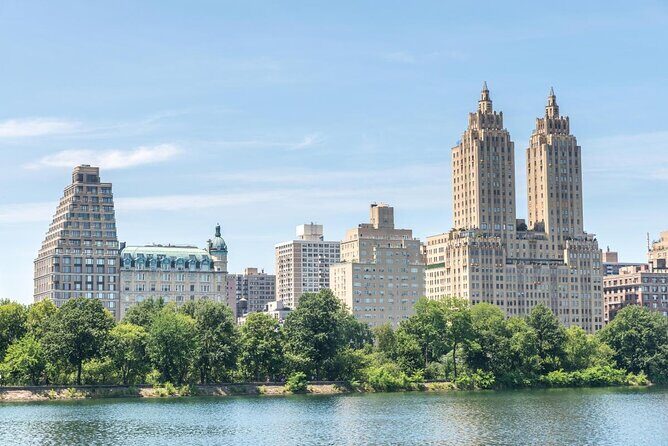
After that, you’ll see The Dakota on Central Park West between 72nd and 73rd streets. It’s described as a square plan building built around an H-shaped courtyard, with apartments accessed through that central layout. It’s tied to the idea of “historical prestige” from a 1996 New York magazine article, and it has the vibe of a Park-famous address even from the road.
Then you’ll pass Tavern on the Green, a restaurant in the historic Sheepfold building, with a long-standing food-history reputation since the 1930s. It reopened after renovation in 2014, which means the space now carries both old structure and updated variety.
This stretch matters because it shows that Central Park isn’t “away from the city.” It’s woven into it. You’re getting park scenes plus real Manhattan power, fame, and culture next to the trees.
Pinebank Arch and the Upper East Side: ending with graceful views and Museum Mile energy
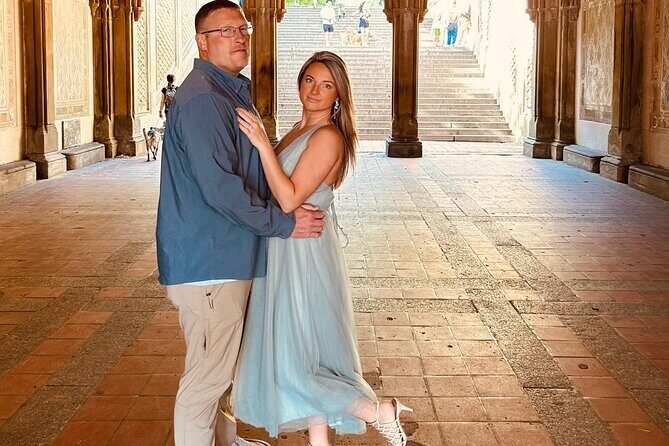
Toward the end, you’ll reach Pinebank Arch, a cast-iron bridge spanning the bridle path. It’s known for its lacy ironwork and the way it seems to emerge from rock outcrops. Photo people love it, and it’s also a calm “pause point” where you can take in surrounding greenery and rock textures.
If your route includes the Upper East Side, you’ll also see how the neighborhood frames Central Park. The Upper East Side is described as residential, with designer shopping on Madison Avenue and Museum Mile along 5th Avenue, near major institutions like the Metropolitan Museum of Art, the Guggenheim, and El Museo del Barrio. Even if you don’t go inside any museums that day, it helps to understand why people treat this park edge like part of their cultural itinerary.
Comfort, timing, and who should take this pedicab loop
This tour is designed around efficient movement. In plain terms, you’ll spend part of the time riding and part of the time looking at stops. That’s not a flaw; it’s the product.
If you’re visiting in summer, the pedicab format can be a lifesaver. You’re not stuck walking in full sun the whole time. In winter or chilly weather, the ride also comes with practical comfort details from guides—blankets were specifically mentioned as part of what made cold days manageable. If you tend to get cold, I’d still dress in layers, but it’s reassuring to know comfort has shown up as an actual feature in real rides.
Who this suits best:
- Couples who want a high-hit tour without wearing blisters into your plans
- Families with kids who want to see the park’s best-known features without constant route-finding
- First-timers who want story and stops, not just a map and guesswork
- Anyone who wants photo opportunities with guidance, not random wandering
Who might want a different option:
- If you love long quiet walks and want to picnic for an hour at one spot, a stop-and-go format may feel too structured.
Price and value: is $44 per person a smart buy?
At $44 per person for about 1 hour 30 minutes (approx.), you’re paying mainly for the guide and the transport through a large park. The attractions listed on the route are described as free admission, which means your cost is not inflated by ticket fees at each stop.
What makes it feel like value is the combination:
- You avoid long walking across Central Park’s big distances
- You get context at major landmarks like Bethesda Fountain, Bow Bridge, and Strawberry Fields
- You gain help with photos and pacing, rather than trying to time everything yourself
The small-group setup matters too. When your pedicab holds up to three adults comfortably, you’re not getting packed in like a bus tour. That makes the ride feel more like an guided experience at a human scale.
Should you book this Central Park guided pedicab tour?
Yes—if your priority is seeing the best of Central Park without turning the day into nonstop walking. I think it’s a smart choice for first-timers and for anyone who wants photos, stories, and clear landmark sequencing, all while conserving energy for the rest of New York.
Book it especially if you’ll be traveling with limited time. The multiple departure options help you plug it into a busy schedule, and the tour length choices (1 hour, 1.5 hours, or up to 2 hours) let you match your day.
Skip it if your dream Central Park day is slow, long strolling with lots of unscheduled detours. This one is about efficiency and iconic stops, not drifting.
FAQ
FAQ
How long is the New York Central Park Guided Pedicab Tour?
The duration is about 1 hour 30 minutes on average, with options for a 1-hour, 1.5-hour, or extended 2-hour tour.
What does the tour cost?
The price is $44.00 per person. GST and guides are included.
Where is the meeting point?
The tour starts at 1794 Broadway, New York, NY 10019, and ends back at the meeting point.
Is the tour private?
Yes. It’s listed as a private tour/activity, so only your group participates.
Is the tour offered in English?
Yes, it’s offered in English.
Do the stops inside Central Park require paid admission?
The information provided says admission is free for the listed stops.
Is there free cancellation?
Yes. You can cancel up to 24 hours in advance for a full refund, but changes made less than 24 hours before the start time are not accepted.