REVIEW · NEW YORK CITY
Guided Walking Tour Of Central Park
Book on Viator →Operated by Bike Rent NYC · Bookable on Viator
Central Park feels simpler with a guide. This 2-hour walk loops through the park’s best-known sights, with a Central Park map for you to keep and clear background on landmarks, history, and events. You’ll use a mobile ticket for check-in, then follow a tight route that fits busy NYC days.
I like that the group stays small—up to 20 people—so the pace feels manageable and questions are actually possible. One drawback to plan for: the quality can hinge on the guide, and there have been reports of last-minute changes when a guide can’t make it.
In This Review
- Key things to know before you go
- Price and time: $39 for a 2-hour Central Park hit list
- Where the tour starts on West 58th Street
- Stop 1: Central Park Mall (the movie-famous straightaway)
- Stop 2: The Balto statue, plus the story behind the dog
- Stop 3: Central Park SummerStage, where big performances happen
- Stop 4: Bethesda Fountain and the terrace that feels like a centerpiece
- Stop 5: Cherry Hill, Bow Bridge, and the real-life park characters
- Stop 6: Strawberry Fields and the John Lennon Memorial’s Imagine mosaic
- Stop 7: Tavern on the Green for a classic NYC photo moment
- What kind of guide experience you can expect
- Who this Central Park walk is best for
- Should you book this $39 Central Park walking tour?
- FAQ
- How long is the Guided Walking Tour Of Central Park?
- How much does the tour cost?
- What time does the tour start?
- Where does the tour meet?
- What language is the tour offered in?
- Do I need a paper ticket?
- Does the tour include a map?
- Are the stops free?
- How big is the group?
- Can I cancel for a refund?
Key things to know before you go
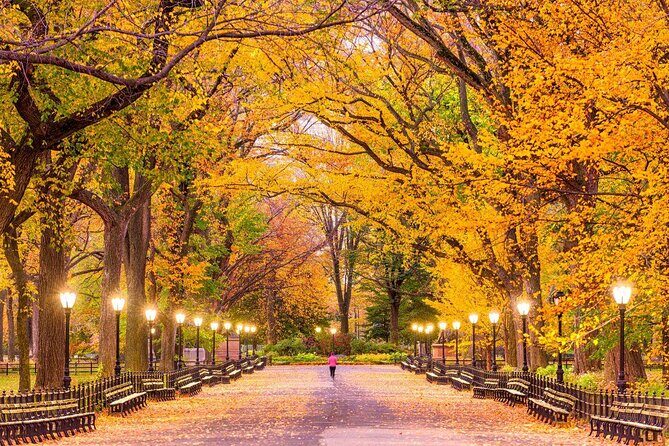
- You get a Central Park map to keep, so you can keep exploring after the walk ends
- Seven major stops get you the highlights in about two hours
- Bethesda Fountain and Strawberry Fields are built for that iconic NYC “wow” moment
- Small group size (max 20) helps the tour feel more personal than a big bus crowd
- Most stops are ticket-free, but the Tavern on the Green stop is not included
- You should be flexible if you care about getting detailed storytelling every minute
Price and time: $39 for a 2-hour Central Park hit list
At $39 per person for about 2 hours, this is priced like an orientation tour, not a full-day “every path in the park” project. That matters because Central Park can eat time fast. If you only have a morning or afternoon to get your bearings, you’ll trade a little independence for a route that’s designed to work.
The best value here is the combo of short guided stops and a map you can keep. You’re not just walking from Point A to Point B—you’re learning enough about what you’re seeing that your self-guided wandering afterward feels easier. You’ll also spend time at recognizable places, so it’s a smart choice for first-time visitors who don’t want to guess where the important landmarks are.
Other walking tours we've reviewed in Central Park & NYC



Where the tour starts on West 58th Street
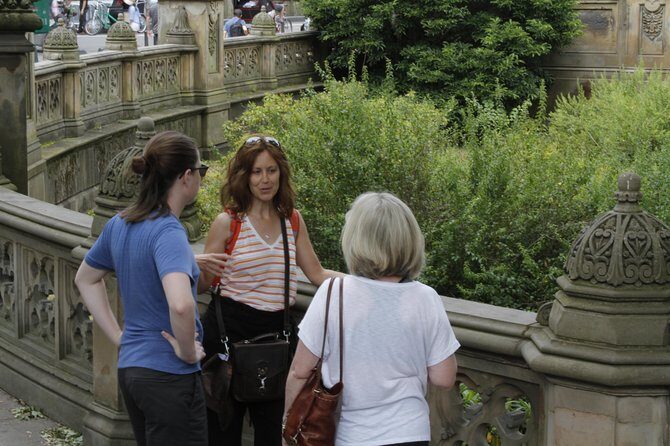
The meeting point is 203 W 58th St, New York, NY 10019, and the tour starts at 12:00 pm. It ends back at the meeting point, which is handy in NYC when you want to keep your afternoon plans from getting messy.
Because it’s near public transportation, you can usually build it into a larger sightseeing day without a lot of friction. The tour is offered in English, uses a mobile ticket, and allows service animals. Also, with a maximum of 20 travelers, it’s not the kind of experience where you’ll feel swallowed by a crowd.
Stop 1: Central Park Mall (the movie-famous straightaway)
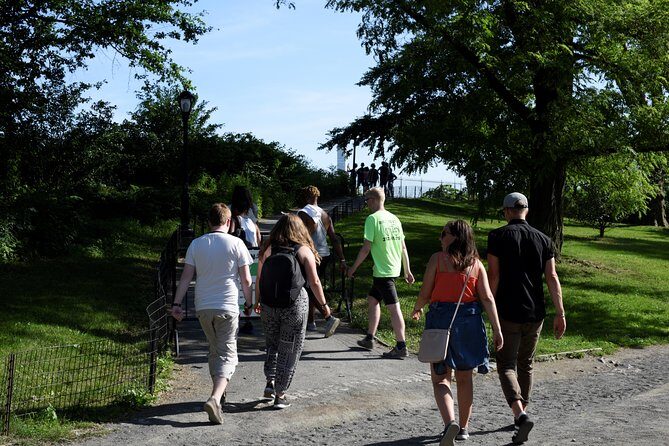
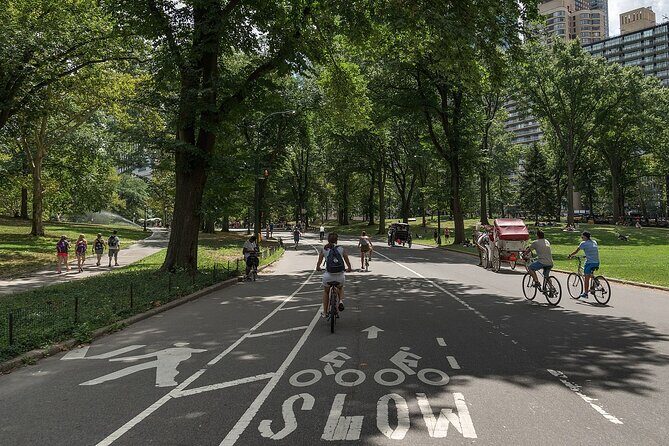
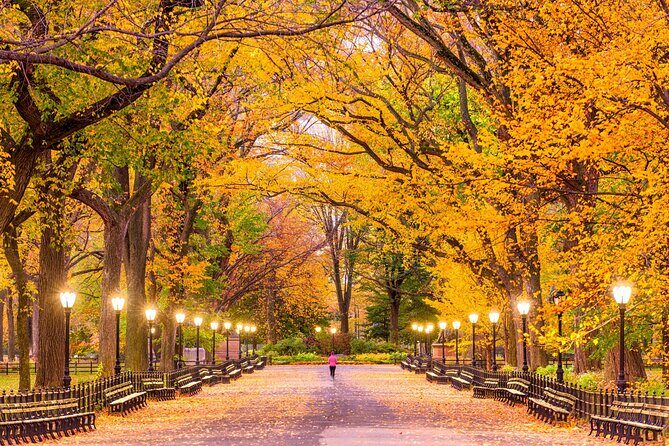
You kick off at the Central Park Mall, the famous straight run you’ve likely seen in movies and television. Even if you don’t know the name, you’ll probably recognize the vibe: wide, direct, and built for public energy.
What makes this stop useful is that it’s not just a “look at this” moment. The Mall is also where public events, performances, and activities can happen, so your guide can connect the park to the broader rhythm of New York life. If you like understanding how a city uses its public spaces, this is a good early anchor.
Plan for a slow settle-in here. You’ll be oriented to how the park “reads” as you walk—straight lines, sightlines, and how the park directs people through key areas.
Stop 2: The Balto statue, plus the story behind the dog
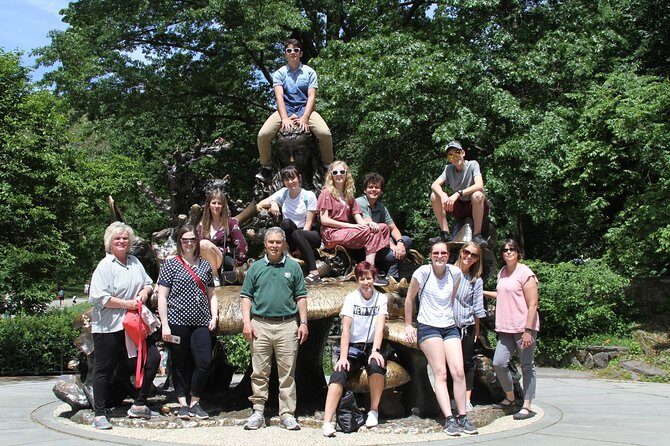
Next up is the Balto statue, a tribute to the brave dog referenced across films, magazines, television, and other media. This is the kind of stop that works even if you’re not a history person. It gives you a human (or dog) entry point, and once you know who or what the statue honors, it’s harder to walk past without noticing details.
The practical win: after this, you’ll start spotting smaller references and memorials around the park with more context, instead of treating everything as just scenery.
This stop is short, so don’t expect a long talk. Think of it as a quick story tap that sets you up to appreciate Central Park as a place full of meaning, not only views.
Stop 3: Central Park SummerStage, where big performances happen
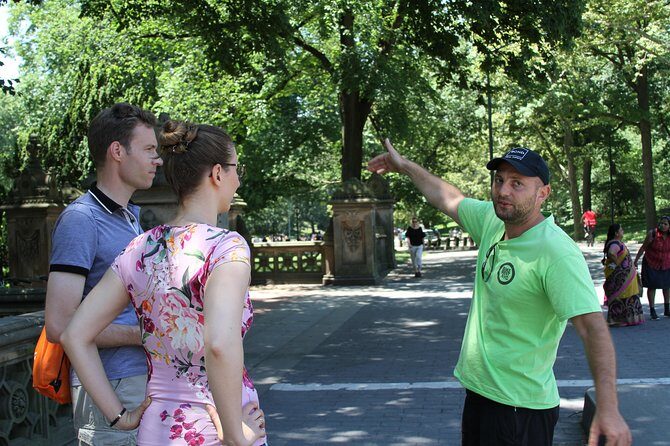
You then head to Central Park Summerstage, a well-known venue for shows where legendary performances have been held and where attendance records have been broken.
Even if you’re visiting outside performance season, this stop helps you understand something important: Central Park isn’t only a quiet getaway. It’s an events engine. You’ll likely start to imagine concerts, public gatherings, and how the park handles crowds without feeling like a stadium.
This is another short stop, but it’s strategically placed. After the Mall and Balto, you get a venue that connects the park to the entertainment side of NYC. If you’re the type who likes to know what’s happening in a place year-round, you’ll appreciate the way the tour keeps switching angles.
Other walking tours we've reviewed in Central Park & NYC





Stop 4: Bethesda Fountain and the terrace that feels like a centerpiece
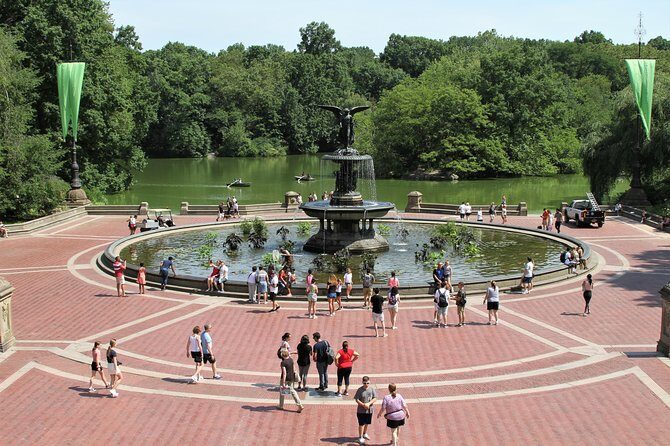
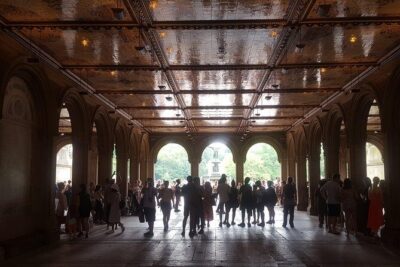
Now you hit one of the park’s most iconic moments: Bethesda Fountain and the terrace nearby. This fountain area is positioned very close to the geographical center of New York City, which is a fun fact to keep in your head as you’re looking around.
Why this stop is worth attention is simple. It’s visually strong, and it’s also a natural place to pause. The “terrace” aspect matters because it creates a small gathering zone where you can slow down, look up, and take in how the park’s layout funnels people toward the focal points.
If you want that classic Central Park photo, this is usually where you’ll want to stand to get the composition people associate with the park.
Stop 5: Cherry Hill, Bow Bridge, and the real-life park characters
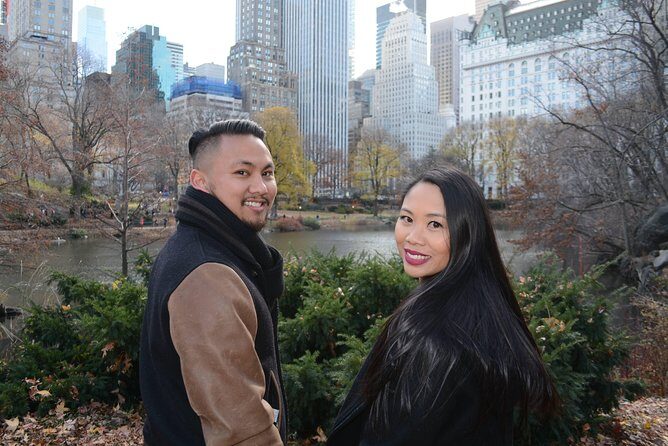
After Bethesda, you move to Cherry Hill, home to another fountain set within lush foliage. This stop is designed to give you a softer, more romantic contrast to the earlier straight-line feel.
Here’s what you’ll likely notice: Bow Bridge, plus the presence of horses and pedicab drivers taking a break. That detail is what makes this part feel grounded. Central Park isn’t staged only for visitors; it has working rhythms and familiar characters.
This stop also works well if you’re traveling with someone who likes “watching” even when they’re not actively sightseeing. The bridge and surroundings provide plenty to look at without you feeling rushed through a single point.
Stop 6: Strawberry Fields and the John Lennon Memorial’s Imagine mosaic
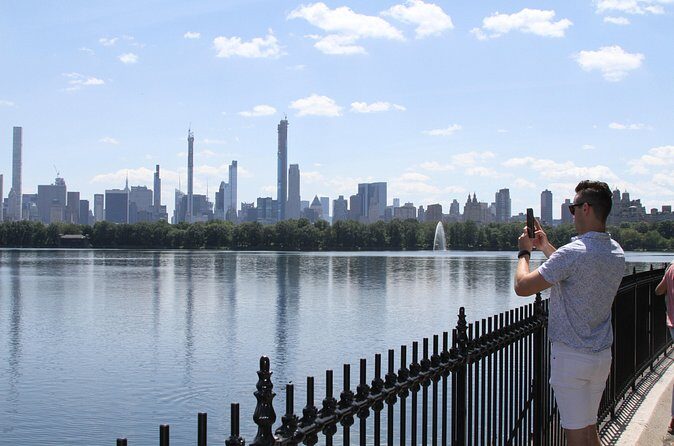
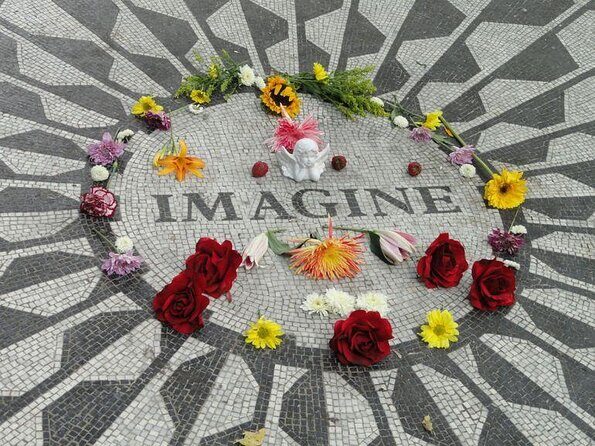
Next comes the emotional highlight for many people: Strawberry Fields and the John Lennon Memorial. The memorial is shaped around an IMAGINE mosaic, created in honor of John Lennon.
This spot gets extra meaning because it sits in a serene clearing located very close to the site of his death. The tour also points out that musicians often play and pay tribute here, so the atmosphere can feel reflective and alive at the same time.
If you’re standing here, do what the space asks for. Slow down. Let other people pass. Listen. Even when there’s no musician performing, you’ll likely feel the intent of the memorial—this isn’t just a statue or a photo background.
Stop 7: Tavern on the Green for a classic NYC photo moment
The final stop is Tavern on the Green, a long-running New York institution that’s been around for decades. You’re not going here for a full meal as part of the tour; this is more of a photo and landmarks finish.
It’s described as a premier food and beverage location and a great setting for pictures. The key practical detail: any admission ticket is not included, so don’t assume you’ll be able to sit down for a drink or browse without paying.
This last stop is useful because it gives you a clean ending. After the walking and the stories, you get a recognizable “I’m done” marker that’s easy to reference when you coordinate the rest of your day.
What kind of guide experience you can expect
One pattern that comes through strongly is that the better guides keep timing and make the tour feel like a guided walk rather than a casual stroll. Names that have shown up with strong notes include Aaron (praised for staying on schedule), Michael (taking people to parts some hadn’t seen before), Edward (friendly and easy to ask questions), and Chris (known for being entertaining and warm).
That doesn’t mean every guide will match the same style, so I’d go in with a realistic mindset: you’re paying for a short, structured walkthrough. If you want deep storytelling at every stop, you might be happiest booking when you know you’ll have time afterward to ask more questions—or simply do your own reading with the map in hand.
Who this Central Park walk is best for
This tour is a strong fit if:
- You’re seeing Central Park for the first time and want the “greatest hits” in a tight loop
- You have a busy schedule and need something that stays close to two hours
- You like getting just enough context so your independent walk afterward makes sense
- You want a small-group experience rather than a giant crowd
It may be less ideal if:
- You already know Central Park well and would rather spend the time on a longer self-guided route
- You’re expecting a full-on deep-history seminar. This is short and designed for quick orientation
- You can’t handle the possibility of last-minute schedule changes on the day
If you’re flexible and you’re using the map afterward, you’ll likely feel like you got your money’s worth.
Should you book this $39 Central Park walking tour?
I’d book it if you want a simple, high-yield way to see Central Park’s key sights—Mall, fountains, Bow Bridge, and Strawberry Fields—without spending the whole day figuring out where to start. The fact that you leave with a map is a big deal. It turns the tour into the launchpad for the rest of your park time.
Skip it (or consider another option) if you’re the type who needs long, uninterrupted explanations and you’re visiting for a second or third time. Also, if your schedule is super tight, build in a little cushion, because there have been instances of unexpected changes.
Bottom line: for a first-time or time-crunched visit, this is a smart Central Park primer—just aim for the best possible guide energy, and use that map to keep exploring after you finish.
FAQ
How long is the Guided Walking Tour Of Central Park?
It runs for about 2 hours (approximately).
How much does the tour cost?
The price is $39.00 per person.
What time does the tour start?
The listed start time is 12:00 pm.
Where does the tour meet?
You meet at 203 W 58th St, New York, NY 10019, USA.
What language is the tour offered in?
The tour is offered in English.
Do I need a paper ticket?
No. You’ll have a mobile ticket.
Does the tour include a map?
Yes. It includes a map of Central Park for you to keep.
Are the stops free?
Most stops are listed as free admission, but the Tavern on the Green stop says admission is not included.
How big is the group?
There is a maximum of 20 travelers.
Can I cancel for a refund?
Yes. You can cancel up to 24 hours in advance for a full refund.