REVIEW · NEW YORK CITY
Central Park Pedicab Tours – History and Movie Locations
Book on Viator →Operated by CENTRAL PARK TRAVEL ™ · Bookable on Viator
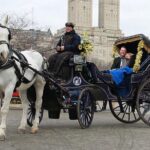
Central Park has film magic, powered by pedicabs. This private ride strings together major sights like Bethesda Fountain, Strawberry Fields, and the Carousel, with a guide who connects the dots to movie scenes and park design. I especially like the way you save your feet while still seeing a lot of ground, and I like having Ricky-style storytelling instead of wandering and guessing.
One thing to consider: this is a weather-based outdoor experience, so if it’s ugly out, you may end up rescheduling. Also, because you’re on a pedicab, you won’t get long, slow “walk-every-inch” time at every stop.
In This Review
- Key things I’d zero in on before you book
- Pedicab time in Central Park: fast, comfy, and built for sightseeing
- From Bethesda Fountain to Bethesda Terrace: the Central Park “wow” corridor
- Cherry Hill Fountain and the Lake edge: pretty, specific, and easy on the legs
- Carousel to chess tables: Central Park’s playful side with film cred
- Gapstow Bridge, the Pond, and Bow Bridge: the “stop for photos” trio
- The Mall (Literary Walk), Rumsey Playfield, and Conservatory Water: quieter Central Park stops
- Strawberry Fields, the Dakota, and Sheep Meadow: memorial + myth + Manhattan contrast
- The park’s architecture and statues: Balto, Falconer, Daniel Webster, and Pinebank Arch
- Wollman Rink to Belvedere Castle: views that change with the season
- Central Park Zoo and historic touches: small surprises, big context
- Alice in Wonderland statue and Cleopatra’s Needle: playful childhood meets ancient artifacts
- The Metropolitan Museum edge, the reservoir, and practical park navigation
- Price and value: $38.40 for a pedicab with admissions included
- Should you book Central Park Travel’s Central Park Pedicab Tour?
- FAQ
- How much does the Central Park Pedicab Tours experience cost?
- How long is the tour?
- Is the tour private?
- Where does the tour start and end?
- What language is the tour offered in?
- Are tickets and fees included?
- Does the tour require good weather?
- Is a mobile ticket provided?
- Are service animals allowed?
Key things I’d zero in on before you book
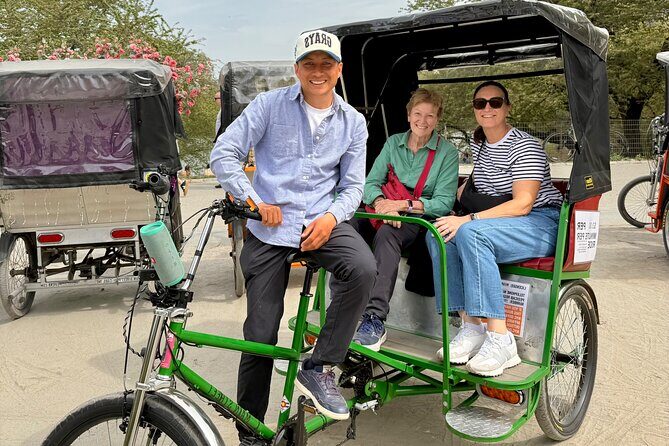
- Private group only: you’re not squeezed into a mixed crowd, which makes photo stops and questions easier.
- Movie-location spotting: you’ll hear exactly what shows up where, from Home Alone 2 to Sex and the City.
- Pedicab efficiency: you cover more park than you likely would on foot in 1–3 hours.
- Mix of classic and quirky: big icons like Bethesda and Bow Bridge plus offbeat stops like the Chess & Checkers House.
- History that’s practical: the stories explain why Central Park is shaped the way it is, not just who built it.
Pedicab time in Central Park: fast, comfy, and built for sightseeing
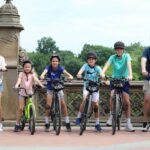
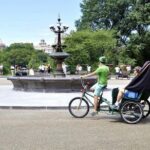
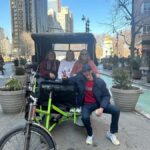
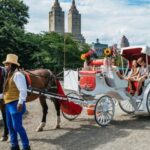
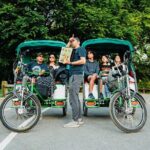
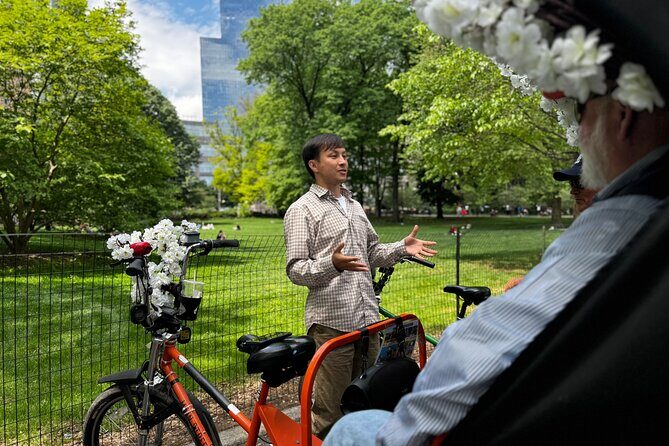
You meet at 1415 6th Ave and ride straight into the park from a place that’s simple to reach. The core idea is straightforward: someone cycles, you look, and your guide handles the timing and the “what am I looking at?” moments. The tour runs about 1 to 3 hours, so you’re getting a focused slice rather than a full-day commitment.
The pedicab format matters more than you might think. Central Park is huge, and even “easy” walking can turn into stop-and-go fatigue fast. On this tour, you keep your energy for the places you want to linger—photo angles, quick looks inside a landmark area, and short stops where the guide can do real storytelling.
You also get a mobile ticket, and the tour is in English. It’s listed as a private activity for your group only, which tends to make the whole experience smoother—less waiting for the slowest rider, and more room for your pace.
If you care about movie locations, this is the kind of tour that can feel like a scavenger hunt you can actually finish. The guide ties specific landmarks to specific films, so you’re not just seeing famous spots—you’re seeing the exact reasons they became famous.
Other pedicab tours we've reviewed in Central Park & NYC
From Bethesda Fountain to Bethesda Terrace: the Central Park “wow” corridor
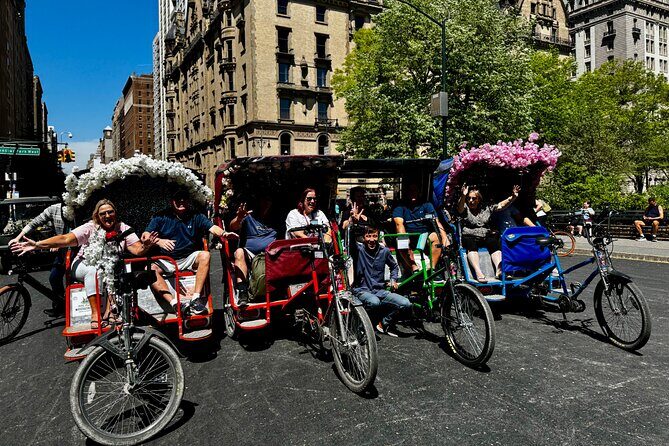
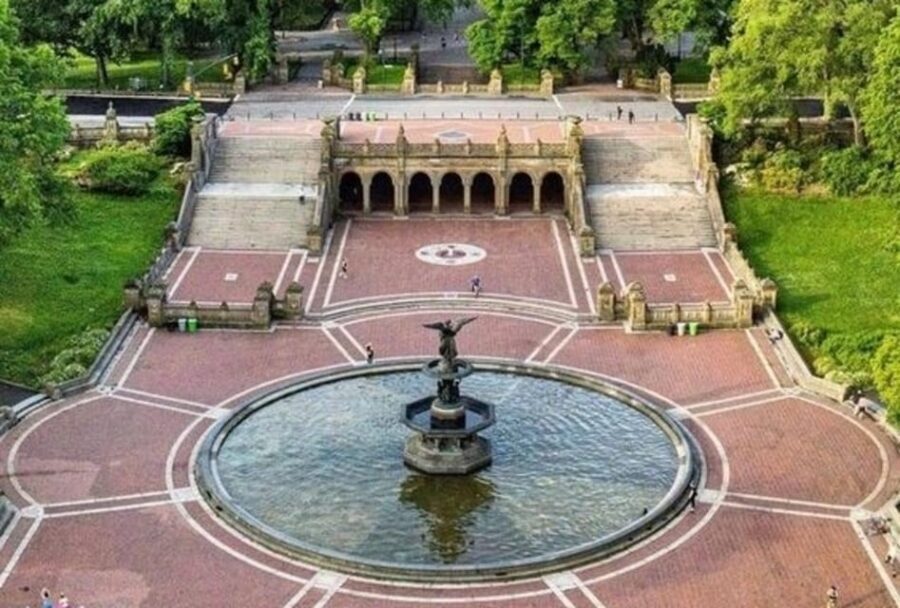
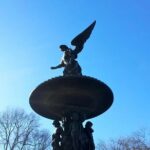
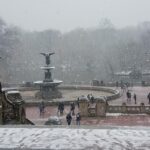
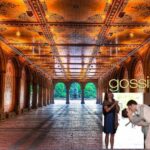
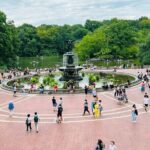
Bethesda Fountain is the kind of place you notice even before you hear its story. The centerpiece is The Angel of the Waters, designed by Emma Stebbins and unveiled in 1873, holding a strong symbol tied to the Gospel of John. The guide also points you toward why this spot keeps showing up on screen: it’s grand, readable from many angles, and it sits in that classic Central Park “this could be anywhere” scenery.
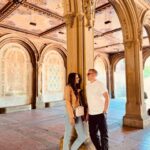
Then comes Bethesda Terrace, a two-level viewpoint where the details reward even short stops. One highlight is the arcade ceiling with Minton encaustic tiles—originally installed in the 1860s. The tiles were removed in the 1980s because restoration was too expensive at the time, and later a donation helped fund a long restoration effort costing about $7 million, completed with reinstallation in 2007.
Practical tip: If you want photos, Bethesda Terrace is one of the best uses of your camera time on the whole route. It has that layered architecture look—fountain below, terrace above, and the Lake area within sight. Even if you’re not a fountain person, the terrace details are a strong reason to stop.
One more value point: these are not random points on a map. They’re connected to Central Park’s design language—formal geometry here, then more natural paths elsewhere. That contrast is part of what makes Central Park feel like a planned work of art, not just a big green space.
Cherry Hill Fountain and the Lake edge: pretty, specific, and easy on the legs
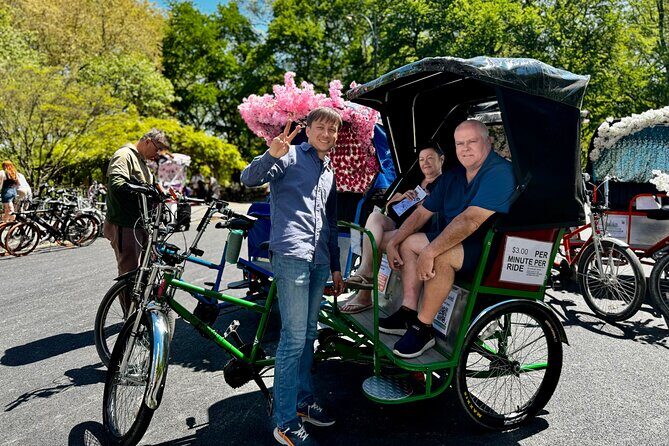
Just west of Bethesda Fountain, Cherry Hill Fountain adds a quieter, more delicate layer to the same lower-park area. It was built in the 1860s by Jacob Wrey Mould as a watering trough for horses—an elegant piece of function that fits the carriage-era history of Central Park. The design includes a granite dome and a sculpted bluestone basin with Minton tiles, plus eight frosted round glass lamps near the top.
If you like “small but right” landmarks, Cherry Hill is a nice change from the big-name crowd magnets. You’ll still get that classic Central Park stone-and-tile look, but in a less overwhelming pocket of space.
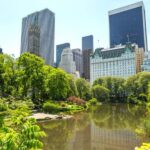
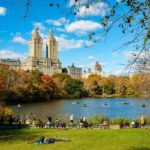
From there, you shift to The Lake—a 20-acre water body that connects key areas like the Ramble and the Bethesda Terrace zone. The guide can point out how the shoreline and paths create layered views, and you get a feeling for why this area is often treated like the park’s core.
You may also hear about boat life here through nearby rental access at Loeb Boathouse. If you end up taking a rowboat later (outside the pedicab time), the Lake is the reason it’s worth the detour. Even from shore, it’s one of the easiest places to slow down and let the park do its thing.
Carousel to chess tables: Central Park’s playful side with film cred
Central Park’s Carousel is the kind of stop that feels instantly fun, but it’s also packed with real history. The current version dates to 1951, and it’s the fourth carousel installed in the park. The ride features 57 intricately carved and painted wooden horses, and it’s tied to early 20th-century craftsmanship by the Stein and Goldstein company.
What I like about including this stop on a pedicab tour is that it breaks up the stone-and-views rhythm. You get movement, smiles, and a “we’re in New York” moment without needing a separate ticket plan.
Next up is the Chess & Checkers House, built in 1952, an octagonal brick structure designed for games with 24 outdoor tables. It’s one of the coolest ways to see Central Park as a living place where locals actually use the space.
It also has a notable movie tie-in: scenes from Searching for Bobby Fischer are associated with the chess action here. The guide’s explanation makes it easier to spot what you might otherwise miss—why the tables feel like part of the park’s social design, not an add-on.
If your group includes kids or just adults who enjoy quirks, this is where the tour tends to feel most memorable.
Gapstow Bridge, the Pond, and Bow Bridge: the “stop for photos” trio
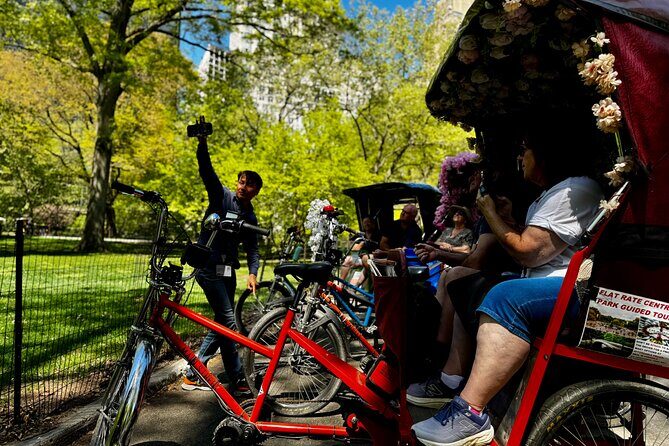
Central Park photographers can get a little intense. Luckily, this tour gives you the kind of set-up that works even if you’re not trying to shoot like a pro.
Gapstow Bridge is a classic: built initially in 1874, then rebuilt in 1896 with the stone version you see today. The guide notes the pond wildlife vibe too—turtles and ducks around the water area are common, and the Midtown skyline views make the bridge feel like a bridge between worlds: city and nature at the same time.
Then you shift to The Pond, a 3.8-acre lake area that has appeared in Home Alone 2: Lost in New York, including the famous pigeon-related scene. Even if you’re only a casual movie fan, this kind of stop helps the location stick in your brain.
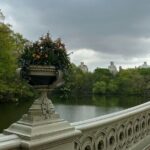
Finally, Bow Bridge is the romantic, cast-iron icon. Designed by Calvert Vaux and Jacob Wrey Mould and completed in 1862, it was built by Janes, Kirtland & Co. The tour’s timing usually gives you the chance to look, frame a photo, and soak in that slightly magical Central Park effect.
A practical note the guide can help with: Bow Bridge has been under restoration at different times, and the data here mentions a temporary closure for a renovation in November 2023. If you’re booking during a period of construction, you might want a day-of confirmation on what’s accessible.
Movie-wise, Bow Bridge is linked to a wide list of productions, including Manhattan, Spider-Man 3, and Night at the Museum. When the guide connects the scenes to the exact structure and sightlines, it turns the bridge into a story, not just a landmark.
Other movie & TV locations tours in Central Park & NYC
The Mall (Literary Walk), Rumsey Playfield, and Conservatory Water: quieter Central Park stops
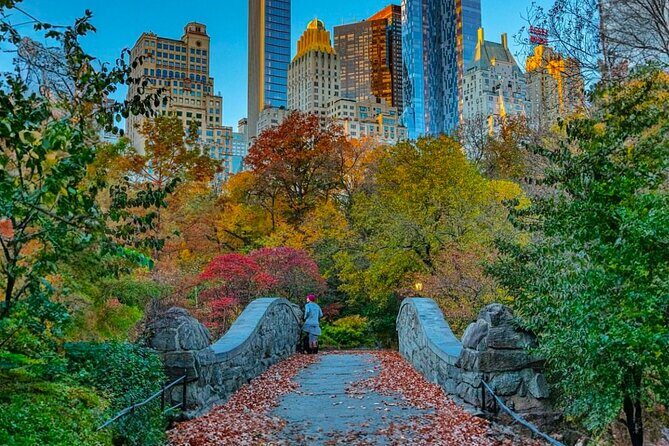
The Mall is a long, iconic promenade that looks natural, but it’s actually the one intentionally straight line inside Central Park’s winding layout. You get the American elm canopy effect, and the guide connects it to the Literary Walk nickname because of statues honoring writers.
It’s a smart stop for anyone who likes to understand how Central Park was designed for walking—planned views, planned pacing, and a sense of rhythm. It’s especially strong in fall when the leaves create that golden tunnel look (seasonal, of course).
Also near the Mall zone is Rumsey Playfield, tied to the SummerStage outdoor concert program. This stop isn’t just about concerts. It carries layers: an older restaurant structure associated with Central Park co-designer Calvert Vaux was later replaced, and the space evolved through different eras until it became the sports-and-performance area it is now. The name Rumsey connects to Mary Harriman Rumsey, and the guide can walk you through how the space keeps changing roles.
If your group enjoys story-rich, less crowded corners, Rumsey Playfield is a good pause.
Then there’s Conservatory Water, a place that feels calm even when Central Park isn’t. It’s known for model boat sailing traditions, and the pond area is also tied to literary statues such as Alice in Wonderland and Hans Christian Andersen. Movie fans can also connect this area to Stuart Little, where a model boat race scene is associated with the pond.
These stops are also good “breather” moments if you’ve been photoing nonstop. You get Central Park’s slower pace without losing the tour’s momentum.
Strawberry Fields, the Dakota, and Sheep Meadow: memorial + myth + Manhattan contrast
Strawberry Fields is a must for most people, even those who aren’t hardcore Beatles fans. It’s a 2.5-acre memorial created as a living tribute after John Lennon’s death, designed by Bruce Kelly. The Imagine mosaic sits at the center, a simple message that carries serious emotional weight.
What makes this stop work on a pedicab tour is that you can approach it with time to look, without needing to plan a long standalone walk. You can also pay respect at your own pace—this is one of those Central Park moments where the space asks you to slow down.
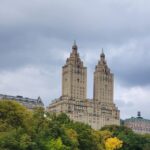
Then you’ll head toward the Dakota, completed in 1884 by architect Henry Janeway Hardenbergh. The building’s Renaissance Revival style and Gothic feel are part of why it’s such a strong film location. It’s especially tied to Rosemary’s Baby for the exterior’s mood.
If Strawberry Fields gives you the reflective side of Central Park, the Dakota reminds you that the park is embedded in celebrity, architecture, and city legend.
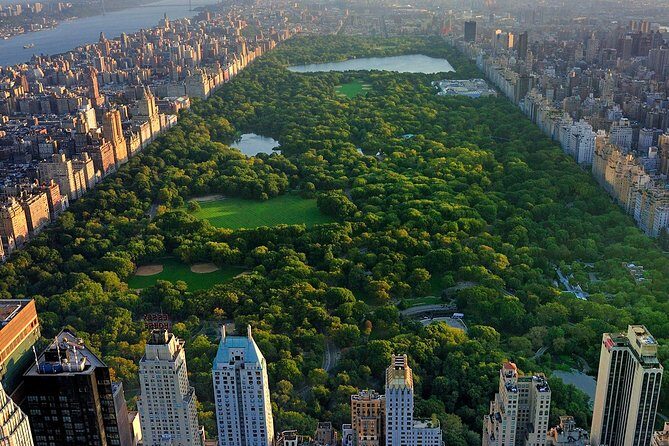
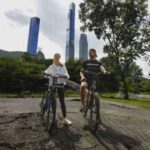
Finally, Sheep Meadow gives you the big open-space contrast. It’s a 15-acre lawn that used to be a grazing area for sheep. Now it’s for picnics, reading, lounging, and big-sky views with skyscrapers rising behind the grass.
Movie connections include Ghostbusters, Wall Street, and The Fisher King. This is one of the most useful stops for understanding Central Park’s “respite from the city” purpose. You feel it immediately when you look across the meadow and see the skyline frame the scene.
The park’s architecture and statues: Balto, Falconer, Daniel Webster, and Pinebank Arch
Central Park isn’t just rolling grass. It also contains public art and historic markers that add meaning to your route.
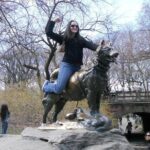
The Balto Statue is one of the most emotionally charged stops. It commemorates the sled dog who helped lead the final leg of the 1925 Serum Run to Nome to deliver diphtheria antitoxin. The statue was unveiled in 1925, just ten months after the mission, and it includes an inscription honoring the indomitable sled dogs who relayed antitoxin across rough ice and treacherous waters.
The Falconer statue is another classic. Donated by Irish-American businessman George Kemp in 1875, it was sculpted by George Blackall Simonds and shows a falconer releasing a falcon in flight. It’s the kind of stop that makes you look up and around, because the composition fits the surrounding park landscape.
If you want a more political, historic vibe, the Daniel Webster Monument is worth the pause. It honors a statesman who served nearly 40 years as a Representative, Senator, and Secretary of State. The monument was commissioned by Gordon W. Burnham and designed by sculptor Thomas Ball, unveiled in 1876.
For a quieter architecture moment, the Pinebank Arch is described as a cast-iron bridge that looks like it emerges naturally from rocky outcrops. If you like details—how structures blend into the terrain—that’s where this kind of stop can make your walk more interesting.
Wollman Rink to Belvedere Castle: views that change with the season
Wollman Rink is a huge deal in winter, and it’s also tied to Central Park’s identity in general. It opened in 1950 and is named for Kate Wollman, who donated $600,000. The guide can explain its role as a public skating space where both beginners and experienced skaters show up, and how the rink was renovated after decline in the 1980s.
If you’re there in the warmer months, you’ll still see why it’s iconic—this is a structure that symbolizes New York seasonal tradition.
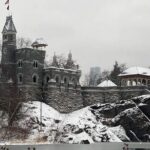
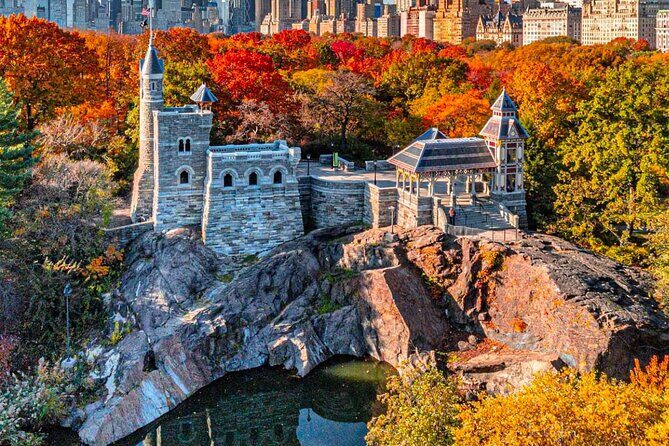
Then Belvedere Castle sits on Vista Rock and brings the fairytale-meets-gothic vibe. Designed by Calvert Vaux and Jacob Wrey Mould in 1867, it’s a decorative folly meant to look like it belongs in the park. Inside are exhibit rooms and an observation deck, and since 1919 it has served as Central Park’s official weather station with data tied to the National Weather Service.
Even on a short stop, Belvedere Castle can give you big-picture views of areas like Turtle Pond, the Great Lawn, and the Ramble. It’s a good “reset” stop when you’ve been taking in details and want one panoramic payoff.
Central Park Zoo and historic touches: small surprises, big context
The Central Park Zoo started in 1864 as an animal menagerie and became the city’s first official zoo in 1934 when the WPA built permanent enclosures. Later, in 1988, it shifted away from traditional cages toward more natural habitats designed to simulate animals’ environments.
This stop can be a great morale boost if your group includes families, animal lovers, or anyone who wants a break from statues and architecture. You’ll also get a sense of what modern zoo design tries to do: keep the viewing experience close to the animals’ natural behaviors.
You’ll also encounter historic park structures along the way, like the Dairy, built in 1871 as a Gothic Revival cottage designed by Calvert Vaux. It was originally a refreshment center where children could enjoy fresh milk and snacks—fresh milk was treated as a luxury in urban areas, so this was a real treat. The Dairy is also associated with filming, including The Fisher King.
And if your route includes it, The Central Park Boathouse is a major cinematic stop. The current boathouse was built in 1956 after a fire, and it offers year-round dining with heated outdoor seating overlooking the Lake. It’s tied to movies including Sex and the City and 27 Dresses.
Alice in Wonderland statue and Cleopatra’s Needle: playful childhood meets ancient artifacts
Not all versions of the route hit every stop, but the 2-hour version explicitly includes some bigger “wow” moments.
The Alice in Wonderland statue, donated in 1959 by George Delacorte, is interactive in a child-friendly way—Alice sits on a giant mushroom with characters like the Mad Hatter, Cheshire Cat, and White Rabbit. The guide’s framing helps you understand why it became such a popular family spot: it invites climbing and touching, so it’s not just a photo prop.
Then comes Cleopatra’s Needle, the oldest outdoor monument in New York City. It’s an obelisk carved in Egypt during the reign of Pharaoh Thutmose Ill, later moved to Alexandria, and eventually gifted to the United States. It was dedicated in Central Park in 1881 between the Great Lawn and the Metropolitan Museum of Art.
If you love history, this stop gives you a dramatic contrast: ancient Egypt in the middle of Manhattan. If you don’t, it still works because it’s tall, unmistakable, and easy to appreciate even in a quick glance.
The Metropolitan Museum edge, the reservoir, and practical park navigation
A clever part of the route is that it also gives you a sense of Central Park’s boundary with major city culture. The Metropolitan Museum of Art is described as a museum with a building design by Calvert Vaux that opened in 1880, with major expansions over time. Even if you don’t tour the museum inside, the stop helps you understand why Central Park is the “front yard” for the Met’s grand presence.
Next, you’ll see the Jacqueline Kennedy Onassis Reservoir, built between 1858 and 1862. The modern curvilinear reservoir design was meant to harmonize with the park, and it covers 106 acres and holds more than one billion gallons of water. That size scale is hard to fully grasp until you’re near it, so this stop can make Central Park’s infrastructure feel real, not abstract.
Finally, depending on your exact route time, there are additional smaller landmark pauses like Heckscher Playground, listed as the oldest and largest of Central Park’s 22 playgrounds (opened in 1926 and named for philanthropist August Heckscher), and classic Central Park building history tied to places like Tavern on the Green (whose building began as a sheepfold in 1870, and where sheep were evicted in 1934 under NYC Parks Commissioner Robert Moses).
Price and value: $38.40 for a pedicab with admissions included
At $38.40 per person, this tour sits in the “reasonable splurge” category. The value comes from two parts working together.
First, you’re paying for a pedicab, which means you’re buying convenience and time. In a place this big, pedicabs can be the difference between seeing five things well versus seeing twenty things poorly.
Second, the tour includes all fees and taxes, and it notes admission ticket included at several stops. You’ll see that language attached to landmarks such as the Central Park Carousel, Bethesda Fountain, Bethesda Terrace, Cherry Hill Fountain, the Lake area stops, Bow Bridge, and the Alice in Wonderland statue. Some stops are marked free like Wollman Rink, Gapstow Bridge, and Strawberry Fields, so you’re not paying admission for everything at every pause, but the key paid attractions are handled in the price.
What you might not love is that you’re not getting a long museum-style tour. This is about “see and understand,” with just enough time at each place to get the story and take photos. If your goal is slow, deep exploration, you’ll likely add separate time blocks afterward.
Should you book Central Park Travel’s Central Park Pedicab Tour?
I’d book it if you want Central Park highlights plus movie connections without planning a complex route. It’s a good fit for first-timers, families who want a mix of fun and history, and couples who care about photo spots like Bethesda, Bow Bridge, and Strawberry Fields.
I’d skip it if you already know Central Park well and prefer to roam alone with a map for several hours. On a pedicab tour, you gain speed and storytelling, but you trade away long free-form wandering.
FAQ
How much does the Central Park Pedicab Tours experience cost?
It costs $38.40 per person.
How long is the tour?
The duration is listed as 1 to 3 hours (approx.).
Is the tour private?
Yes. It’s described as a private activity for your group only.
Where does the tour start and end?
The tour starts at 1415 6th Ave, New York, NY 10019 and ends back at the meeting point.
What language is the tour offered in?
It’s offered in English.
Are tickets and fees included?
The experience includes all fees and taxes and pedicab. Some stops also note admission tickets as included, while others are free.
Does the tour require good weather?
Yes. The experience requires good weather and may be offered a different date or a full refund if canceled due to poor weather.
Is a mobile ticket provided?
Yes. It lists a mobile ticket.
Are service animals allowed?
Yes, service animals are allowed.