REVIEW · NEW YORK CITY
Central Park, NY: Nature, Architecture and Movie Scenes Tour
Book on GetYourGuide →Operated by Isle Of New York Tours llc · Bookable on GetYourGuide
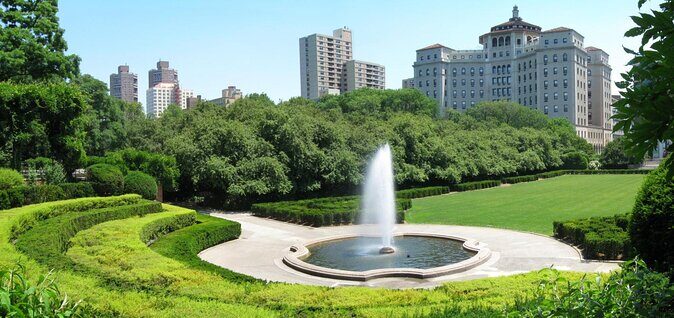
Central Park has a movie script hidden in plain sight. This 2-hour walk connects Central Park film and TV scenes with real architecture, celebrity-adjacent homes, and calm wildlife moments. I especially love how the guide turns the park into a visual scavenger hunt, and how stops like Bethesda Fountain and the lake bridges make great photos. One thing to plan for: it’s a stair-included walk with a moderate fitness level.
You start at the Apple logo glass cube and then step down from Midtown noise into quieter corners fast. With a good guide like Stan, the vibe stays friendly and fun, with a lot of practical context as you go—plus the chance to spot a heron or egret near a pond.
In This Review
- Key things I’d highlight before you go
- Where it starts: the Apple logo cube near Midtown
- From Grand Army Plaza down into a quieter Central Park mood
- Home Alone 2 and the Nova Scotia sandstone pigeon lady arch
- Bethesda Fountain: the park’s centerpiece and a wedding-photo magnet
- Central Park Lake bridges and the celebrity-apartment reflection game
- The Lennon stops: Strawberry Fields and the peace garden meaning
- Architecture details you might miss on your own: tunnels, tiles, elm plaques
- Moving south: 19th-century statuary, Tavern on the Green, and more movie exteriors
- Return to Midtown at Columbus Circle: where the park meets skyscrapers
- How much walking you’re really signing up for
- Price and value: is $40 a good deal?
- Should you book this Central Park nature, architecture, and movie scenes tour?
- FAQ
- How long is the tour?
- How much does it cost?
- Where do I meet the tour?
- Is the tour inside any paid attractions?
- What language is the guide?
- Is this tour accessible for wheelchairs or mobility scooters?
- What should I wear and bring?
- What if it rains?
Key things I’d highlight before you go
- Movie scenes spread across the whole park instead of one single highlight.
- Celebrity home reflections on Central Park Lake for photos with atmosphere.
- Bow Bridge and Bethesda Fountain as prime, repeatable photo backdrops (including wedding photo days).
- John Lennon’s Strawberry Fields plus Yoko Ono’s peace garden story.
- Stairs and varied terrain mean you’ll want comfortable shoes and steady footing.
- Stan’s guide style: informative, upbeat, and tuned to the group.
Where it starts: the Apple logo cube near Midtown
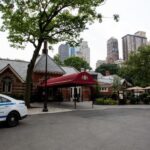
The tour begins at a glass cube with the Apple logo—easy to spot once you’re in the right part of Midtown. Plan to arrive a few minutes early so you can check your shoes, refill water if you want, and get your bearings before walking.
You’re also close to major transit. That matters because Central Park tours can feel like a day plan. This one is tight and efficient: you’ll cover a lot of ground in about two hours and still end up near multiple subway lines.
Other movie & TV locations tours in Central Park & NYC


From Grand Army Plaza down into a quieter Central Park mood
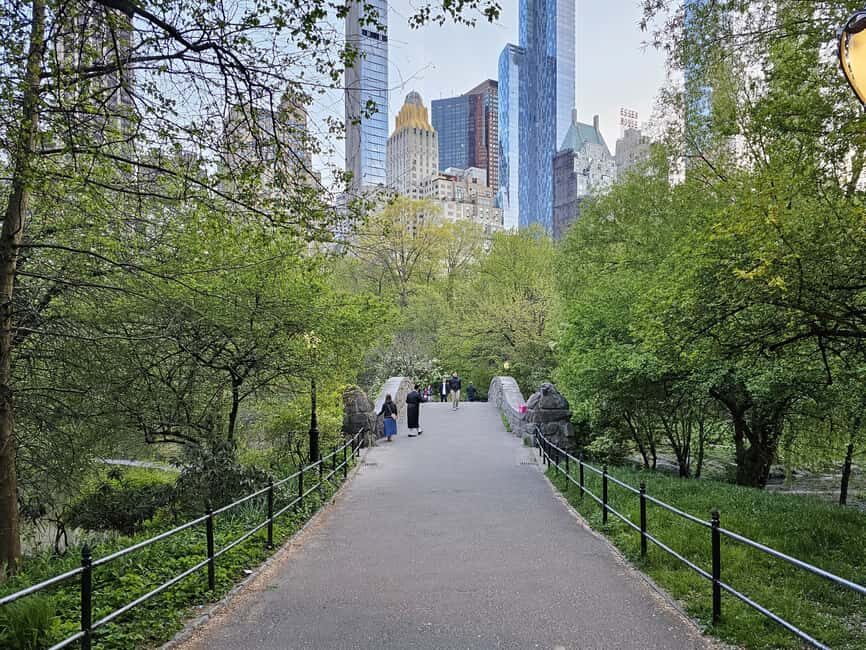
You’ll start at Grand Army Plaza near the Plaza Hotel area, then the walk quickly shifts from city noise to park calm. One of my favorite parts of this kind of Central Park tour is that moment when you stop hearing traffic and start hearing birds.
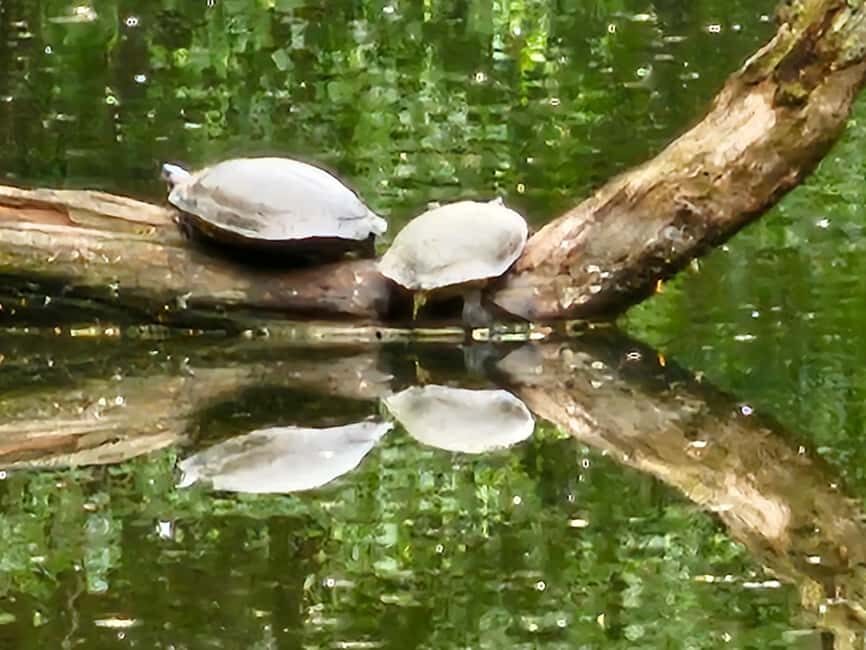
Early on, you’ll move toward a pond where, with luck, you may spot a heron or egret. Even if you don’t, the point is the same: you’ll get that rare feeling of being in a large, planted pocket while surrounded by New York City.
The guide also uses the walk to teach you how Central Park is shaped. Paths curve. Views open in controlled bursts. And small bridges and corners can give you a “how is this here?” feeling—especially when you’re shooting photos.
Home Alone 2 and the Nova Scotia sandstone pigeon lady arch
One of the more fun stops is the pigeon lady arch from Home Alone 2. You’ll look for it along the route and learn what makes that location feel so movie-ready, even in real life.
A helpful detail here: it’s lined with Nova Scotia sandstone. That’s exactly the kind of specificity that makes your photos better. Instead of guessing, you know what you’re looking at—and why it looks the way it does.
This stretch also gets you into the park’s rhythm: winding paths, small sightlines, and those occasional photo-friendly bridges where the light hits well. And yes, the park has only one straight path, so the guide uses that fact to keep you oriented as you move toward the centerpiece.
Bethesda Fountain: the park’s centerpiece and a wedding-photo magnet
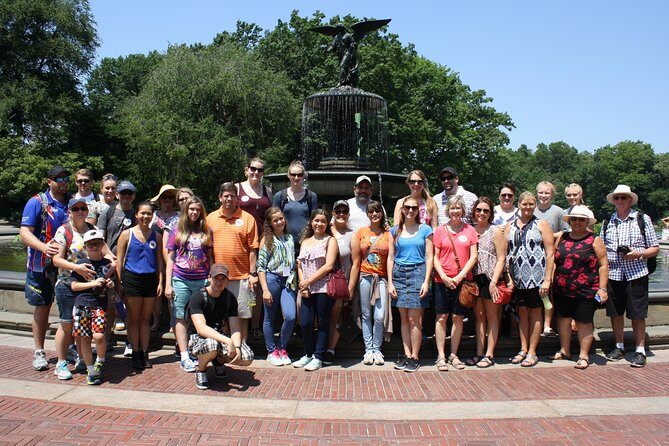
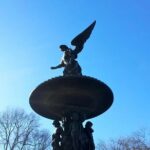
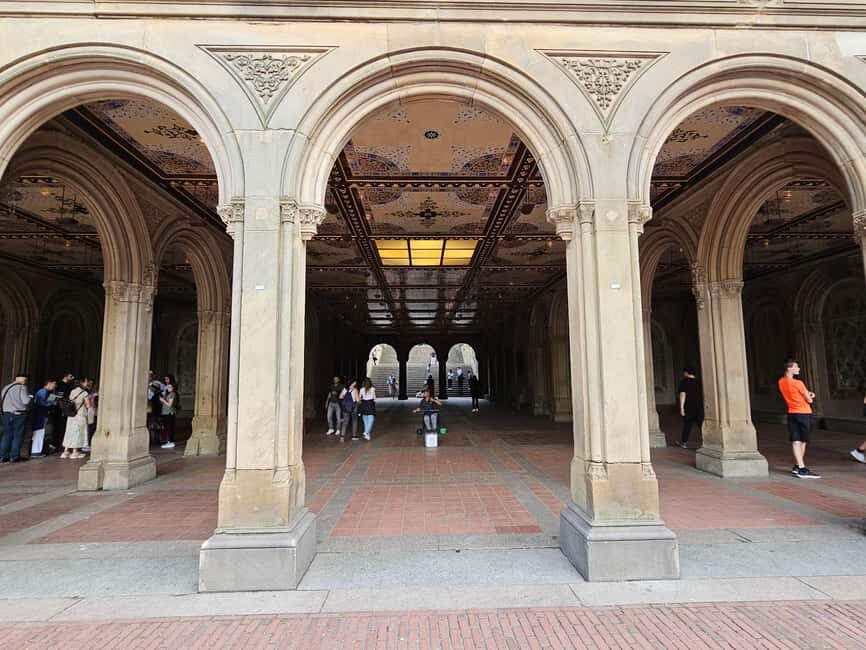
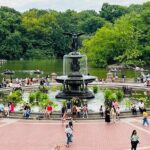
Bethesda Fountain is where you slow down. It’s the park’s visual anchor, and on this tour it acts like a big “you’re here” marker—so you can mentally map what comes next.
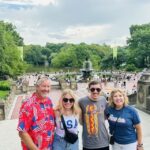
What I like about this stop is the way it feels both grand and practical. People gather for photos. Couples sometimes have wedding pictures taken, including on Saturdays. So it’s not just a monument you pass by; it’s a working, real-life stage inside Central Park.
From here you’ll keep walking along the kind of paths that make Central Park feel intentionally designed. You’re not just going point to point. You’re getting guided context for how the park uses turns, elevation, and viewpoints to keep the experience varied.
Central Park Lake bridges and the celebrity-apartment reflection game
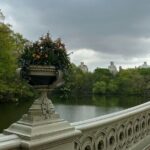
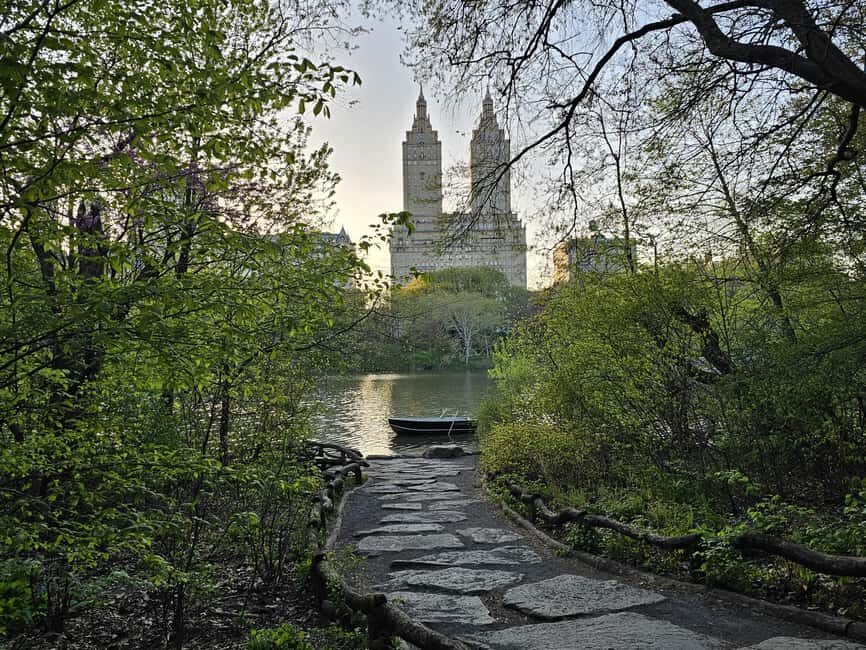
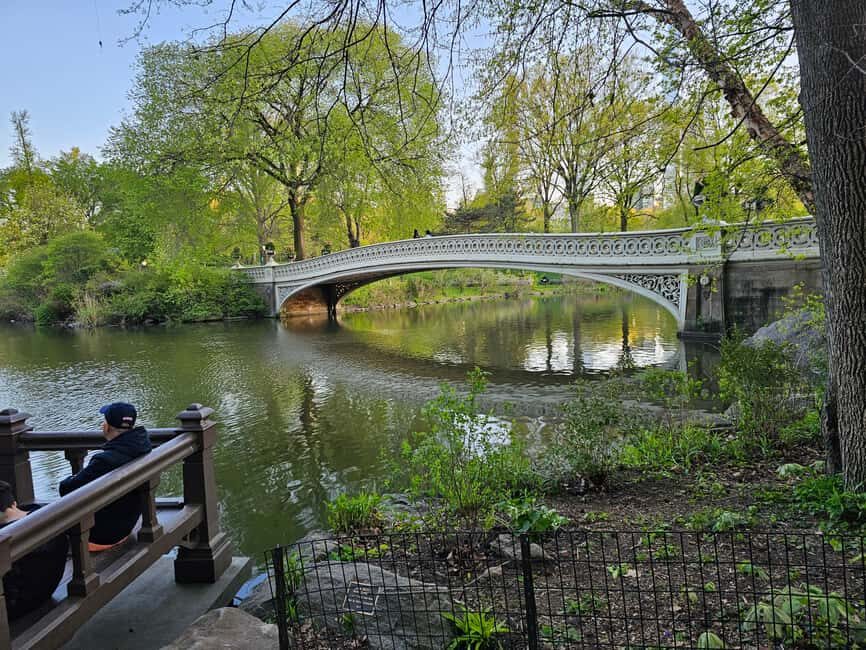
As the tour moves west, you’ll come to a cast-iron Victorian bridge over Central Park Lake. It’s a classic Central Park scene for a reason: bridges add structure to photos, and lake reflections double your payoff.
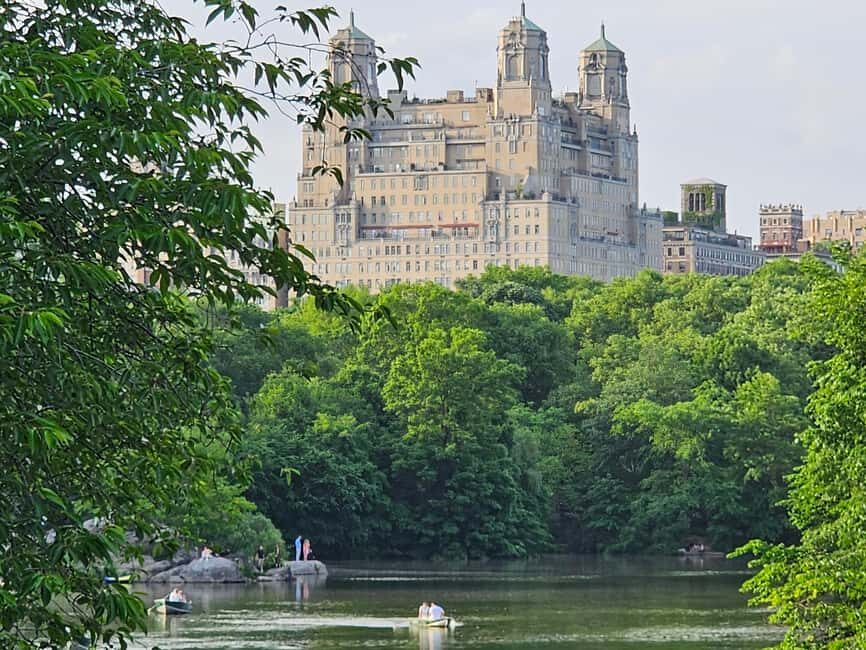
This is also where you’ll hear about the apartment-building lineup along the park’s edge. Buildings like The Dakota, The Langham, and the San Remo come up through the exterior-focused lens of the tour—so you’re not touring apartments, you’re learning how these buildings became part of Central Park’s everyday skyline.
If you care about photography, this section is a smart use of time. You’re getting symmetry, water reflections, and recognizable facades in one walk, without needing tickets or timed entry.



The Lennon stops: Strawberry Fields and the peace garden meaning
Then comes one of the most emotionally grounded parts of the tour: the John Lennon memorial, Strawberry Fields. The guide connects the dots between Lennon’s connection to the neighborhood and why this memorial matters.
You’ll also hear about John Lennon and Yoko Ono living across from the park for ten years before his murder in front of The Dakota. That sets the stage for what you’re seeing, rather than treating Strawberry Fields like just another photo spot.
The story continues with Yoko Ono’s role in creating a teardrop-shaped international peace garden within the park, supported by funds from more than 100 nations. It’s not just a name drop. It changes how you look at the space—like it’s built to hold remembrance and hope at the same time.
You’ll spend a moment lingering here, and that pause is part of the value. A two-hour tour can still include a respectful breathing space if it’s done right.
Architecture details you might miss on your own: tunnels, tiles, elm plaques
A big reason this tour feels fuller than a simple “movie locations” walk is the architecture layer. You’ll pass up to 36 styles of pedestrian tunnels, which explains how the park handles roads and movement without breaking the walking experience.
You’ll also notice carved stone from the US and Canada. That sort of material detail adds texture to what you’re seeing, and it gives you something to talk about if you’re traveling with non–movie-obsessed friends.
Another highlight is an arcade ceiling lined with more than 7000 Victorian tiles from Stoke-on-Trent, England. It’s the kind of detail that makes Central Park feel stitched together from global design influences, not just local parks and statues.
Then there are memorial plaques donated by New York City families, linked to preserving elm trees. I appreciate this because it reminds you Central Park isn’t only about nostalgia and film scenes. It’s also an ongoing maintenance project, shaped by real residents and donors.
Moving south: 19th-century statuary, Tavern on the Green, and more movie exteriors
As you head south toward Midtown, the tour shifts into another practical mode: spotting exterior locations that pop up in famous films and shows.
Just before Tavern on the Green, you’ll see 19th-century statuary, including a US soldier and an Italian revolutionary. These aren’t just decorative. They reinforce the park’s long-running tradition of symbolism and storytelling through public art.
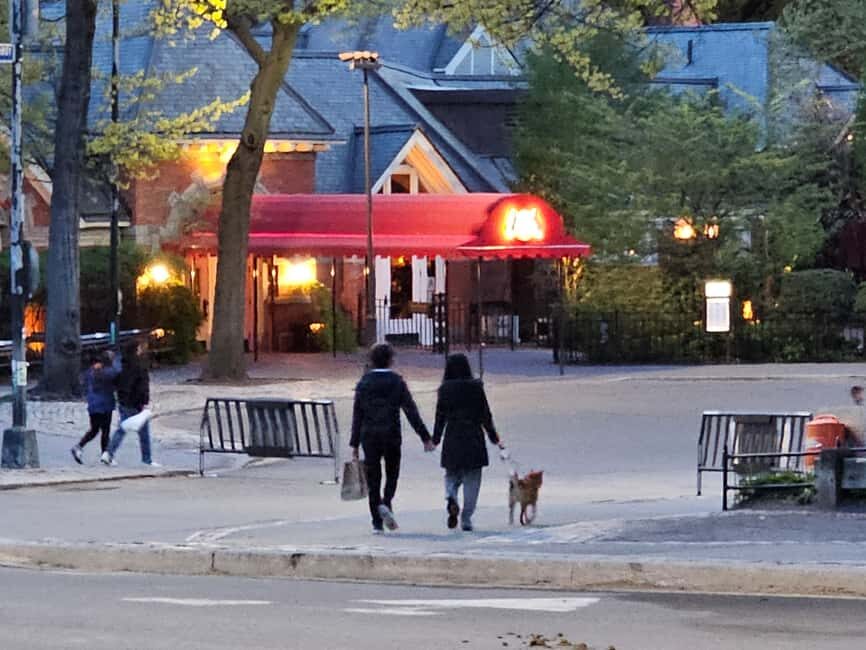
Then you get the fun side again. You’ll come across the haunted apartment building used in Ghostbusters, and you’ll also spot the vibe of Buddy’s family home from Elf. The tour doesn’t treat these as trivia. It helps you place them in the real city geometry—street, avenue, sightline, and the way the building fronts frame the park.
You’ll also reach a “snowball fight” bridge from Elf. This is exactly the kind of stop that makes the whole tour feel like a guided connection between what you’ve watched and what you’re actually standing in front of.
Return to Midtown at Columbus Circle: where the park meets skyscrapers
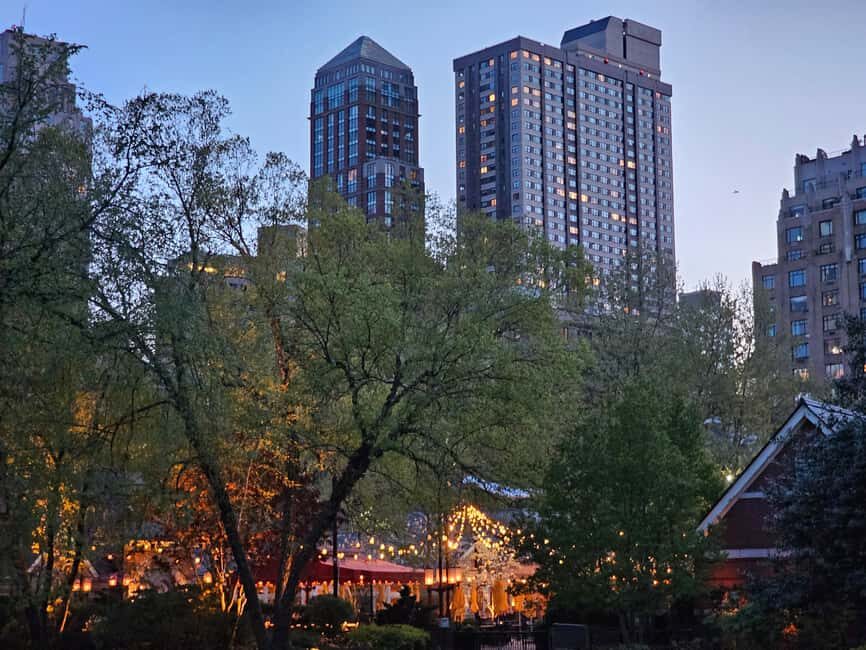
To close, you’ll return toward Midtown and reach Columbus Circle, which is where the park meets the city’s vertical energy. Super-tall skyscrapers greet you again, and the contrast is the point: you get a full sense of how Central Park works as a break in the urban grid.
The tour ends close to subway access, and it’s within walking distance of Times Square. That’s useful if you want to roll right into dinner or a show afterward without losing your day to transit.
How much walking you’re really signing up for
This is a two-hour walk that includes stairs. You don’t need to be an athlete, but you should be comfortable with uneven paths, steps, and steady walking.
It’s not suitable for people with mobility impairments or wheelchair users, and it isn’t designed for kids under 6. If your group includes anyone who struggles with stairs, you may want to plan an alternate pace.
Also note what’s not allowed. Mobility scooters, bikes, and baby carriages aren’t part of this tour. So if you’re traveling with gear, plan around it.
Price and value: is $40 a good deal?
At $40 per person for about two hours, the value is in what you’re getting per minute. There are no admission fees required for the stops, so you’re paying for guide time plus curated sightline value.
For me, the best part of this pricing model is that you get both kinds of payoff:
- Movie and TV scene locations, spread out so you don’t feel stuck on one corner.
- Architecture and landmark context, including celebrity building exteriors and specific materials.
You’re also not paying extra just to see the city’s most famous park—because you’re walking through it. And with a live English guide, you get real explanations as you go, not just signage.
On top of that, the tour style is small or private groups available, which is a big deal for a sightseeing walk. Less “herding,” more attention.
If you want a fast, photo-friendly Central Park plan that feels like more than a self-guided stroll, this price fits the job.
Should you book this Central Park nature, architecture, and movie scenes tour?
Book it if you want Central Park with a theme, and you like having someone point out what you’d otherwise miss—like the pigeon lady arch, the lake bridges, Strawberry Fields, and those Ghostbusters and Elf exteriors.
Skip it if your group mainly wants downtime. This is active and walking-focused, and stairs are part of the deal. Also, if your goal is indoor museums or ticketed attractions, this tour keeps things outdoors and on foot.
One more easy decision check: if you’ve ever wanted Central Park to feel like a story—quiet pond to fountain to movie scenes—then this is built for you.
FAQ
How long is the tour?
The tour lasts about 2 hours.
How much does it cost?
The price is $40 per person.
Where do I meet the tour?
Meet at a glass cube with the Apple logo.
Is the tour inside any paid attractions?
No. The tour has no areas that require admission, and there are no additional entry fees.
What language is the guide?
The live tour guide provides the tour in English.
Is this tour accessible for wheelchairs or mobility scooters?
No. It is not suitable for people with mobility impairments, wheelchair users, or mobility scooters.
What should I wear and bring?
Wear comfortable shoes and weather-appropriate clothing. Bring outdoor clothing that can handle stairs and get a little dirty if needed.
What if it rains?
The tour runs outdoors and includes stairs. If rain is likely, bring rain gear.