REVIEW · NEW YORK CITY
Best of Central Park Tours by Pedicab – Stories & Photos
Book on Viator →Operated by CENTRAL PARK TRAVEL ™ · Bookable on Viator
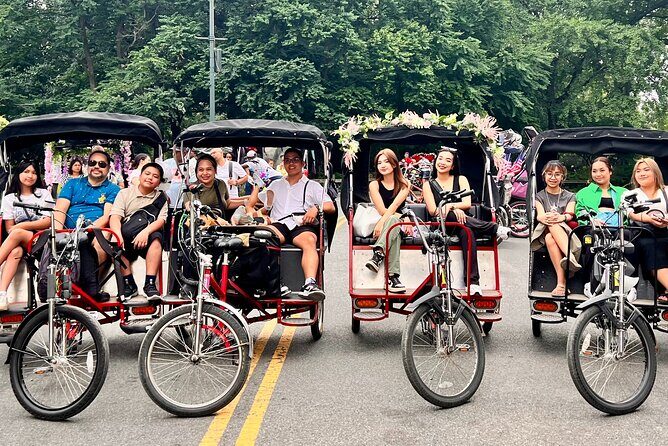
Pedicab beats aching legs in Central Park. This private tour strings together major sights and movie-famous spots with photo pauses, plus a licensed NYC guide. You’ll get the park’s layout in a way that feels fast, but never rushed, with extra warmth and rain cover when needed.
I love the easy-on-your-feet pace of a private pedicab. I also love that your guide focuses on photo stops and adds film locations and local stories so landmarks make sense, not just look good.
One consideration: there’s no hotel pickup, so you’ll want to arrive at the meeting point on time. And because it’s an outdoor ride, you’ll need decent weather for the best experience.
In This Review
- Key highlights I’d plan around
- Why a private pedicab is the smart move in Central Park
- Price of $38.40: what you’re really paying for
- Meeting at 1415 6th Ave: get oriented before you roll
- Central Park classics: Bethesda Terrace, The Mall, and the Angel of the Waters
- Central Park itself: the park’s design story
- The Mall, also known as Literary Walk
- Bethesda Fountain: the landmark you’ve seen in movies
- Bethesda Terrace: Minton tiles and a restoration story
- Cherry Hill Fountain
- Bridges and park ponds: Gapstow, The Lake, and Conservatory Water
- Gapstow Bridge: the classic postcard view
- The Pond: serene water with a movie moment
- Conservatory Water: model boats and literary statues
- The Central Park Zoo and Balto’s statue
- When you want Central Park joy: carousel, chess tables, and old buildings
- Central Park Carousel
- Chess & Checkers House
- Dairy House
- Strawberry Fields, the Dakota, and Sheep Meadow’s big-open feeling
- Strawberry Fields: John Lennon’s memorial
- The Dakota: architecture with a real-life story
- Sheep Meadow and Tavern on the Green
- Bow Bridge to Bow Bridge: romantic iron and the park’s monuments
- Short stops that make the day feel complete
- Rumsey Playfield
- Heckscher Playground
- Pinebank Arch
- The 2-hour add-ons: Met views, Cleopatra’s Needle, the Reservoir, and Belvedere Castle
- Alice in Wonderland statue
- Cleopatra’s Needle
- The Metropolitan Museum of Art
- Jacqueline Kennedy Onassis Reservoir
- Belvedere Castle
- Who this tour suits best (and who might skip it)
- Should you book Best of Central Park Tours by Pedicab?
- FAQ
- How long is the pedicab tour?
- Is this a private tour?
- What does the $38.40 price include?
- Are admissions included for Central Park sights?
- Where does the tour start?
- Do you get hotel pickup or drop-off?
- What language is the tour offered in?
- Do you provide rain or cold-weather help?
- Can I bring a car seat on the pedicab?
- Are service animals allowed?
- What if the weather is poor or the minimum number of travelers isn’t met?
Key highlights I’d plan around
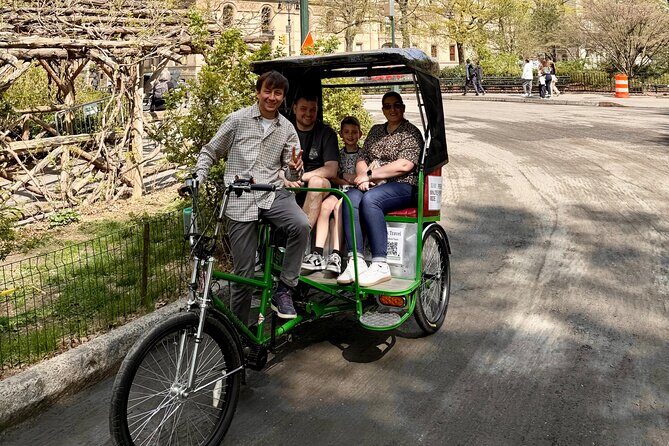
- Private, only-your-group ride through Central Park, so you set the tempo
- Photo help built in, with stops at the most camera-friendly landmarks
- Movie locations and fun facts along the route, not just a list of names
- A mix of big icons and park details, from Bethesda to the chess tables
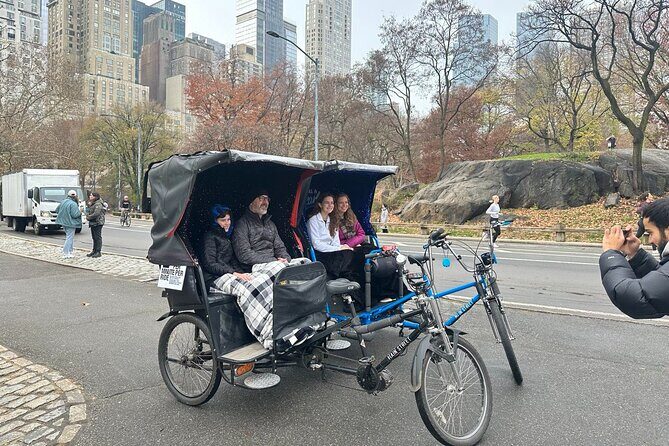
- Comfort extras like blankets in cold weather and rain cover when needed
Why a private pedicab is the smart move in Central Park
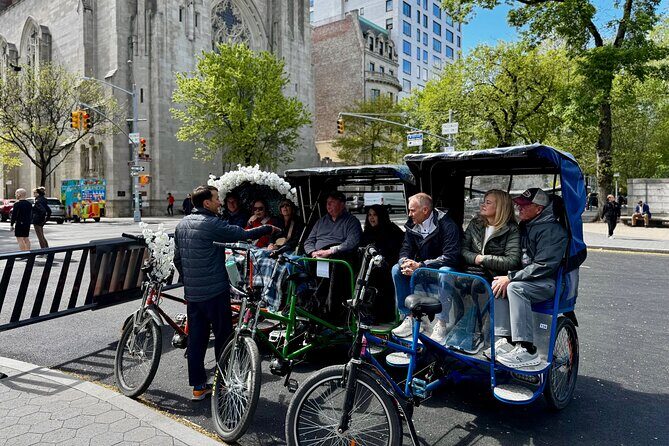
Central Park is huge, and walking everywhere can feel like a second job. A private pedicab solves that problem. You get to see a lot without committing to marathon distances, which is especially helpful if you’re traveling with kids, older adults, or anyone who’s trying to keep their energy for the rest of Manhattan.
The other big win is how the route functions. Instead of you trying to connect far-apart sights on your own, the tour lines up famous landmarks and well-known corners into a logical loop. That means you spend less time figuring out where to go and more time actually looking. Plus, the guide’s job isn’t just narration; it’s to point out what matters—why Bethesda is where it is, what the bridges are for, and how certain spots became famous onscreen.
Other pedicab tours we've reviewed in Central Park & NYC
Price of $38.40: what you’re really paying for
At $38.40 per person for a private pedicab ride, the value is in the combination: vehicle time + a licensed NYC guide + photo stops + storytelling. If you’ve ever done a DIY Central Park day, you know the hidden costs: time, logistics, and the feeling that you’re missing the best bits.
Here’s what you’re getting for the money:
- A private pedicab ride through the park
- A friendly, licensed NYC guide who shares local stories and film locations
- Photo stops where your guide helps with getting the shot
- Weather comfort items like blankets in cold weather and rain cover
- Fun context that turns familiar landmarks into something you understand in minutes
The tour also runs roughly 1 to 3 hours, depending on the version you book. That flexibility matters. If you only want a highlight run, you don’t have to commit to a full-day plan.
Meeting at 1415 6th Ave: get oriented before you roll
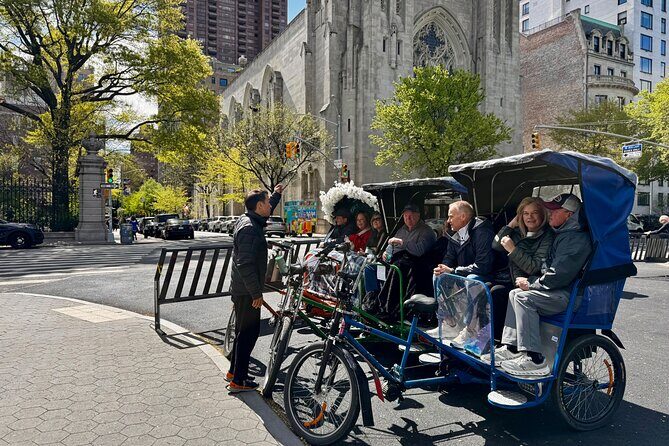
The tour starts at 1415 6th Ave, New York, NY 10019, and it ends back at the same meeting point. That’s useful because it simplifies your day: you can plan lunch or museum time nearby without guessing how far you’ll be from where you started.
Since hotel pickup and drop-off aren’t included, I recommend you build in a few minutes of buffer to reach the pedicab start spot. Wear shoes you can walk in, even if most of your time is seated. You may step off for photo stops, and some areas are more enjoyable when you can walk a few steps to line up a view.
Central Park classics: Bethesda Terrace, The Mall, and the Angel of the Waters
The core of the experience is a Central Park loop that hits many of the park’s most recognizable spots—Bethesda, Strawberry Fields, The Mall, and Bow Bridge are all in the mix.
Central Park itself: the park’s design story
Central Park was designed by Frederick Law Olmsted and Calvert Vaux and established in 1858, recognized as the first landscaped public park in the United States. The original site was more than “just land”—it was swampy and rocky. Turning over 800 acres into a green retreat is a big reason the park still feels intentional, not random.
What you’ll notice on your ride is how the design uses nature and architecture together: lakes, bridges, and meandering paths arranged to feel scenic even while you’re in Manhattan.
Other photography tours in New York City


The Mall, also known as Literary Walk
The Mall is one of the park’s signature promenades—a long, shaded path under towering American elm trees. It’s the only intentionally straight line in Central Park’s otherwise winding layout, which makes it great for photos and for getting your bearings fast.
It’s also where the park borrows a literary theme. The area features statues honoring writers like William Shakespeare, Robert Burns, and Sir Walter Scott, and at the southern end you’ll find a statue of Christopher Columbus. If you’ve got one “walkable corridor” moment in mind, this is it.
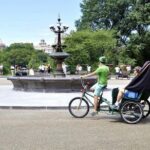
Bethesda Fountain: the landmark you’ve seen in movies
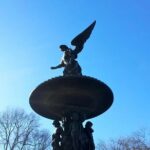
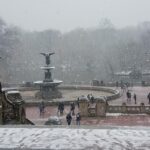
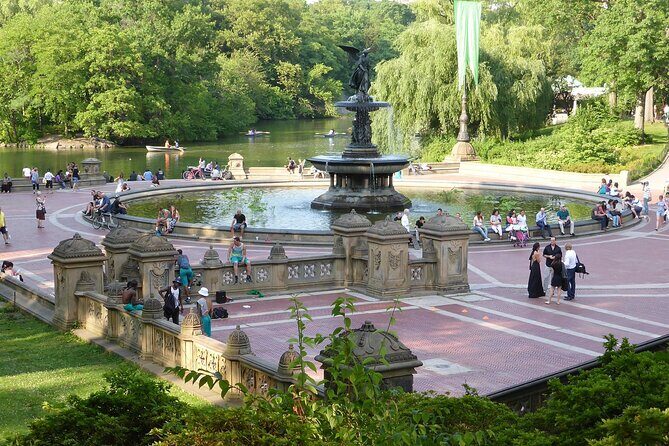
Bethesda Fountain sits below Bethesda Terrace, centered on the sculpture known as The Angel of the Waters, designed by Emma Stebbins and unveiled in 1873. The symbolism matters here. It references the biblical story from the Gospel of John, tied to healing at the Pool of Bethesda.
If you love film trivia, this is a strong stop. Bethesda has appeared in titles like Home Alone 2 (Kevin near the fountain), and it shows up in big-screen and TV scenes often enough that seeing it in person can feel like spotting an old friend.
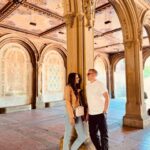
Bethesda Terrace: Minton tiles and a restoration story
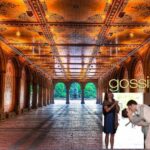
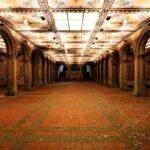
The terrace is famous for its grand two-level structure and the arcade ceiling covered with Minton encaustic tiles made in England and installed in the 1860s. In the 1980s, the tiles were removed because restoring them was too costly, and they sat in storage for more than 20 years.
The Central Park Conservancy later funded a restoration starting in 2004, with a project cost of $7 million, and the tiles were reinstalled in 2007. If you care about architecture details, this is where the tour can quietly surprise you.
Cherry Hill Fountain
Just west of Bethesda Fountain, Cherry Hill Fountain was built in the 1860s and was originally intended as a watering trough for horses traveling through the park by carriage. The design includes a granite dome, a bluestone basin, Minton tile work, and eight frosted glass lamps at the top—so even if you only get a quick look, you’ll likely spot the craftsmanship.
Bridges and park ponds: Gapstow, The Lake, and Conservatory Water
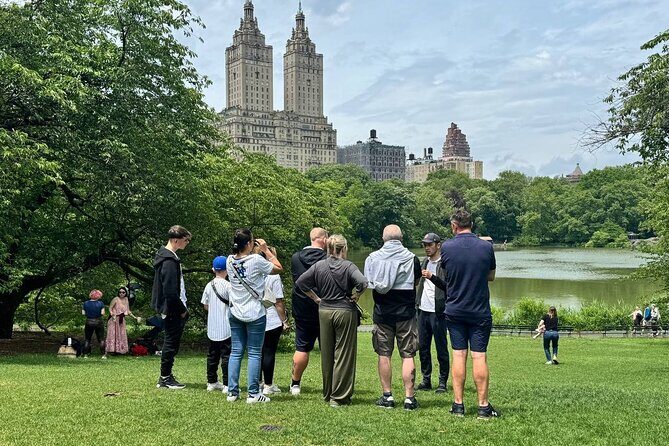
Central Park’s water features are part of the reason it feels like a break from city life. Your route includes a couple of the best-known.
Gapstow Bridge: the classic postcard view
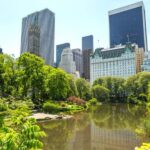
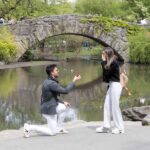
Gapstow Bridge is one of the most photographed bridges in the park, with views across The Pond and toward the midtown skyline. It was built in 1874, and an early version used wood and cast iron. Structural issues led to a replacement in 1896 with the current stone version.
The stone arches and ivy give it that calm, old-world look. It’s also associated with a peaceful wildlife scene—turtles and ducks often show up around The Pond area.
The Pond: serene water with a movie moment
The Pond is a 3.8-acre feature designed by Olmsted and Vaux as part of their original vision. It’s a great stop for a slow glance because it changes depending on the light and season.
It’s also famous from Home Alone 2, including the scene with the pigeon lady. Even if you’re not chasing movie sets, it’s one of those places where the park feels designed for quiet moments.
Conservatory Water: model boats and literary statues
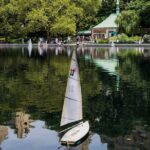
Conservatory Water is known for model boat sailing and a calmer, more family-friendly vibe. The name remains even though a conservatory structure was never built. In the early 1900s, the area became popular with children and boat enthusiasts racing miniature sailboats—a tradition that still lives on.
You may also spot statues of literary figures in the area, including Alice in Wonderland and Hans Christian Andersen. If you like the park’s mix of storytelling and scenery, this is a fun stop.
The Central Park Zoo and Balto’s statue
If your group includes kids or anyone who likes animal exhibits, the Central Park Zoo is a classic add-on. It started as a small menagerie in 1864, became the city’s first official zoo in 1934, and later shifted away from traditional cages toward more natural habitats in 1988.
The zoo is managed by the Wildlife Conservation Society and includes exhibit zones like the Temperate Territory, Tropic Zone, and Polar Circle—with animals such as penguins, sea lions, and snow leopards mentioned in the tour info.
You’ll also pass the Balto statue, honoring the sled dog from the 1925 Serum Run to Nome. The statue was unveiled in December 1925, commissioned after New Yorkers raised funds, and it’s an easy stop that adds a human-scale story to the park’s scenery.
When you want Central Park joy: carousel, chess tables, and old buildings
Central Park isn’t only about fountains and bridges. It has daily-life charm built into it, and this tour leans into that.
Central Park Carousel
The carousel story goes way back. The original carousel dates to 1871 (horse-powered beneath the platform), and the current version installed in 1951 is the park’s fourth carousel. The current carousel features vintage details—built by the Stein and Goldstein company, known for hand-carved wooden animals, with 57 intricately carved horses.
Even if you skip the ride, the history and craftsmanship make it worth stopping for photos. It’s one of those places where Central Park feels playful, not just scenic.
Chess & Checkers House
The Chess & Checkers House, built in 1952, is an octagonal brick structure surrounded by 24 game tables. It’s shaded by a rustic trellis, so it’s a comfortable place to watch people play or sit for a minute.
This stop also ties into popular culture. The tour info notes it appears in Searching for Bobby Fischer (1993), which gives you extra context if you’ve seen the film.
Dairy House
The Dairy House, built in 1870, began as a refreshment spot for children and families with dairy products. Over time it fell into neglect, then was restored in the 1980s and now functions as a visitor center with maps, brochures, and info.
It’s also been featured in films like Enchanted and Stepmom, so if you like spot-the-location moments, keep your eyes open.
Strawberry Fields, the Dakota, and Sheep Meadow’s big-open feeling
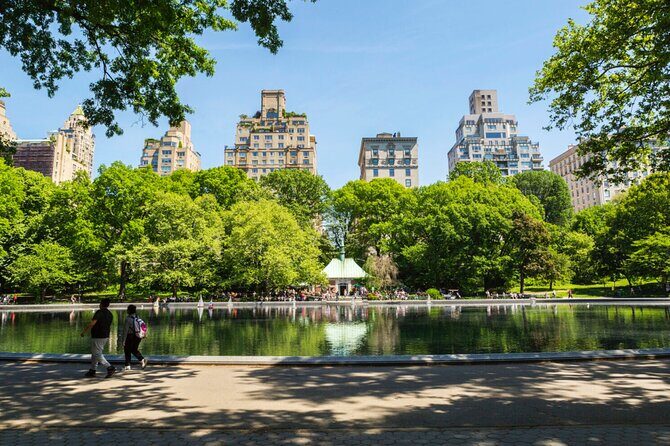
This part of the route brings Central Park’s emotional and everyday sides together: reflection, pop-culture landmarks, and a massive lawn.
Strawberry Fields: John Lennon’s memorial
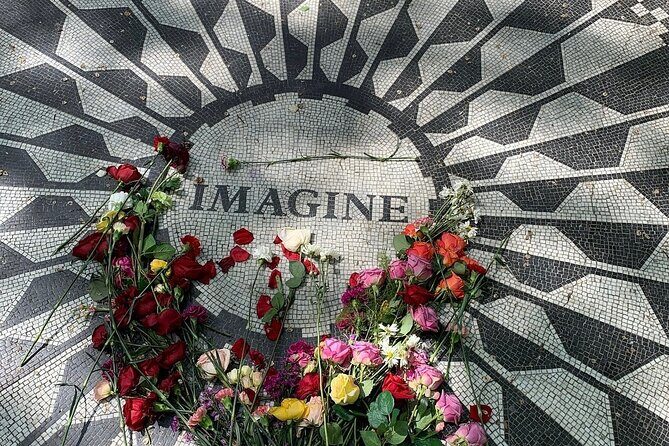
Strawberry Fields is a 2.5-acre memorial dedicated to John Lennon, created as a living tribute after his death in 1980. It draws its name from Strawberry Fields Forever, which ties back to a children’s home in Liverpool connected to Lennon’s early life.
At the heart of the memorial is the Imagine mosaic, tied directly to Lennon’s vision of peace and gifted by the city of Naples. It’s a quiet stop that often feels more meaningful than you expect.
The Dakota: architecture with a real-life story
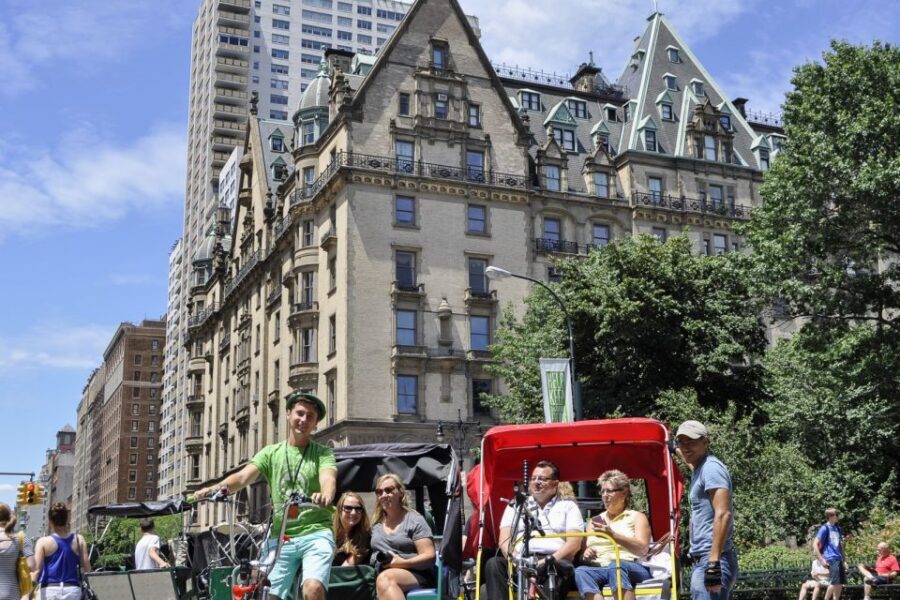
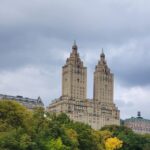
The Dakota building, completed in 1884, is one of the most iconic residential addresses in New York. It’s Renaissance Revival in style and was designed by Henry Janeway Hardenbergh. The tour info highlights famous residents, including John Lennon and Yoko Ono, and it notes Lennon was killed outside the building in 1980.
If you like film history, the tour also points to Rosemary’s Baby (1968) as a key location use of the Dakota’s exterior.
Sheep Meadow and Tavern on the Green
Sheep Meadow is a 15-acre lawn at the southern end of the park, once used as grazing land and now a go-to spot for relaxing, reading, picnicking, and general downtime. The contrast between the wide green open space and the tall Manhattan skyline is the whole point here.
Tied to that is the area around Tavern on the Green. The tour info notes the building was originally a sheepfold built in 1870 based on a design by Calvert Vaux and Jacob Wrey Mould. The sheep were evicted from the sheepfold in 1934 under Parks commissioner Robert Moses. Today the restaurant building has its own history of reopenings and roles, but the big takeaway is how deeply the park’s past is literally under the modern scene.
Bow Bridge to Bow Bridge: romantic iron and the park’s monuments
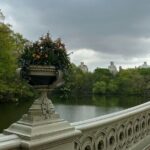
If you want one more iconic “Central Park looks like a movie” moment, Bow Bridge is the place. It was completed in 1862 and designed by Calvert Vaux and Jacob Wrey Mould, built by Janes, Kirtland & Co. (the same foundry linked to the U.S. Capitol dome).
The bridge underwent restoration in 1974 and was temporarily closed for renovation in late 2023 for about two months. The tour keeps you focused on the view and the shape—its bow-like curve makes it instantly recognizable.
The route can also include other statues and monuments along the way, such as:
- The Falconer, donated in 1875, designed to show a falconer releasing a falcon
- The Daniel Webster Monument, commissioned as a tribute to his influence and unveiled in 1876
Short stops that make the day feel complete
Some stops are quick, but they add texture so the tour doesn’t feel like only big-ticket sights.
Rumsey Playfield
Rumsey Playfield links to SummerStage and the park’s live performance energy. The tour info explains that a restaurant (known as the Casino, meaning little house in Italian) once sat there, later replaced by an Art Deco nightclub, and then transformed by the Central Park Conservancy into a sports field. SummerStage moved here by 1990, so if your timing overlaps performances, this area becomes extra meaningful.
Heckscher Playground
Heckscher Playground is close to Central Park South, between Sixth Avenue and Seventh Avenue, and it’s noted as the oldest and largest of the park’s 22 playgrounds. Opened in 1926, it’s a nice break point for families who want a change of pace.
Pinebank Arch
Pinebank Arch is a cast-iron bridge designed to blend into rocky outcrops, with delicate ironwork that fits the surrounding greenery. It gained wider fame from appearing in Elf (2003), so it’s a great stop when you want something photogenic without feeling like you’re chasing the main crowd.
The 2-hour add-ons: Met views, Cleopatra’s Needle, the Reservoir, and Belvedere Castle
If you choose a longer version (the info calls out a set of stops included in the 2-hour tour), you’ll go beyond the classic center of the park.
Alice in Wonderland statue
The Alice in Wonderland statue is a 1959 gift from publisher philanthropist George Delacorte. The tour info says it was intended for New York City children and memorializes his wife Margarita, an avid reader and linguist. If you want a family-friendly landmark that also feels tied to literature, this is one of the easiest “yes, I recognize that” moments.
Cleopatra’s Needle
Cleopatra’s Needle is described as the oldest outdoor monument in New York City and dates back more than 3,500 years. The obelisk was carved in Egypt, moved across major ancient locations, and was gifted to the United States in the late 19th century. It was dedicated in Central Park in 1881 between the Great Lawn and the Metropolitan Museum of Art.
The Metropolitan Museum of Art
The tour also notes the Met’s origin story: founded in 1870, with the original museum opening in 1880 along Central Park’s eastern edge. The building design is credited to Calvert Vaux, with later expansions and major entrances credited to Richard Morris Hunt, plus wing additions by McKim, Mead & White. The tour info states the museum holds over 2 million works spanning 5,000 years.
Jacqueline Kennedy Onassis Reservoir
The Reservoir was built between 1858 and 1862 to increase the city’s receiving reservoir capacity. The current reservoir uses an irregular, curvilinear shape to better harmonize with the park and spans 106 acres with a depth of about 40 feet, holding more than one billion gallons.
Belvedere Castle
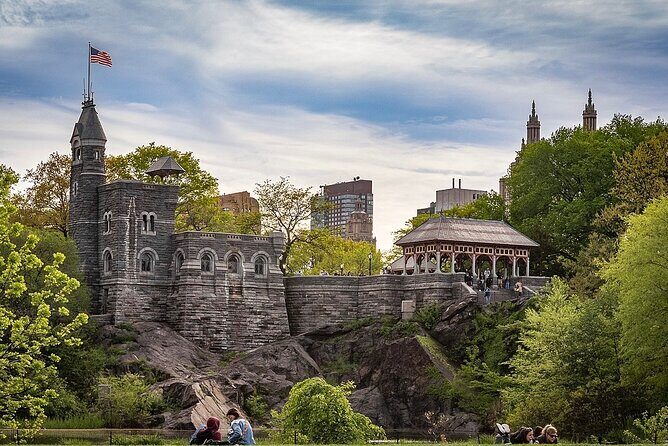
Finally, Belvedere Castle sits on Vista Rock and is described as a whimsical decorative structure built in 1867. The design blends Gothic and Romanesque elements, and it includes exhibit rooms and an observation deck. The tour info also highlights that it has served as Central Park’s official weather station since 1919, with data sent to the National Weather Service.
Who this tour suits best (and who might skip it)
This is the right pick if you want:
- A highlight-focused Central Park day without map work
- A photo-friendly route with built-in stops
- Central Park stories, including film locations and park design context
- A comfortable option for groups who don’t want to walk a lot
It may not be the best fit if you love long, unstructured wandering and you want to spend extended time inside attractions. The tour is designed for efficient viewing, not for hours of independent exploring at each stop.
One more note from real-world feedback: the guide experience really matters here. In top-rated rides, guides like Ricky were praised for humor, strong storytelling, and helping guests get great photos at the famous locations.
Should you book Best of Central Park Tours by Pedicab?
Yes, if your priority is seeing Central Park’s most recognizable highlights with minimal stress. For $38.40, you’re buying comfort, a private guide, and photo stops that keep your day from turning into a checklist marathon.
If you’re the type who enjoys planning routes and doesn’t mind walking, you might do okay DIY. But if you want an easy, guided “best of Central Park” loop—plus the added context that makes Bethesda, Bow Bridge, Strawberry Fields, and the rest feel connected—this is an efficient and fun way to do it.
FAQ
How long is the pedicab tour?
The tour runs about 1 to 3 hours, depending on the version you book.
Is this a private tour?
Yes. It’s a private tour/activity, and only your group participates.
What does the $38.40 price include?
It includes a private pedicab ride through Central Park, a friendly licensed NYC guide, photo stops at iconic spots, help with getting good photos, fun facts and film locations, and blankets in cold weather and rain cover if it rains.
Are admissions included for Central Park sights?
The itinerary notes an admission ticket included for the Central Park portion, and several stops are marked as free (for example Wollman Rink, Gapstow Bridge, The Mall, Bow Bridge, Bethesda Fountain, and others).
Where does the tour start?
It starts at 1415 6th Ave, New York, NY 10019, and it ends back at the meeting point.
Do you get hotel pickup or drop-off?
No. Hotel pickup and drop-off are not included.
What language is the tour offered in?
The tour is offered in English.
Do you provide rain or cold-weather help?
Yes. The tour includes blankets in cold weather and a cover if it rains.
Can I bring a car seat on the pedicab?
The information says you cannot have a carseat on the pedicab.
Are service animals allowed?
Yes, service animals are allowed.
What if the weather is poor or the minimum number of travelers isn’t met?
The tour requires good weather. If it’s canceled due to poor weather, you’ll be offered a different date or a full refund. If the minimum traveler requirement isn’t met, you’ll also be offered a different date/experience or a full refund.