REVIEW · NEW YORK CITY
NYC Central Park guided Pedicab Tour – 2 hours
Book on Viator →Operated by Central Park Attractions · Bookable on Viator
Pedicab pacing makes Central Park feel manageable. I like the fast way it gets you around and the photo-friendly stops that let you hop out without losing the whole morning. At $99.99 per person for about 2 hours, it’s a smart way to see a lot without treating Central Park like a fitness test.
I’d keep one thing in mind: this is a guided ride with short stops, so you won’t have time to fully linger at every attraction the way you would on a free-walk day. It’s still an excellent way to get your bearings and see the highlights in an efficient loop.
In This Review
- Key things that make this pedicab tour work
- Where you start on 1794 Broadway, and how the 2-hour pace feels
- Why a pedicab beats walking when you want highlights, not miles
- Columbus Circle to the carousel: the quick orientation hits
- Umpire Rock, the Plaza, and Gapstow Bridge: views that explain the geography
- Zoo, Balto, and SummerStage: Central Park’s cast of characters
- Jacqueline Kennedy Onassis Reservoir to Belvedere Castle: water views and skyline angles
- Harlem Meer and Museum Mile: a calm corner before the postcard center
- Bethesda Fountain, the Mall, and Literary Walk: where the classic shots happen
- Cherry Hill to Bow Bridge: romantic views and easy photo rhythm
- Strawberry Fields to the Dakota: music memorials and famous building silhouettes
- Tavern on the Green and Pinebank Arch: classic dining history and a last iron bridge
- Price and value: is $99.99 for 2 hours fair?
- Who this Central Park pedicab tour suits best
- Should you book it
- FAQ
- How long is the NYC Central Park guided pedicab tour?
- What is the price per person?
- Is the tour private?
- Where does the tour start and end?
- What language is the tour offered in?
- Do I get a mobile ticket?
- Are there multiple departure times?
- Is the tour good for most travelers?
- Can I bring a service animal?
- Is cancellation refundable if plans change?
Key things that make this pedicab tour work
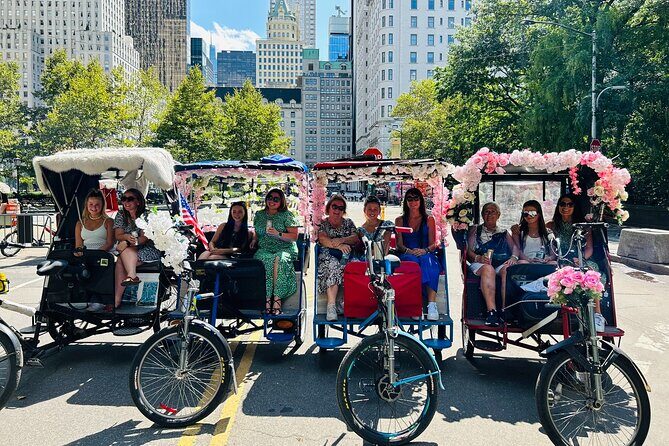
- Two hours, many stops: You move quickly between major sights without feeling rushed inside each one.
- Photo breaks built into the route: Bridges, fountains, and overlooks are timed for quick looks and pictures.
- Guides who add context on the move: Names you may run into include Ibrahim, Ali, Abraham, and Shade, with stories and on-the-spot visual help.
- Stops shaped for variety: From water (Reservoir, Bow Bridge) to famous monuments (Strawberry Fields, Balto).
- Private group feel: Only your group rides together.
- Convenient starting point near transit: Meeting at 1794 Broadway puts you close to the action.
Where you start on 1794 Broadway, and how the 2-hour pace feels
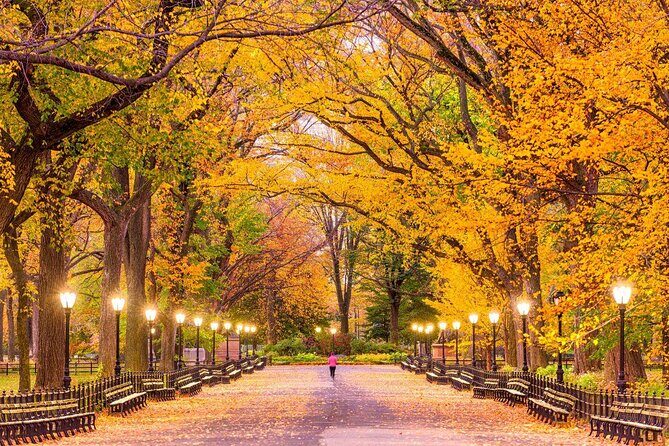
The tour starts at 1794 Broadway, and you end back at the same meeting point. That loop matters, because it keeps logistics simple: you’re not trying to solve subway math while wearing park shoes and carrying a water bottle.
The whole experience runs about 2 hours, and a big chunk of that time is the pedicab ride itself—seeing the park while your guide talks and you get brief windows to get out and look around. You’ll also find numerous departure times, so you’re more likely to pick a slot that fits your day (before the crowds build, or after you’ve done other Midtown plans).
This is a private tour/activity, so you’re not sharing your guide with a huge mix of strangers. It tends to make the stops feel calmer—especially when you’re taking photos or asking quick questions.
Other pedicab tours we've reviewed in Central Park & NYC


Why a pedicab beats walking when you want highlights, not miles
Central Park is big, and it’s easy to underestimate how far you’ll go once you start chasing “just one more” viewpoint. A pedicab solves that. You still walk a little for photos, but you’re mostly seated, with less energy spent on crossing between distant spots.
At $99.99 per person, the value comes from the mix of (1) coverage and (2) guidance. You’re paying for a ride that helps you see major landmarks—Columbus sculpture, Bethesda Fountain, Bow Bridge, Strawberry Fields—within a tight timeframe, while your guide keeps the story straight as you move.
If you’re visiting on limited time—first day in NYC, tight itinerary, or you just don’t want sore legs by late afternoon—this format makes sense. It also pairs well with a longer park plan afterward, because once you know where things are, you can choose what to revisit under your own steam.
Columbus Circle to the carousel: the quick orientation hits
The tour kicks off with a big visual landmark: a colossal Columbus figure standing on a column pierced by the three ships—Niña, Pinta, and Santa María. It’s the kind of sculpture that instantly gives you a sense of place: this part of the park feels like an entry point to both history and world-famous sights.
From there you head to the carousel, one of the park’s favorites since it opened in 1871, with the note that around 250,000 people ride it every year. Even if you don’t ride, it’s a “yes, I recognize this” moment that anchors the early part of the tour.
Next is the Chess & Checkers House, which currently functions as one of the Central Park visitor centers run by the Central Park Conservancy. The octagonal brick building surrounded by 24 game tables under a wooden trellis feels like Central Park’s playful side—something different from the big monument vibe.
Then you’ll pass The Dairy, Central Park’s mid-park gift shop near 65th Street. The practical angle: it’s a convenient place to pick up postcards, snacks, or park-themed gifts without leaving the area you’re already touring. The other plus is that purchases support the Conservancy’s work, so it doesn’t feel like random tourist spending.
Possible drawback here: because the early stops are packed, you’ll likely treat these as “see it, snap a photo, move on” moments. If you want deep time for shops, games, or rides, plan to come back after the tour.
Umpire Rock, the Plaza, and Gapstow Bridge: views that explain the geography
One of the first scenic breaks is Umpire Rock, named for its role in Central Park’s earliest playground area. From the same area you can see Wollman Rink, which gives you a helpful visual link between the park’s open spaces and the sport-and-season side of Central Park.
Then you’ll get an urban-famous contrast with The Plaza—the classic New York hotel that’s been the setting for “see and be seen” moments for kings, presidents, and stars. It’s also the building associated with the 1990s film Home Alone. For many visitors, it’s the strange magic of Central Park: you’re inside greenery, yet Midtown culture is right next door.
Next up is Gapstow Bridge, a favorite photo spot because it crosses the narrow neck of the pond and offers a scenic overlook. This is where the pedicab shine shows: getting to the best angles efficiently is hard if you’re walking at a casual pace.
If you love photos, bring a quick-grab mindset here. Short stops let you capture the bridge with different light, then move on before the park shifts under changing crowds.
Zoo, Balto, and SummerStage: Central Park’s cast of characters
The route includes the Central Park Zoo, where animals represent different regions—tropical, temperate, and polar. The sea lion pool and tank in the courtyard is called out as a prominent feature visible from outside the zoo, so you get something zoo-related even if you don’t plan to buy an admission ticket. Other animals mentioned include snow leopards, grizzly bears, and penguins.
Then comes Balto, the beloved monument tied to a heroic Alaska journey. The story matters because it makes the statue more than a random metal dog: in 1925, when diphtheria threatened Nome and vaccines couldn’t be transported by plane due to weather, the relay of dog teams became the only way. It’s one of those moments where Central Park turns into a living museum without a building.
After that, you’ll pass SummerStage, the City Parks Foundation outdoor performance series held at Rumsey Playfield. Even if there isn’t a show scheduled, it’s a reminder that Central Park isn’t only for sightseeing—it’s also for performances, festivals, and community events.
This section is a good example of why the guide’s tone matters. Several guides (including people named Ibrahim, Ali, and Abraham in accounts you may encounter) are praised for being friendly, flexible, and good at making stops make sense.
Other guided tours in New York City




Jacqueline Kennedy Onassis Reservoir to Belvedere Castle: water views and skyline angles
One of the biggest “wow, I get it now” stops is the Jacqueline Kennedy Onassis Reservoir. It’s Central Park’s largest water body, and it has a 1.58-mile track around it that’s often filled with runners and walkers. You’ll also have a chance to enjoy birdwatching vibes because the reservoir attracts aquatic birds.
If you’re the kind of person who likes skyline views, this is your moment. The reservoir area is positioned for perspectives that make you feel the park meets the city.
Then you go up to Belvedere Castle, an iconic feature on top of Vista Rock, described as the park’s second-highest natural point. The castle is a “mini” structure, but it gives you that classic Central Park topography feeling—higher ground, wider sightlines, and that fairytale look you only really understand in person.
Consideration: when you’re short on time, it’s tempting to rush. Try to slow down for 3 minutes at Reservoir and Castle. Those are places where the photo is worth the pause.
Harlem Meer and Museum Mile: a calm corner before the postcard center
The tour also reaches Harlem Meer, in the northeast corner. It’s known for scenic beauty and for having lots of places to sit along paths lined with benches and lawns. If you like a park break that isn’t just a viewpoint, this section gives you that.
The surrounding area also connects you to the Upper East Side, with the Museum Mile stretch of Fifth Avenue nearby. The point isn’t that you’ll suddenly “tour museums” during a pedicab ride—it’s that the park’s edge lets you frame what’s around it: grand buildings, designer shopping, and major cultural institutions like the Metropolitan Museum of Art and the Solomon R. Guggenheim Museum.
In at least one account, visitors specifically called out enjoying views of newer, taller skyscrapers from within the park. Even when you can’t see everything, the guide helps you notice angles you’d miss while walking with your phone up.
Bethesda Fountain, the Mall, and Literary Walk: where the classic shots happen
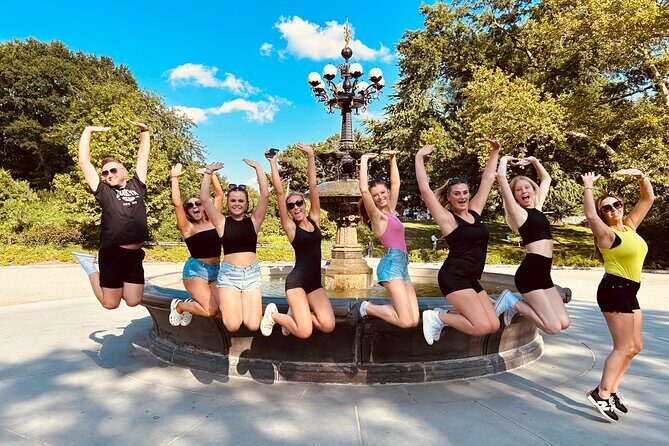
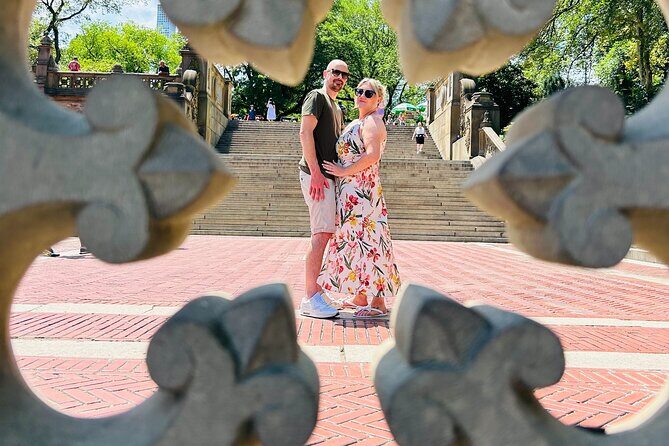
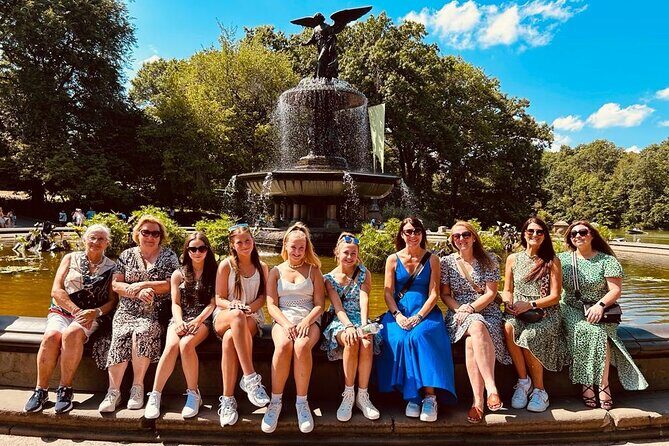
No matter how many times you’ve seen Central Park photos, Bethesda Fountain hits differently in real life. The stop includes the terrace and arcade levels, with the fountain at the center, also known as the Angel of the Waters. This is a “sit for a minute” location, because people-watching plus architecture makes the pause feel worthwhile.
From there, you walk along the Mall, a wide straight path lined by elm trees. It has a refined, formal feel, and the southern part is known as Literary Walk because of statues of writers added in the 19th century. If you’re into storytelling through art, this is a strong match for a guided explanation rather than just a solo walk.
Why this section is valuable: it gives you the Central Park vibe that shows up on postcards and film frames. When the pedicab moves you there quickly, you get to spend your energy on the spots that matter most.
Cherry Hill to Bow Bridge: romantic views and easy photo rhythm
Next is Cherry Hill, named for the cherry trees that bloom there each spring. It overlooks the lake, with a sloping lawn that’s ideal for picnicking and relaxing—plus views of rowboats. Even if it isn’t peak cherry season when you go, the hillside shape makes it feel open and airy.
Then comes Bow Bridge, named for its graceful curve that resembles a bow. It offers expansive views over the lake and surrounding landscapes, and it’s one of the park’s most photographed features. It’s also described as a romantic spot, with proposals taking place here.
This part of the tour works well if you want a clear rhythm: hop out, frame the bridge, take your photo, get back in, and move on before you lose the timing of daylight.
Strawberry Fields to the Dakota: music memorials and famous building silhouettes
Strawberry Fields is a memorial to John Lennon, with the Imagine mosaic where people pay tribute. The name connects to Lennon’s 1967 song “Strawberry Fields Forever,” which gives the place an immediate emotional context beyond the visual.
Then you head to The Dakota, a famous building on the west side of Central Park West between 72nd and 73rd streets. It’s square in plan with an H-shaped courtyard, and apartments access through that central courtyard structure. The notes also point to its historical prestige and scale—so even if you can’t go inside, you get the sense of why this building sits in the Central Park fame conversation.
If you’re into architecture, this stop is a gentle reminder that Central Park isn’t only park-world. It’s an address for big city life too.
Tavern on the Green and Pinebank Arch: classic dining history and a last iron bridge
One of the most Midtown-meets-park moments is Tavern on the Green, in the historic building once known as the Sheepfold. It’s described as a fine dining destination since the 1930s, and it reopened in 2014 after years of renovation that removed some additions to expose more of the original structure and add more variety.
Even if you’re not dining that day, it’s helpful to see where a “Central Park institution” actually sits. It gives you a reference point for future visits, whether you come back for a meal or just want to locate the famous dining landmark.
The tour finishes with Pinebank Arch, an elegant cast-iron bridge spanning the bridle path. The ironwork is described as blending into the surrounding foliage, and it’s often photographed. It also gives a final chance to survey the surroundings before you loop back to the start at Broadway.
Price and value: is $99.99 for 2 hours fair?
For $99.99 per person and about 2 hours, you’re buying three things:
- Coverage. You cover a lot of iconic Central Park territory without needing to plot directions every time you stop.
- Energy savings. You sit for most travel between far-apart sights, which matters when you’re touring the rest of NYC too.
- Guided context. Several guides named in experiences like Ibrahim, Ali, Abraham, and Shade are praised for being friendly, accommodating, and for adding context at stops. One account mentions a guide using pictures and short videos on a phone for extra explanation, which can make a statue or structure feel less random.
The trade-off is time at each stop. You’ll get quick photo moments and short looks, not half-day museum-level exploration. So if you want to linger at a specific attraction—like spending a long time inside a building or shopping for a long time—this is best as your “highlights + orientation” tour, not your only Central Park plan.
Also, timing: the tour is often booked about 38 days in advance, which tells you it’s a popular way to see the park efficiently. If you’re traveling in peak seasons, booking ahead is a smart move.
Who this Central Park pedicab tour suits best
This tour fits you if:
- You want Central Park highlights without planning a complicated route.
- You want to reduce walking distance while still getting out for photos.
- You like guides who explain what you’re seeing in plain terms.
- You’re traveling with a group and want a shared, private experience.
It might not fit as well if:
- You hate any kind of “stop-and-go” pacing.
- You want long, unstructured wandering with no guidance.
- You plan to spend most of your time inside major attractions during the same 2 hours (this route is built for efficient sightseeing).
One more practical note: the tour is marked as suitable for most travelers, and service animals are allowed. It also runs near public transportation, so you can pair it with subway or walking plans.
Should you book it
If your goal is to see the park’s biggest hits—Columbus figure, Bethesda Fountain, Reservoir views, Bow Bridge, Strawberry Fields, and the famous edges around the Dakota—this is a strong booking. The 2-hour format is especially good when you want momentum and don’t want sore legs before dinner.
I’d book it when:
- You’re on a tight schedule in NYC.
- You want a guided “map in motion” so you can return later to what you loved.
- You value photos and quick orientation over long detours.
Skip it (or treat it as optional) if you’re the type who only enjoys Central Park when you can roam slowly for hours with no plan. Otherwise, the pedicab setup is a very workable way to experience Central Park without turning it into homework.
FAQ
How long is the NYC Central Park guided pedicab tour?
It runs for about 2 hours.
What is the price per person?
The price is $99.99 per person.
Is the tour private?
Yes. It’s described as a private tour/activity, so only your group participates.
Where does the tour start and end?
It starts at 1794 Broadway, New York, NY 10019, and it ends back at the same meeting point.
What language is the tour offered in?
It’s offered in English.
Do I get a mobile ticket?
Yes, it includes a mobile ticket.
Are there multiple departure times?
Yes, the tour notes numerous departure times, which can help you fit it into your schedule.
Is the tour good for most travelers?
The tour says most travelers can participate.
Can I bring a service animal?
Yes, service animals are allowed.
Is cancellation refundable if plans change?
You can cancel for a full refund up to 24 hours before the experience starts. Changes or cancellations inside that window are not refundable.