REVIEW · NEW YORK CITY
New York Central Park Guided Electric Scooter Tour
Book on Viator →Operated by Central Park Attractions · Bookable on Viator
Central Park is made for slow walks, but you can see more on an electric scooter. This 2-hour guided ride turns the park into a moving classroom, with stops at landmark spots and plenty of chances to pause and look up close. I like that it’s paced for you, not the crowd, and I especially like the guide focus—people I heard about named Daryl and Barry both bringing strong history and even photo-help into the mix.
Two things I really appreciate: you get to cover a lot of ground without getting wiped out, and you learn details you would miss wandering on your own. A possible drawback is simple: it requires moderate physical comfort with scooter riding, and the experience runs best in good weather.
If you want a fun, efficient way to hit Central Park highlights (with context) while keeping energy for the rest of your NYC day, this is a strong bet.
In This Review
- Key things to know before you go
- Why Central Park looks different from an e-scooter ride
- Is $99 a good value for a 2-hour guided scooter tour?
- Getting started at 1794 Broadway: the Columbus Circle energy check
- Carousel, Chess & Checkers House, and the Dairy stop that feels like a win
- Umpire Rock, The Plaza, and Gapstow Bridge: the southwest highlights
- Central Park Zoo, Balto, and SummerStage: more than a quick pass
- Jacqueline Kennedy Onassis Reservoir: the big open scene with real views
- Belvedere Castle and Harlem Meer: classic views that feel like you found a secret
- Museum Mile and the Met viewpoint: adding a culture layer without leaving the park
- Bethesda Fountain, the Mall, and Literary Walk: the refined, symmetrical center
- Cherry Hill, Bow Bridge, and Strawberry Fields: romantic angles and pop-culture meaning
- The Dakota and Tavern on the Green: the urban edge inside the park
- Pinebank Arch: one last photo-worthy moment before you head back
- Guides make the difference: Daryl and Barry as proof
- Who this Central Park e-scooter tour suits best
- Should you book this Central Park guided e-scooter tour?
- FAQ
- What’s the duration of the New York Central Park guided electric scooter tour?
- How much does the tour cost?
- Where does the tour meet?
- Is this tour private?
- What language is the tour offered in?
- What’s included with the tour price?
- Are there many departure times?
- Does the tour run in bad weather?
Key things to know before you go
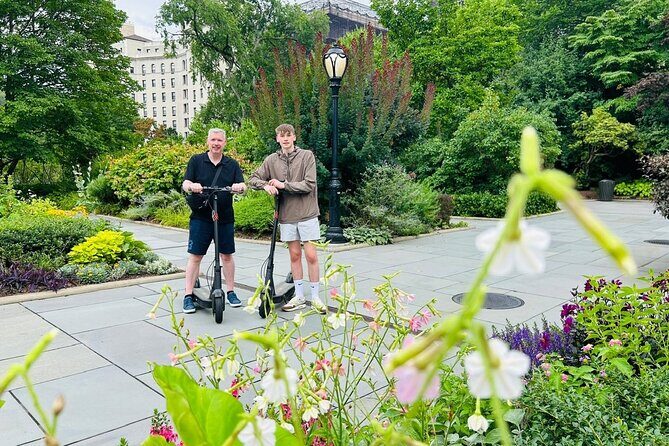
A guided e-scooter plan that helps you see more in less time
Private group setup, so you get personal attention on the route
Frequent stop-and-look moments for photos and quick breaks
Multiple departure times that make it easier to fit your schedule
Guides who are focused on storytelling and photo-friendly viewpoints
Weather matters, and the operator may adjust if it’s too cold
Why Central Park looks different from an e-scooter ride
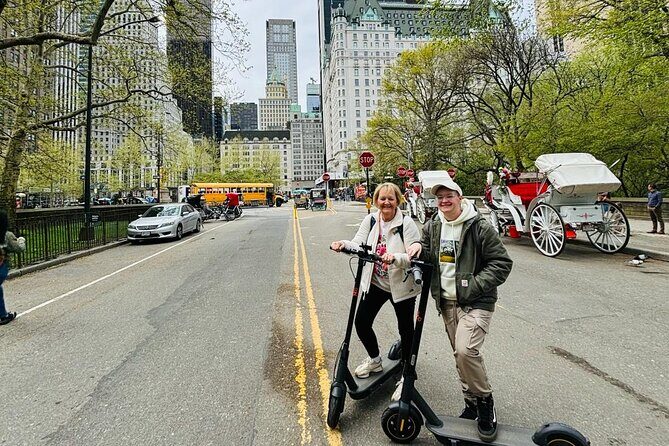
Central Park can feel huge when you’re on foot, and the “I’ll just get to the next spot” plan can quietly become a workout. The big appeal here is practical: the scooter lets you cover distance without burning all your time (or legs). In about two hours, you can bounce between major scenes—water, bridges, viewpoints, monuments—and still have moments to actually see them instead of power-walking through them.
The other reason this works is the human scale of a guided route. A good guide doesn’t just point and move on. They explain why a spot matters, then give you a reason to stop—whether it’s a viewpoint, a historical detail, or a good angle for photos.
And because this is set up as a private tour for your group, you’re not stuck waiting for a large crowd to catch up. If your group likes to slow down for a few extra pictures at a bridge or fountain, you’re more likely to get that rhythm.
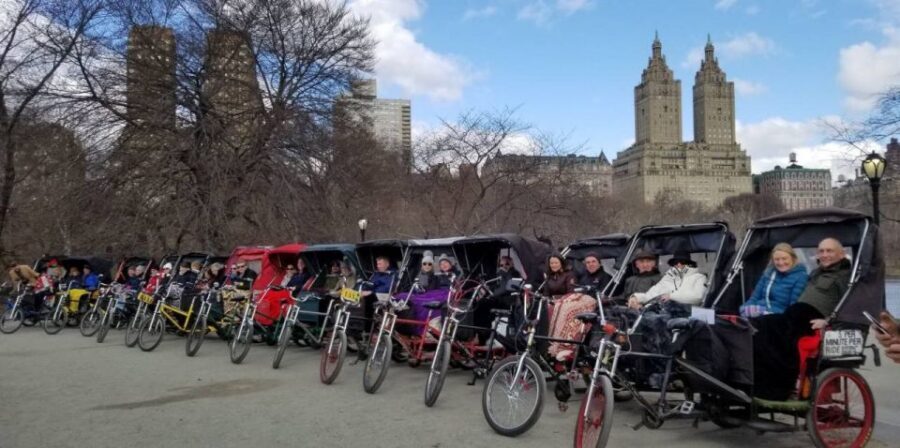
Other electric scooter tours and rentals in Central Park



Is $99 a good value for a 2-hour guided scooter tour?
At $99 per person for roughly 2 hours, the value comes down to what you’re trying to accomplish.
If your goal is Central Park highlights with context, the guide component matters. You’re paying for:
- A private guide who helps you understand what you’re looking at
- Use of the e-scooter, which changes how much you can realistically see
- An itinerary that hits classic icons and photo-friendly stops without requiring you to map a route
If you’re the type who loves reading plaques and wandering, you can still do Central Park on your own. But you’ll probably spend more time getting from place to place and lose some of the surprise. This tour is built for efficiency with meaning.
For families, or for anyone with limited time, the math often works out well: you’re buying back energy and time. Reviews also pointed out guides like Daryl and Barry as being especially engaging, even with kids, plus helpful for photo stops.
Getting started at 1794 Broadway: the Columbus Circle energy check
The tour meets at 1794 Broadway. That’s a solid starting point because it puts you near the Midtown edge of the park, where Central Park’s scale can feel most dramatic right away.
You kick off with a major centerpiece: the colossal Columbus figure on a column, with the Niña, the Pinta, and the Santa María shown on a pedestal and winged details around the base. It’s one of those “you’ve probably seen this in photos” scenes, and getting an explanation on location helps it click faster than it would if you just arrived and moved on.
From the beginning, the pacing is about setting you up for a day in motion: scooter riding, quick orientation, and then jump into the park’s most recognizable layers.
Carousel, Chess & Checkers House, and the Dairy stop that feels like a win
After Columbus, you roll into a different Central Park mood—lighter, more human, and very “NYC playground.”
One stop is the Central Park carousel, first launched in 1871. It may be the kind of attraction you’d skip if you’re not traveling with kids, but it’s worth seeing because of its longevity. Being told that around 250,000 people ride each year makes it feel less like an old-fashioned prop and more like a living part of the park.
Next comes the Chess & Checkers House, now linked to one of the Central Park visitor centers run by the Central Park Conservancy. Around the octagonal brick structure, you’ll spot 24 game tables shaded by a wooden trellis. This is a great moment to slow down. You get architecture, activity, and the sense that Central Park isn’t just scenery—it’s a place with everyday culture.
Then there’s The Dairy, the park’s large gift shop around 65th Street. It’s a practical stop if you want to grab something mid-park: snacks, souvenirs, and gifts that support the park’s care through purchases (as described for the shop). Even if you don’t buy, the stop gives you an easy break point without losing momentum.
Umpire Rock, The Plaza, and Gapstow Bridge: the southwest highlights

As you move deeper, you hit Central Park’s “classic postcard” zone.
Umpire Rock sits in the southwest corner and is named for the park’s first playground location, when children had open space to play games there. A nearby bonus is the chance to look toward Wollman Rink, which helps you connect winter energy to the same area you’re cruising in now. One of the nice things about this tour format is that you naturally get mini-viewpoints rather than only arriving at a single destination.
Then you’ll pass by The Plaza—the historic New York hotel that’s been a celebrity magnet for decades, and famously tied to a 1990s movie setup (Home Alone). It’s brief, but it’s fun to get context for why that corner of the park looks the way it does and why it’s so often used as a backdrop.
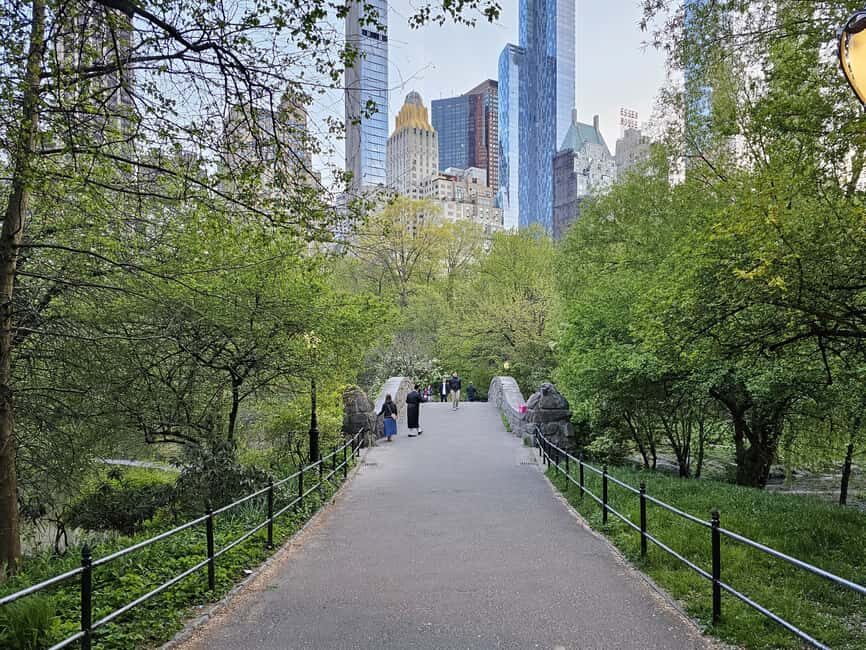
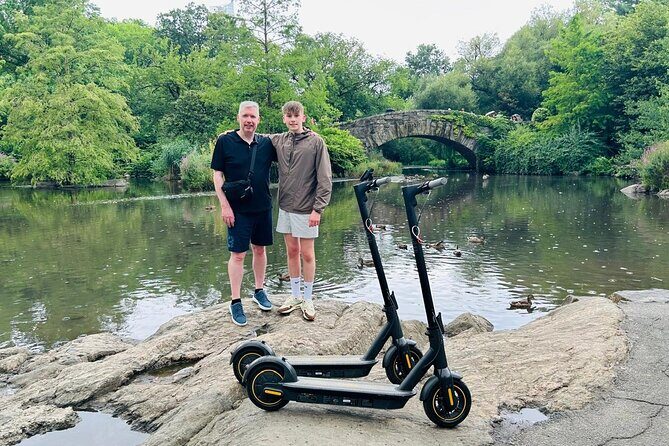
A key photo stop is Gapstow Bridge. The bridge crosses the pond’s narrow neck, and it’s a known viewpoint for scenery and pictures. If you like taking photos where the water and bridge frame each other, this stop does that job.
Other guided tours in New York City





Central Park Zoo, Balto, and SummerStage: more than a quick pass
Central Park Zoo is one of the park’s big anchors, and you get a stop that makes it feel like part of the wider park story instead of a random detour.
You’ll learn that the zoo includes animals from different climates, and one standout is the sea lion pool visible from outside the zoo’s center courtyard. You also get mentions of exhibits that include animals like snow leopards, grizzly bears, and penguins. Even if you don’t go inside, getting this overview helps you understand what you’re looking at if you return later or if you’re deciding whether to add zoo time.
Then you’ll see Balto, the beloved monument tied to the famous Alaska relief journey. The story centers on a diphtheria outbreak in Nome in January 1925 and how weather prevented vaccine transport by plane, leading to a relay of dog-sled teams. It’s a powerful moment in a park that can otherwise feel light and scenic. It also makes the memorial more than a statue—you start to understand why it earned its fame.
From there, you reach the area associated with SummerStage, the outdoor concert and performance series run by the City Parks Foundation. It happens at Rumsey Playfield, which helps you connect Central Park’s year-round life: not just sightseeing, but shows and gatherings.
Jacqueline Kennedy Onassis Reservoir: the big open scene with real views

One of Central Park’s most popular destinations is the Jacqueline Kennedy Onassis Reservoir, and the tour’s timing gives you a reason to notice the scale.
You’ll be told it’s the largest water body in Central Park and that a 1.58-mile track rings it. Even if you don’t run, seeing that track pattern makes you understand why this is where people come to get motion and fresh air. It also attracts birdwatching because of aquatic birds.
This stop is a great example of why guided scooter tours work: you can reach a major feature quickly, take a moment to appreciate the water + skyline view, and then keep moving without losing your day.
Belvedere Castle and Harlem Meer: classic views that feel like you found a secret

Next up is Belvedere Castle, located on top of Vista Rock, the second-highest natural point in Central Park. The “mini castle” idea can make it sound like a gimmick, but its placement on the rock is what makes it memorable. You get height, views, and the sense that Central Park has dramatic changes even though it’s in the middle of a city.
From there you shift to Harlem Meer, in the northeast corner. This is the quieter-feeling water area, with a path lined by benches and lawns for relaxing, picnicking, and sunbathing. It’s also a place where you can notice shoreline vegetation, wildlife, and views of the rocky bluffs known as the Fort Landscape.
If you’re the kind of traveler who loves a moment of calm, this section helps. It breaks up the “see-see-see” feeling and gives you a more scenic, slower pause.
Museum Mile and the Met viewpoint: adding a culture layer without leaving the park
Central Park’s connection to NYC culture is one of its best features. In this tour, you’ll transition toward the Upper East Side area and Museum Mile, the stretch along 5th Avenue next to the park that draws major institutions like the Metropolitan Museum of Art.
You’ll hear that the Met is an encyclopedic art museum, described as the largest art museum in the Americas and the fourth-largest in the world. You won’t suddenly turn into a museum visitor during a scooter tour, but you can connect the dots: this isn’t just greenery. It’s also an easy gateway to some of the city’s big art names.
Even if you don’t plan to step inside the Met, the quick context helps you understand why people treat this side of the park as a cultural hub.
Bethesda Fountain, the Mall, and Literary Walk: the refined, symmetrical center
Now you get into some of Central Park’s most iconic geometry.
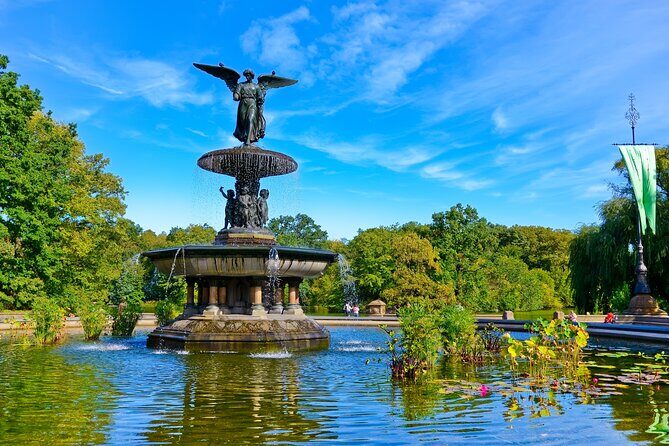
Bethesda Fountain, also known as the Angel of the Waters, is set in a plaza with two levels plus an arcade. The Terrace is a popular people-watching area, and getting to see the fountain in context helps it feel more like an urban gathering point than just a pretty landmark.
Then comes The Mall, one of Central Park’s most significant landscapes: a wide, straight path lined with two rows of American elm trees. The southern stretch is called Literary Walk, because it has statues of writers added in the 19th century. If you like the feeling of walking through a themed idea—names, literature, and time—this is one of the most satisfying sections.
The scooter format helps here too because you can keep the line of sight while traveling, so you don’t break the visual rhythm.
Cherry Hill, Bow Bridge, and Strawberry Fields: romantic angles and pop-culture meaning
This part of the route is where Central Park becomes both cinematic and emotionally recognizable.
Cherry Hill is named for the cherry trees that bloom in spring. Even outside bloom season, you’ll understand why people flock there: it overlooks the lake, with sloping lawn space that’s good for picnics and relaxing. The highlight you’ll hear is that spring brings pink and white blossoms from the Yoshino cherry trees.
Then you reach Bow Bridge, named for its curve that resembles the bow of an archer or violinist. It’s a major photo spot with expansive views over the lake and surrounding scenery. And yes, it has a romantic reputation, with the bridge serving as a site for wedding proposals.
Next is Strawberry Fields, a memorial to John Lennon. The memorial includes the Imagine mosaic, and it’s tied to the Lennon song Strawberry Fields Forever. This stop is a good reminder that Central Park isn’t only about American history and architecture; it also holds global pop-culture memory and peace symbolism.
If you care about landmarks with human stories, you’ll probably linger here—even on a scooter tour.
The Dakota and Tavern on the Green: the urban edge inside the park
As the tour swings back toward Central Park West, you’ll see The Dakota, a famous building on the western side of the park between 72nd and 73rd streets. It’s described as square in plan with apartments accessed through an H-shaped central courtyard. You’ll also learn it’s considered one of the top-tier apartment buildings on Central Park West based on its historical prestige and residents (as described in a referenced New York magazine article).
This stop helps you “feel” where Central Park ends and the city begins. It’s also useful for travelers who want to connect their park visit to the neighborhoods and skyline they’ll keep seeing later.
Then comes Tavern on the Green, located in a historic building once known as the Sheepfold. It’s been a fine dining destination since the 1930s, and it reopened in 2014 after a long renovation that removed some additions to expose more of the original structure and add variety to the dining options. Even if you’re not eating there, seeing a historic structure like this anchors the park’s past in real architecture, not just stories.
Pinebank Arch: one last photo-worthy moment before you head back
The route ends with Pinebank Arch, an elegant cast-iron bridge that spans the bridle path. Designed to look integrated into the landscape, it appears to emerge from rock outcrops on both ends. Its lacy ironwork is the kind of detail you appreciate more when you’re actually stopped for a minute.
It’s also a survey point. From here, you can take in surrounding views and get those “I’m still in Central Park” pictures right before the tour closes.
Guides make the difference: Daryl and Barry as proof
What really seems to lift this tour is guide quality. The information isn’t just facts; it’s delivered in a way that keeps you interested while you’re moving.
Daryl is highlighted for being brilliant and especially great with kids, and that matters because it signals the tour can work for families without turning into a lecture. Barry is highlighted for being amazing, with stops across the park plus interesting history and fun energy. One helpful detail: Barry was also described as being an incredible photographer, which suggests you’ll get photo guidance beyond telling you to stand near something scenic.
If you’re choosing between “quick sightseeing” and “guided experience with better photos,” this is where the value often lands.
Who this Central Park e-scooter tour suits best
This tour is a strong fit if:
- You want major Central Park highlights in about two hours
- You’d rather learn the story than only rely on signs and casual walking
- You’re traveling with kids (and you want the guide to keep things engaging)
- You care about photo stops and want help hitting good angles
It may not be your best choice if:
- Your group has no comfort with scooter riding or balancing
- Your schedule is so packed you can’t enjoy stops and questions (this tour works because you pause)
Should you book this Central Park guided e-scooter tour?
If you’re on a time budget and you want Central Park to feel meaningful instead of just pretty, I’d book it. The combination of guided storytelling, a private group setup, and the ability to cover ground without exhaustion is exactly the kind of upgrade that makes a first Central Park visit smoother.
I’d especially consider it if your day includes multiple NYC priorities and you don’t want Central Park to eat your energy. And if you’re booking for a period where weather can swing, plan for the possibility that the operator may adjust if conditions are too cold for scooters.
Overall: this is a smart, efficient way to see iconic Central Park places and actually understand what you’re looking at while you do it.
FAQ
What’s the duration of the New York Central Park guided electric scooter tour?
The tour runs about 2 hours.
How much does the tour cost?
The price is $99.00 per person.
Where does the tour meet?
The meeting point is 1794 Broadway, New York, NY 10019.
Is this tour private?
Yes. It’s described as a private tour/activity, so only your group participates.
What language is the tour offered in?
The tour is offered in English.
What’s included with the tour price?
The tour includes use of the e-scooter and a private guide.
Are there many departure times?
Yes. It’s noted that there are numerous departure times, making it easier to fit the tour into your schedule.
Does the tour run in bad weather?
The experience requires good weather. If it’s canceled due to poor weather, you’ll be offered a different date or a full refund.