REVIEW · NEW YORK CITY
Central Park New York Guided Walking Tour Semi-Private 12ppl Max
Book on Viator →Operated by Babylon Tours New York City · Bookable on Viator
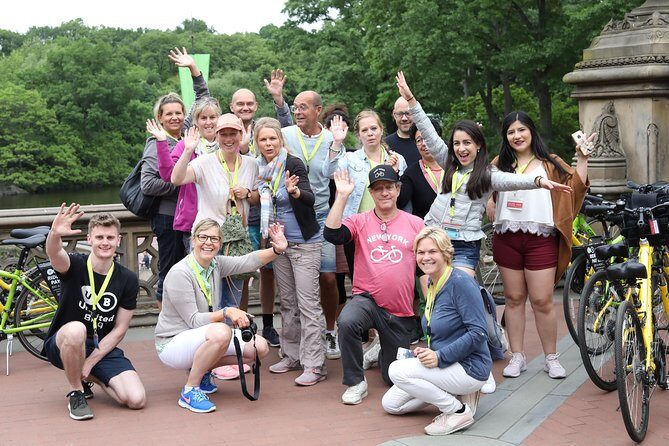
Central Park feels bigger with the right guide. This semi-private walking tour keeps the group small (up to 12), so you can actually ask questions while you cover classic sights in about 2.5 hours. You get stories that connect the park to NYC beyond the trees, and it runs rain or shine.
I like how the route mixes famous landmarks with details you’d likely miss on your own. You move past recognizable spots like Strawberry Fields and Bethesda Fountain, but the guide also points out the statues, the literary connections along the Mall, and the way the park is kept running day to day. Guides named Mark and Jeff have stood out for turning the walk into something that feels like you’re seeing Central Park from both a tourist and a local angle.
One thing to consider: you won’t necessarily go inside everything. With security rules at some attractions, parts of the experience may be view-only, and the exact path can shift for national celebrations.
In This Review
- Key highlights worth centering on
- The sweet spot of a semi-private Central Park walking tour
- Where the tour starts: Central Park South to real landmark territory
- Central Park’s signature run: Gapstow, the Mall, Bethesda Terrace, and the bridges loop
- A small reality check on pacing
- The city edge tour: 432 Park Avenue and Time Warner Center views
- Bow Bridge and Gapstow Bridge: two different looks, two good reasons
- Turtle Pond and the Great Lawn: wildlife pause and picnic energy
- The Dakota and Strawberry Fields: John Lennon’s Central Park path
- Bethesda Fountain and the Angel: art you can’t really ignore
- Central Park Zoo as your finish line (and how to use the extra time)
- Price and value: what $51.94 buys you in real terms
- What to bring so the walk stays comfortable
- Should you book this Central Park semi-private tour?
- FAQ
- How long is the Central Park guided walking tour?
- What group size is this semi-private tour?
- Where do I meet the guide and where does the tour end?
- Is the tour available in bad weather?
- Is the Central Park Zoo included?
- Are tickets or admission fees included for the stops?
- Can I cancel for a full refund?
Key highlights worth centering on
- Max 12 people keeps the pace human and the guide easy to hear
- Icon stops like the Dakota, Strawberry Fields, and Bethesda Terrace/Fountain
- Bridge time at Bow Bridge (cast iron) and Gapstow Bridge (great skyline view)
- Small-group perspective on NYC edges via 432 Park Avenue and Time Warner Center
- Central Park Zoo finish for an easy add-on, with admission not included
The sweet spot of a semi-private Central Park walking tour
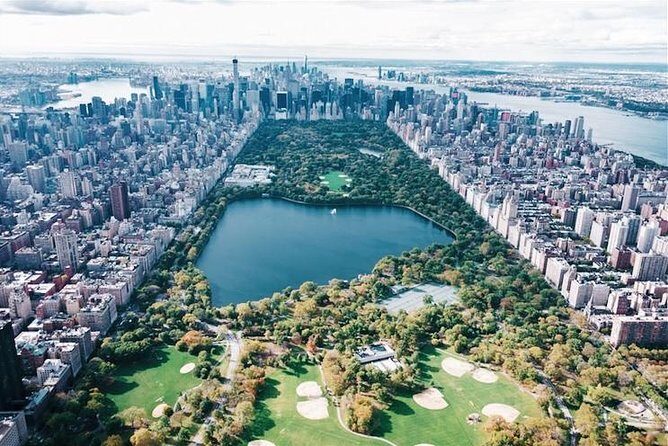
Central Park is huge, and DIY can turn into aimless walking fast. This tour works because it’s long enough to hit the must-sees, but short enough that you’re not done before you’ve even gotten your bearings. With a 12-person maximum, you get a more personal experience than the big-bus style crowding you may be used to in Manhattan.
The tour also makes planning easier because it’s set up to run rain or shine. That matters in NYC, where weather can flip quickly. The general fitness requirement is “moderate,” so if you’re comfortable with a brisk walk for a couple hours, you should be fine.
A big value is the guide’s focus on how the park functions. It’s not just photo stops. You’ll hear about history and maintenance, and that context makes the scenery feel purposeful instead of random.
Other walking tours we've reviewed in Central Park & NYC



Where the tour starts: Central Park South to real landmark territory
You’ll meet at Central Park South (Central Park S). From the start, the tour direction funnels you into the park’s big-name spaces and shows you why these spots became Central Park shorthand for New York itself.
Early on, you’ll get the kind of orientation that saves you time later. For example, you’ll learn your way around statue groupings and themed points, including the presence of figures like Bolivar and Marti, plus more playful references such as sled-dog Balto and characters from Alice in Wonderland. It’s the sort of detail that makes your later independent wandering feel smarter, not harder.
Then the route starts to connect the park to the city in a very practical way. You cross bridges and move between famous “icons” without having to navigate the map constantly. And because you’re walking with a guide, you’re not guessing which view is worth the extra few minutes.
Central Park’s signature run: Gapstow, the Mall, Bethesda Terrace, and the bridges loop
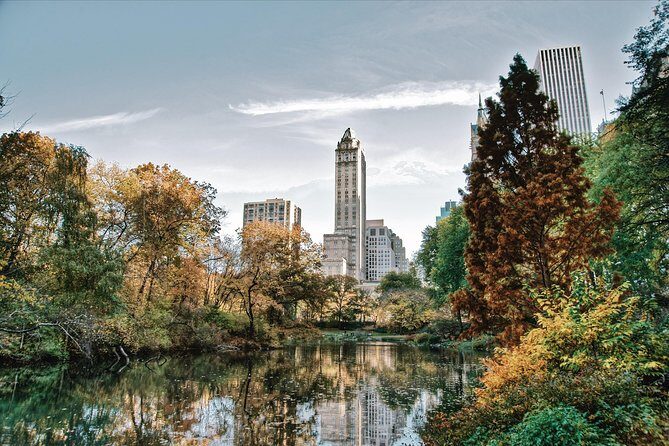
Central Park is at its best when you notice the composition: gates, paths, terraces, and sightlines that were designed to frame the city. This tour highlights that design language.
A key moment is moving across Gapstow Bridge, first as a bridge-crossing and then again later as a standout view. The bridge was originally built in 1874, and the reason it keeps showing up on cameras is simple: it gives you a strong look toward the skyline. Even if you’ve seen NYC pictures a thousand times, this angle hits differently because you’re surrounded by park edges.
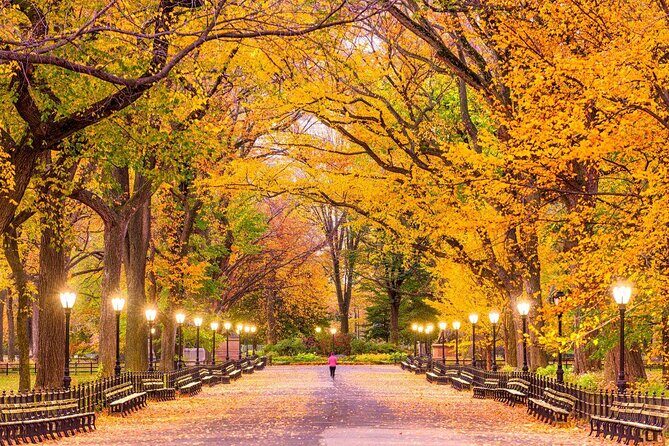
Another major anchor is the Mall, where you’ll talk about literary figures connected to the path. The Mall is one of those places where timing matters. If you’re there during softer daylight, the straight walk and tree-lined symmetry makes everything feel calmer, and the guide’s references help you notice the why behind the design.
Then you’ll reach Bethesda Terrace and the Fountain, one of the most instantly recognizable Central Park scenes. The tour connects it to public art too, including the fact that the Angel of Bethesda became New York City’s first major public art commission from a woman. If you like civic design, this is the moment you’ll want to slow down and look longer than planned.
Along the way, you may also pass by spots like Tavern on the Green (with the note that you might want to plan dinner nearby) and Sheep Meadow, which is where many locals go to reset. That mix of grand monuments and casual hangout areas is part of why Central Park feels like it belongs to real people, not just history books.
A small reality check on pacing
This is still a walking tour, and you’ll be moving. If your goal is to linger at every single photo spot for 20 minutes, this won’t be that kind of tour. The tradeoff is you get a tightly guided route with enough stops that you can still enjoy the details, even if you’re not spending an hour at one location.
The city edge tour: 432 Park Avenue and Time Warner Center views
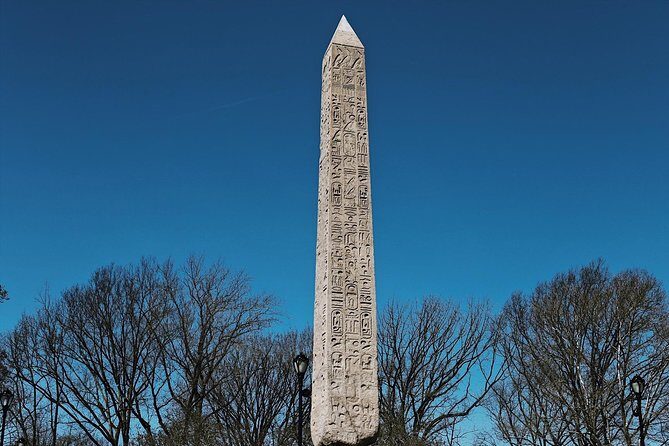
One of the smarter choices here is that the tour doesn’t treat Central Park like an island with no connection to NYC. You’ll also get moments that show how the park sits next to real power.
At 432 Park Avenue, you’ll see the surviving ASPCA horse drinking fountain from 1912. That detail is surprisingly practical: it’s the only place in the city where you can bring a horse to drink water, if you happen to have one. It’s also a reminder that the park has always been part of city life, not sealed off from it.
From there, you’ll walk toward a viewpoint that frames the residential skyscrapers overlooking Central Park. You’ll also spot the second tallest building in New York after One World Trade Center—another “wow, right, that’s right there” moment that helps you understand how rare it is to have this much open space in the middle of Manhattan.
Next comes Time Warner Center, a mixed-use complex with two towers connected by a multi-story atrium. You’ll get the basic idea—retail, office, and residential spaces—and then you move on. This section isn’t about shopping or office towers. It’s about context: you’re walking the border between green space and the built city.
Other walking tours we've reviewed in Central Park & NYC




Bow Bridge and Gapstow Bridge: two different looks, two good reasons
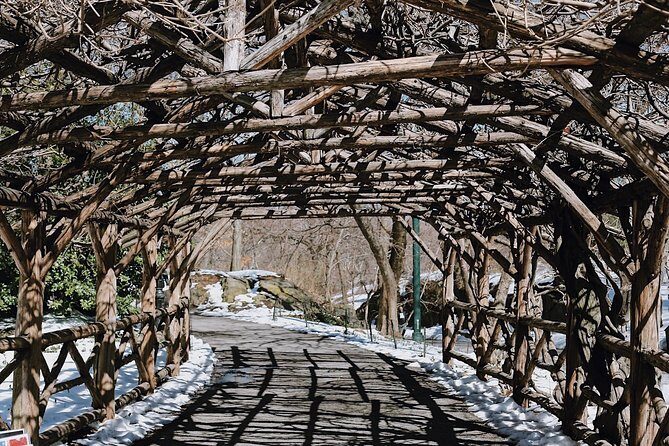
Bridges in Central Park aren’t just crossings. They’re set pieces—designed to frame views and add structure to the park’s “rooms.”
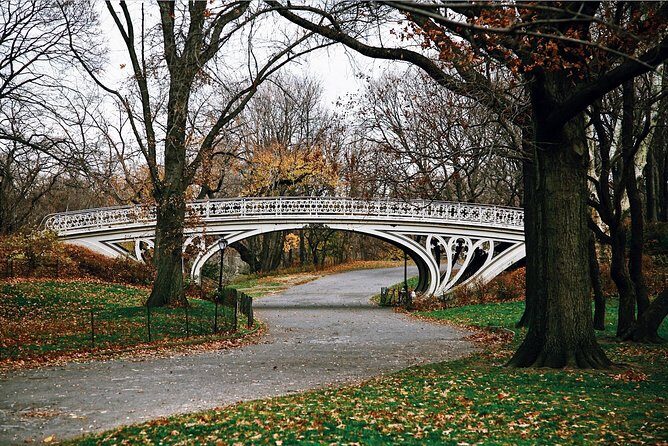
You’ll visit Bow Bridge, described as the largest bridge in the park. It’s a cast iron bridge with a classical look, and the details matter here: you’ll see the interlocking-circles design on the railing and the intricate elements under the arch span. That’s the sort of thing that’s easy to overlook while moving. With a guide, you get the visual checklist to notice.
Then you’ll get back to Gapstow Bridge, where the skyline view is the main payoff. This is one of those spots where a guide explanation helps you understand why the view works. You’re not just stopping because it’s famous—you’re stopping because it’s framed for the city backdrop.
If you like photography, plan for short bursts rather than long rests. The bridges give you high impact in a short stop, which makes them perfect for a semi-private format.
Turtle Pond and the Great Lawn: wildlife pause and picnic energy
After the bridges and viewpoints, the tour shifts toward a quieter mood.
You’ll head toward Turtle Pond, where many of the park’s turtles live. It’s not a zoo scene, but it’s a reminder that the park runs like a small ecosystem. Even if you don’t see turtles at the exact moment, the point is the same: Central Park isn’t only for people.
Nearby is the Great Lawn, a 55-acre space known as one of the world’s most famous lawns. This is where a picnic idea starts to feel real. If you’re traveling with snacks or you plan to grab something later, this stop is where you can picture how you’d spend a warm afternoon in the park. The guide’s timing here helps too: the area is a great reset after the bridge views.
A drawback to note: if you’re visiting on a day with lots of crowds, the Great Lawn can feel busy. The tour helps you experience the spot with meaning, but it can’t remove the fact that this is a high-demand area.
The Dakota and Strawberry Fields: John Lennon’s Central Park path
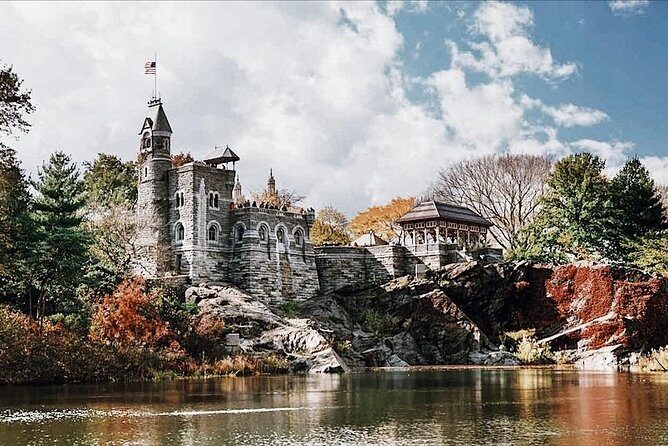
If your NYC trip has even a small pop-culture angle, this part of the walk will likely be the emotional center.
At the Dakota, you’ll learn its basics first: constructed in 1884, it’s a famous cooperative building that still keeps much of its original character. Then comes the Lennon connection—John Lennon lived here until his death in 1980, and the tour points out the association tied to the building’s archway.
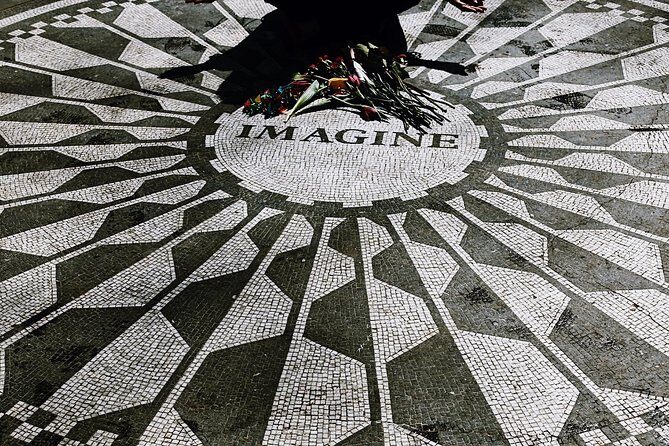
Next you reach Strawberry Fields, a 2.5-acre tribute area inside Central Park. It’s described as a quiet area, lined with elm trees, shrubs, flowers, and rocks. The rocks are part of what makes the place feel reflective instead of purely decorative. Even if you don’t know the full backstory, the atmosphere is easy to feel.
This stretch works well in a walking tour because the spacing is right: you’re not forcing a long detour, but you’re also not skimming past. The guide’s pacing gives you a chance to stand still long enough to feel why these two places are paired in NYC memory.
Bethesda Fountain and the Angel: art you can’t really ignore
Bethesda Terrace and Bethesda Fountain are hard to describe without sounding like a postcard, but the value of this tour is in what you notice once someone explains it.
You’ll see the Angel of Bethesda atop the fountain. The tour highlights that the angel became the city’s first major piece of public art commissioned from a woman, which reframes the moment from decoration to history. You’ll also learn how the terrace anchors the park’s design and why it’s such a gravity point for walkers.
One of my favorite aspects of guided walks like this is how they can change your attention. Instead of rushing to the big object, you start looking at the surroundings: the structure of the terrace, the way light hits the sculpture, and the path layout that funnels people into the same “look here” view.
And if you happen to catch music around the Bethesda area, it can be striking. People have talked about moments like a soprano busker in the nearby arcade space, where the acoustics feel strong. Even if you don’t plan on it, the point is that Bethesda often feels like a performance stage inside a park setting.
Central Park Zoo as your finish line (and how to use the extra time)
The tour ends at the Central Park Zoo at the southeast corner of Central Park, at Central Park West side. You’ll have a short window at the end to either stay and explore the area or head to the subway. The zoo itself is an obvious add-on, but here’s the key detail: admission to the zoo is not included.
So think of this finish as two ways to customize your day:
- If you want more park time, stay near the zoo grounds.
- If you’re done with the park by then, use the tour ending as a clean way to pivot back to NYC.
It’s a smart ending point because you’re not stuck deep inside the park with nowhere easy to go. The guide can point you toward the nearest subway, which makes the transition smoother.
Price and value: what $51.94 buys you in real terms
At $51.94 per person, this tour isn’t the cheapest way to move around Central Park. But you’re not paying for access. You’re paying for time savings and interpretation.
The main value is that you’re getting a professional guide on a route that would be hard to organize well by yourself, especially if you want the right mix of famous spots and the in-between details. You also get a small group size, which matters in a place like Central Park where bottlenecks happen fast.
Also, the tour structure reduces decision fatigue. With multiple iconic stops—bridges, literary references along the Mall, John Lennon landmarks, and Bethesda art—having a guide means you don’t have to choose what to skip. You’ll still enjoy the views, but you’ll also understand why these landmarks matter, and you’ll likely notice more once you’ve been pointed in the right direction.
If you’re the kind of traveler who reads a plaque for longer than most people, this tour can feel like a shortcut to better noticing.
What to bring so the walk stays comfortable
This is a 2.5-hour trek, so small comfort choices matter.
Bring comfortable shoes—Central Park is forgiving, but you’ll still be walking. Plan for weather with an umbrella and a bottle of water. During warmer months, a hat helps a lot. And if you’re packing light, remember that no large bags or suitcases are allowed.
If you’re sensitive to crowds, treat this as a “pick good moments” kind of day. The tour will take you through busy areas, but it also helps you time what you look at once you’re there.
Should you book this Central Park semi-private tour?
Book it if you want Central Park to feel guided without feeling boxed in. This setup is especially good for first-timers who want the classics—Dakota, Strawberry Fields, Bethesda, and the bridges—plus enough context to make the park click. It’s also a great choice for couples or small groups who like learning on foot and don’t want a giant crowd in their ear.
Skip or think twice if you’re planning a slow, sit-and-stay day where you want to linger for long stretches at just one location. This tour is built for coverage and meaning, not marathon pacing.
If you’re visiting with a moderate fitness level and you’re happy walking for a few hours, this is one of the cleaner ways to turn Central Park from a list of famous spots into a connected experience.
FAQ
How long is the Central Park guided walking tour?
The tour is approximately 2 hours 30 minutes.
What group size is this semi-private tour?
The tour allows a maximum of 12 travelers.
Where do I meet the guide and where does the tour end?
You start at Central Park South (Central Park S) and end at Central Park West (Central Prk W).
Is the tour available in bad weather?
Yes. The tour runs rain or shine.
Is the Central Park Zoo included?
The tour ends at the Central Park Zoo, but zoo admission is not included.
Are tickets or admission fees included for the stops?
The tour listing notes admission tickets as free for the included stops, but the Central Park Zoo admission is not included.
Can I cancel for a full refund?
Yes. You can cancel up to 24 hours in advance for a full refund.