REVIEW · NEW YORK CITY
Central Park: Scandal & Vice Walking Tour
Book on Viator →Operated by Purefinder New York · Bookable on Viator
Central Park has hidden stories under every path. This walking tour focuses on scandal and vice, so you’ll see familiar park landmarks with a very different lens. I like how it goes beyond the usual photo stops and turns Central Park into a guided storybook of arrests, crimes, and controversial monuments, starting right where the Arsenal sets a gritty tone.
Two things I especially like: you get a small-group format (max 15) that leaves room to ask questions, and the guide ties the park’s famous design to the messy human drama around it. One consideration: the subject matter runs darker than a standard sightseeing walk, so if you prefer light and breezy park history, this may feel more intense than you expect.
In This Review
- Key highlights at a glance
- Why this Central Park tour feels different
- Price and what you’re really paying for
- Meeting point: the Arsenal at 830 5th Ave
- Your end point: the Ramble, then an easy exit
- Stop-by-stop: what you’ll hear at each landmark
- Stop 1: The Arsenal and Central Park’s 19th-century trouble
- Stop 2: Central Park Zoo—strange origins and arrest stories
- Stop 3: Balto Statue and the controversy behind it
- Stop 4: Rumsey Playfield, plus Wisteria Pergola drama
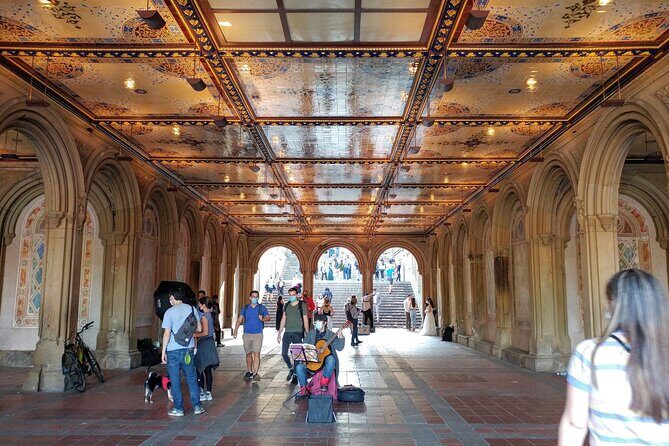
- Stop 5: Bethesda Terrace—Jacob Wrey Mould and the crime/vandalism link
- Stop 6: Sheep Meadow and Hooverville during the Great Depression
- Stop 7: Strawberry Fields—murder, class, and subculture overlap
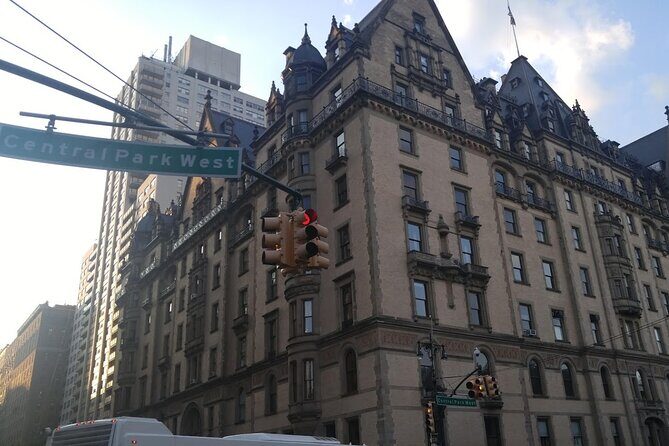
- Stop 8: The San Remo and Central Park-related accidents
- Stop 9: American Museum of Natural History—heist and witness protection trouble
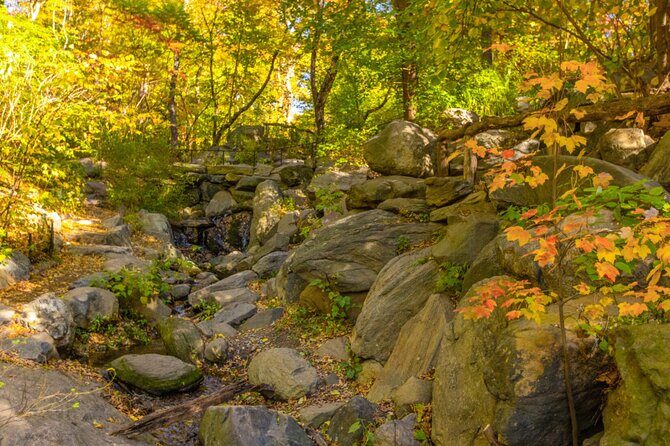
- Stop 10: The Ramble—cruising history, raids, and pop culture
- Small-group format: how the group size changes the experience
- Who should book this tour (and who might skip it)
- What to bring for a smooth walk
- Should you book Central Park: Scandal and Vice?
- FAQ
- What’s the price of the Central Park Scandal and Vice Walking Tour?
- How long is the tour?
- Where does the tour start?
- Where does the tour end?
- What time does the tour start?
- What group size should I expect?
- Is the tour offered in English?
- Is bottled water included?
- Can I use a mobile ticket?
- What’s the cancellation policy?
- Is it easy to get there using public transportation?
Key highlights at a glance
A small-group walk (max 15) for real Q&A
19th-century violence and evictions at the Arsenal
Arrests for indecency and odd origins behind the zoo
Scandal-linked art, statues, and “what really happened” stories
Park-adjacent connections to a heist and witness protection fallout
Ends in the Ramble, so you can keep exploring if you want
Why this Central Park tour feels different
Central Park is one of those places you think you already know. You’ve walked it. You’ve taken the classic shots. You’ve maybe done the “what you’re seeing” tours that hit the highlights and move on.
This one slows you down and makes you pay attention to the human side of the park. Instead of treating the scenery as pure beauty, the guide connects the landscape to the actions around it: the people pushed out before the park existed, the trouble that followed, and the controversies tied to statues and designers. That mix is what makes it satisfying for NYC fans who want something more than the usual route.
And because it’s a mobile-ticket tour with a live English guide, you can focus on the walk rather than logistics. You’ll also get an in-person guide experience designed for questions, not just narration.
Other walking tours we've reviewed in Central Park & NYC



Price and what you’re really paying for
The tour costs $40 per person for about 2 hours. That price feels fair when you think about what you’re buying: a guide who can connect multiple sites, offer context, and keep the group moving at a pace that supports conversation.
Also, because it’s small-group and not a huge crowd, you’re less likely to get stuck listening to a loudspeaker over your shoulder. You’ll have time to ask what you’re curious about—especially if you want to understand why certain Central Park stories have stayed controversial.
A practical note: bottled water isn’t included, so plan to bring your own or purchase it nearby before you start.
Meeting point: the Arsenal at 830 5th Ave
You’ll start at The Arsenal, 830 5th Ave, New York, NY 10065, with the tour starting at 11:00 am. The starting point matters because it frames the whole experience. The walk begins with the park’s early, darker context rather than jumping straight to the view.
If you’re using public transit, you’ll find the area easy to reach, and the route is close to major lines. The end point is also helpful for planning after the tour.
Your end point: the Ramble, then an easy exit
The tour finishes in the Ramble at the Stone Arch in Central Park (Oak Bridge area, New York, NY 10024). After the walk, the guide escorts you out of the Ramble unless you choose to stay longer.
The nearest exit out of the park is near West 77th Street and Central Park West, close to the 81 St–Museum of Natural History subway station (B, C). That’s a big convenience if you’re planning dinner afterward or want to head home without wandering back through the park.
Stop-by-stop: what you’ll hear at each landmark
This is a walking tour with short stops—think quick stories, not long museum lectures. That structure is useful: it keeps momentum high while still covering a lot of Central Park-connected topics.
Other walking tours we've reviewed in Central Park & NYC




Stop 1: The Arsenal and Central Park’s 19th-century trouble
At the Arsenal, you’ll get a brief Central Park history, then shift into its association with 19th-century infamy and violence. The guide also covers the evictions that happened in the area before the park was constructed.
Why it works: this stop sets expectations. You learn that the park didn’t appear in a vacuum. It came after conflict, removal, and hard decisions—so the rest of the walk makes more sense when the guide starts pointing out later controversies.
Possible drawback: because this is the first stop, you’ll want to arrive ready to listen. If you show up late or distracted, it’s harder to catch the frame that connects everything that comes next.
Stop 2: Central Park Zoo—strange origins and arrest stories
Next up is the Central Park Zoo. You’ll hear about strange origins tied to the zoo—and even arrests for indecency that occurred there.
This stop feels like a pattern match: places you assume are wholesome or purely family-friendly end up having real stories behind the scenes. The guide keeps it grounded in what the site represents, rather than making it sensational for its own sake.
Stop 3: Balto Statue and the controversy behind it
At the Balto statue, you’ll hear about controversy connected to the city’s first dog statue. The guide also brings in scandalous stories linked to other Central Park statues.
This is the kind of stop I find most rewarding if you like art and public memory. Statues aren’t just decoration; they’re claims about what a city chooses to honor. When those claims become controversial, you start seeing the park as a civic arena, not just a backdrop.
Stop 4: Rumsey Playfield, plus Wisteria Pergola drama
At Rumsey Playfield, you’ll hear about quarrels connected to the Wisteria Pergola. The guide also covers a prohibition-era nightclub that used to exist in Central Park.
Why it matters: the guide shows how Central Park has always been a space people used for more than walks. Even in a planned park setting, people organized, fought, and partied—or got in trouble—according to the rules of the era.
Stop 5: Bethesda Terrace—Jacob Wrey Mould and the crime/vandalism link
At Bethesda Terrace, the story focuses on Jacob Wrey Mould, described here as the unsung third designer of Central Park. You’ll also hear about crime and vandalism and how that ultimately helped become a catalyst for the Central Park Conservancy.
This stop is a good pivot from scandal to repair. You start with wrongdoing and ends with organized stewardship. Even if you already knew the Conservancy played a role, hearing how crime and neglect fed into that outcome gives you a clearer picture of why the park’s care system exists.
Stop 6: Sheep Meadow and Hooverville during the Great Depression
At Sheep Meadow, you’ll learn about Hooverville, a settlement during the Great Depression, plus protest and demonstration history tied to the meadow.
That combination—personal hardship plus collective action—is powerful because it reframes what “a park” means during national crises. Sheep Meadow isn’t just scenic lawn. It’s also a place where people showed up when they had nowhere else.
Stop 7: Strawberry Fields—murder, class, and subculture overlap
At Strawberry Fields, the guide brings in a gruesome murder connected with the area, with links that intersect class and subculture.
This stop is for people who like to connect culture to context. The park often gets treated as neutral ground. Here, the guide suggests it can reflect social tensions around it.
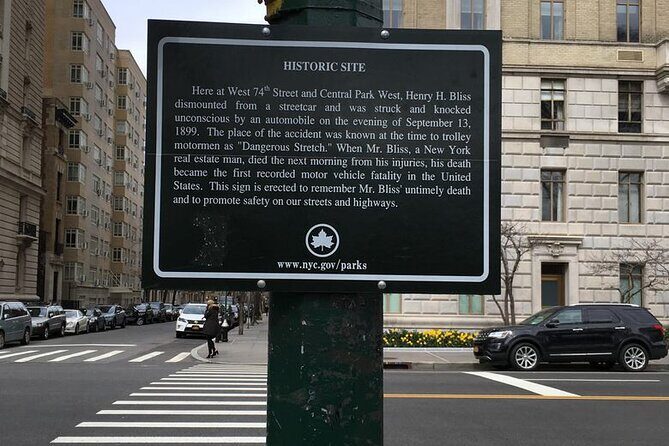
Stop 8: The San Remo and Central Park-related accidents
At The San Remo, you’ll hear about interconnecting history involving accidents, stunts, and suspicious deaths connected with Central Park.
I like the way this stop works like a detective thread. You’re not just told one-off stories; you’re guided toward how one incident can connect to rumor, fear, or media attention. It keeps you thinking while you walk.
Stop 9: American Museum of Natural History—heist and witness protection trouble
Stop 9 brings you close to the American Museum of Natural History. You’ll hear about a notorious park-adjacent heist, plus another tale tied to a witness protection situation that went wrong.
This is a great stop if you enjoy the idea that Central Park’s influence extends beyond its borders. The park isn’t an island; it connects to the institutions next to it, and that proximity can matter when major events happen.
Stop 10: The Ramble—cruising history, raids, and pop culture
Finally, the walk ends in the Ramble. Along the way, you’ll hear about the Ramble’s cruising history, nighttime incidents, police raids, and the films and TV shows that activity inspired.
For me, this is the emotional closer. It’s one of the park’s most atmospheric zones, and the guide frames that atmosphere with real-world history rather than leaving it as pure aesthetics. It also explains why the Ramble has a reputation beyond “quiet walking.”
Small-group format: how the group size changes the experience
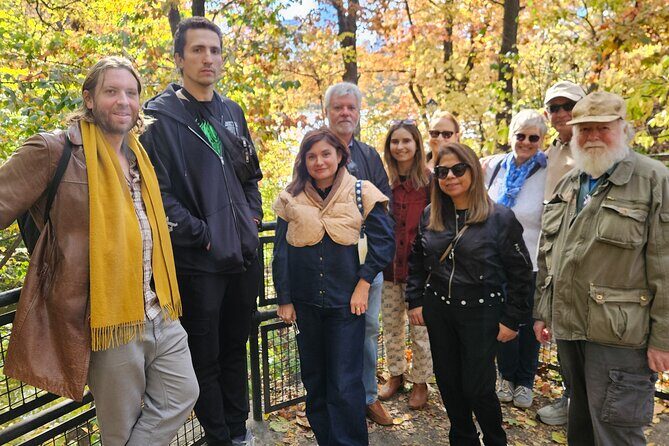
The tour runs with a maximum of 15 people, and that matters. In practice, it means the guide can keep pace while still answering questions without turning it into an awkward Q&A line.
I also appreciate that the tour is explicitly English-language and led by an in-person guide. It keeps the pacing consistent and helps if you want clarification on a specific scandal or name.
Who should book this tour (and who might skip it)
You’ll likely enjoy this tour if:
- You’re the type of NYC visitor who reads the plaque, but also wants to know what went wrong.
- You like public art, architecture, and city design, but want the human drama behind it.
- You want a different take on Central Park that still stays grounded in real places.
You might want to choose something lighter instead if you prefer parks framed mainly by beauty and straightforward sightseeing, not by arrests, violence, crime, and scandal.
What to bring for a smooth walk
Because the tour is about 2 hours and includes multiple outdoor stops, plan for basic walking comfort. I suggest wearing shoes you can move in for a while, and bring something to drink since bottled water isn’t included.
If you want to take photos, be aware that the guide may be talking during key points—so it helps to listen first, then shoot after. The stop stories stick better that way.
Should you book Central Park: Scandal and Vice?
Yes, if you want Central Park to feel like a living city story, not just a postcard. This tour’s value is in how it connects multiple sites into one theme: scandal, vice, and controversy—with a guide who can answer questions in a small-group setting.
Skip it only if dark history isn’t your thing. If you’re okay with that tone, you’ll probably love how many different sides of Central Park you get to see in just around two hours, ending in the Ramble with an easy path to leave.
FAQ
What’s the price of the Central Park Scandal and Vice Walking Tour?
It’s $40.00 per person.
How long is the tour?
The tour lasts about 2 hours.
Where does the tour start?
The meeting point is The Arsenal, 830 5th Ave, New York, NY 10065.
Where does the tour end?
It ends in the Ramble at the Stone Arch in Central Park (Oak Bridge, New York, NY 10024). The guide escorts you out of the Ramble at the end unless you choose to stay.
What time does the tour start?
The start time is 11:00 am.
What group size should I expect?
The tour has a maximum of 15 travelers.
Is the tour offered in English?
Yes. The guide and tour are in English.
Is bottled water included?
No. Bottled water is not included.
Can I use a mobile ticket?
Yes, the tour uses a mobile ticket.
What’s the cancellation policy?
You can cancel for a full refund up to 24 hours in advance of the experience’s start time. If you cancel less than 24 hours before, the amount paid won’t be refunded.
Is it easy to get there using public transportation?
It’s near public transportation, and the nearest exit out of the park is close to 81 St–Museum of Natural History (B, C).