REVIEW · NEW YORK CITY
Central Park: Bethesda Terrace, Strawberry Fields, Bow Bridge
Book on Viator →Operated by New York City By Foot · Bookable on Viator
Central Park feels manageable with a guide, not a map. This small-group walk threads together the big-name scenes—from Bethesda Terrace to Strawberry Fields—so you get context as you go, not just snapshots. You start at Grand Army Plaza and finish in the quiet memorial section tied to John Lennon, with stories that connect the park’s layout to its cultural impact.
Two things I really like about this tour: you’re guided by live commentary that helps you understand what you’re seeing, and the pace is designed for photos, with 14+ photo stops along the route. The group size stays small (up to 15 people), which makes it easier to hear the guide and ask quick questions without feeling like you’re in a crowd.
One consideration: it’s still a walking tour—about 3 hours—with multiple stops. If you want long sits in cafés or indoor attractions, you’ll likely prefer adding extra time to the rest of your day after the tour ends.
In This Review
- Key highlights worth your time
- Grand Army Plaza: Where Central Park meetings start
- Duck Pond to Wollman Rink: Quick nature and winter-to-spring contrasts
- Practical tip for your photos
- The Dairy and Chess & Checkers: Classic park buildings and playful energy
- Carousel time at Central Park Carousel
- Sheep Meadow views: Open space with skyscrapers in the background
- Poet’s Walk and the Mall: Literature that shapes the scenery
- Bethesda Terrace and the Angel of the Waters: The emotional heart of the park
- Alice in Wonderland Statue: Whimsy in full scale
- Loeb Boathouse and the lake: A peaceful pocket in the middle of it all
- The Ramble: A nature-feeling pause inside the city
- Bow Bridge: The cast-iron icon you can’t ignore
- Cherry Hill: Panoramic lake views with a seasonal bonus
- Strawberry Fields: A quiet ending with John Lennon’s Imagine mosaic
- How the route feels in real time (and why mornings work)
- Price and value: What $39 buys on this kind of Central Park day
- Who should book this walking tour (and who might want another plan)
- Should you book this Central Park tour?
- FAQ
- How long is the Central Park walk?
- Where does the tour start and end?
- What’s included in the $39 price?
- Are there admission fees at the stops?
- How big is the group?
- Can I cancel for a full refund?
Key highlights worth your time
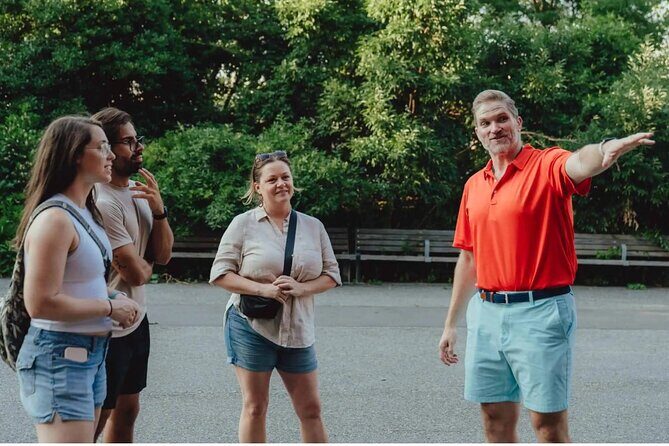
- Max 15 people keeps the focus on the stories and your questions
- 14+ photo stops at the park’s most recognizable viewpoints
- Expert live commentary that explains the park’s design and legacy
- South-to-center route that’s easiest for first-timers to follow
- Morning start (9:30 am) leaves the rest of the day open for your own plans
Grand Army Plaza: Where Central Park meetings start
The tour begins at Grand Army Plaza, the classic southeastern entrance into Central Park. Standing here first helps you get your bearings fast, because you’re entering from the city side and immediately seeing how the park’s “pause button” works.
This is also a good warm-up stage. You’re not thrown into the deepest parts of the park right away; instead you start with a clear point of reference and the guide’s orientation, which matters if you’re visiting Central Park for the first time or just feel overwhelmed by the size.
If you're still narrowing it down, here are other tours in New York City we've reviewed.



Duck Pond to Wollman Rink: Quick nature and winter-to-spring contrasts
Next you head toward the Duck Pond, where you can slow down for a calm look at the water and the park’s wildlife. It’s a small moment, but it’s exactly the kind of scene that makes Central Park feel different from the streets around it.
From there, you pass the Wollman Rink, a spot that changes with the seasons. Depending on when you visit, you might see skaters or just take in the views from the rink’s setting—either way, it’s a handy reminder that Central Park shifts its mood throughout the year.
Practical tip for your photos
Bring your camera-ready mindset. This route keeps moving, but it builds in dedicated photo moments, so you don’t have to guess which corners are worth the stop.
The Dairy and Chess & Checkers: Classic park buildings and playful energy

At the Dairy Visitor Center and Gift Shop, you’ll notice the Gothic-style architecture—a detail that turns an ordinary-looking building into a recognizable Central Park landmark. Even if you’ve only walked past it before, having the guide point out what you’re looking at makes the architecture feel more intentional.
Nearby is the Chess & Checkers House Visitor Center, where the whole area has that casual, human scale that makes parks feel alive. If you’re into watching people, it’s the kind of stop where you can read the park like a living room—games, small interactions, and an easy break in the walking.
Carousel time at Central Park Carousel
The stop at the Michael Friedsam Carousel is short, but it’s a crowd-pleaser for a reason: it’s built for classic Central Park charm. You’ll see the crafted horses and hear context about why this carousel became a beloved landmark.
Even if you’re not traveling with kids, this is a smart pause. It breaks the day into smaller chapters, and it gives you something visual to anchor the stories the guide has been telling.


Sheep Meadow views: Open space with skyscrapers in the background
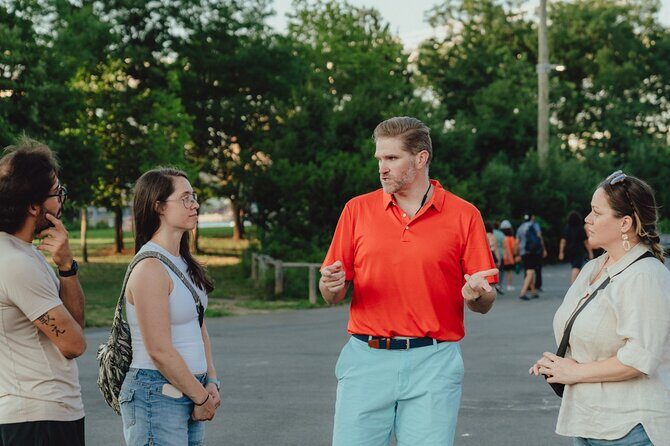
If conditions allow, you’ll make a stop at Sheep Meadow, one of the park’s most recognizable open lawns. This is where you really feel the scale of Central Park—wide, open, and designed for relaxing, picnicking, or just spreading out (when you’re here, you’ll understand why it’s so famous).
The big advantage of this stop on a guided walk is timing. Instead of searching for the right viewpoint on your own, you get an intentional stop that’s positioned for those skyline-in-the-distance views.
Poet’s Walk and the Mall: Literature that shapes the scenery
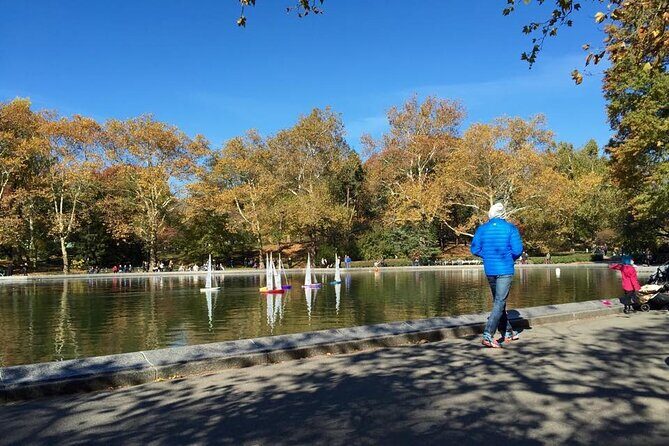
Walking along the Mall and Literary Walk, you’ll get to Poet’s Walk, known for its elm trees and literary-inspired benches. It’s one of those Central Park features where a small design choice—what lines the path, how it’s framed—turns the walk into something more reflective than “just getting from A to B.”
This is also a good section if you’re the type who likes to understand the reasoning behind a place. Central Park didn’t become iconic by accident; the guide’s explanations here help you see how the park invites different uses—strolling, thinking, pausing—without feeling random.
Bethesda Terrace and the Angel of the Waters: The emotional heart of the park
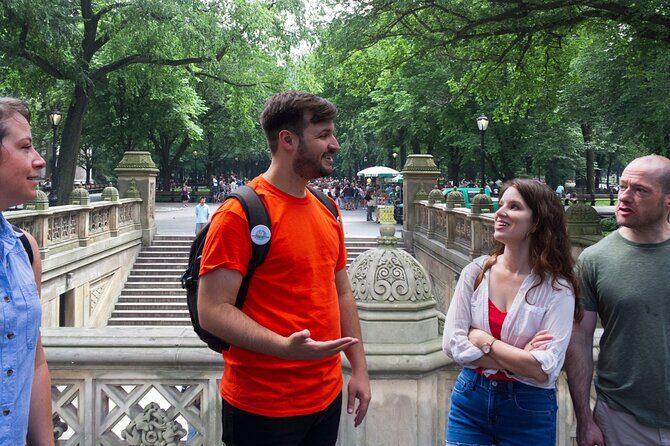
Then comes the big classic moment: Bethesda Terrace, one of Central Park’s showpiece areas. You’ll spend time here for a look at the Angel of the Waters Fountain, plus the sweeping perspective connected to the adjacent lake.
This stop is where the tour’s value really clicks for many people. You’re not just seeing a famous viewpoint—you’re getting the “why it matters” behind the architecture and the way the space is meant to be experienced from multiple angles.
If you’re short on time in New York and only want the most meaningful sights, Bethesda is the kind of stop you’ll want to prioritize. Having a guide saves you from the common problem of standing in front of something impressive and missing the story that makes it unforgettable.
Alice in Wonderland Statue: Whimsy in full scale
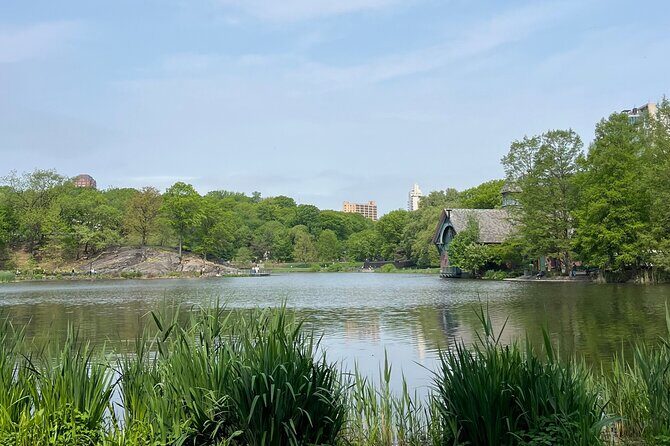
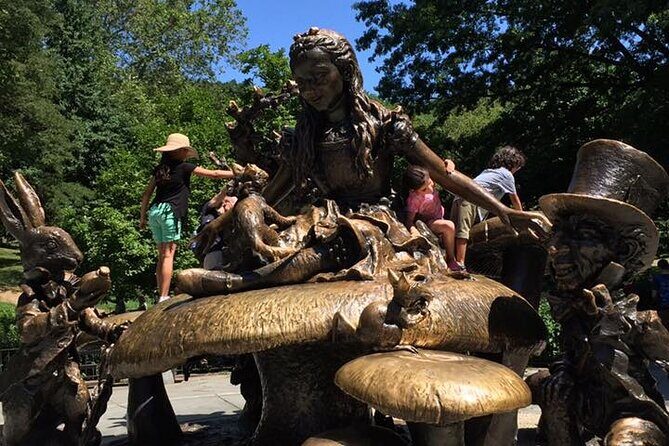
The tour adds a fun contrast with the Alice in Wonderland Statue. This is a standout because it mixes pop-culture familiarity with sculptural detail tied to the story—characters like the Mad Hatter and the White Rabbit are part of what you’ll be looking for.
It’s also a smart “reset” stop. After more structured architectural and scenic sections, this playful moment makes the route feel varied instead of repetitive.
Loeb Boathouse and the lake: A peaceful pocket in the middle of it all
At the Central Park Boathouse (the Loeb Boathouse area), you pause by the water for a calmer scene in the middle of the park. You may even spot how the boathouse fits into the everyday rhythm here—rowboats can be rented, and it’s a place where people show up for the lake view as much as the activity.
The tour’s short stop format helps here too. You get enough time to look, breathe, and photograph, without turning the day into a long detour.
The Ramble: A nature-feeling pause inside the city
Next is the Ramble, one of the park’s more wooded pockets. This area is known for winding paths and tranquil streams, and it’s a great fit for anyone who wants to feel like they left the city without actually leaving it.
This stop also adds variety to the walk. Instead of only visiting open viewpoints, you get a sensory shift—more shade, quieter path feel, and a birdwatch-friendly vibe that makes Central Park seem larger than the postcard images.
Bow Bridge: The cast-iron icon you can’t ignore
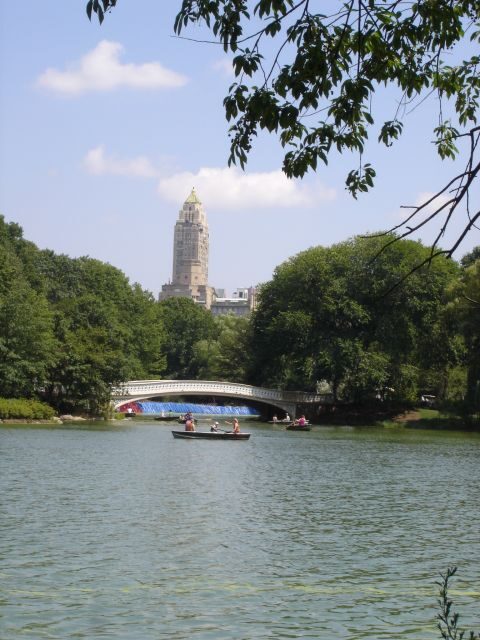
Now for one of the most photographed spots in the entire park: Bow Bridge. It’s a cast-iron bridge that arches over the lake, and it’s exactly the kind of structure where the guide’s framing helps. You learn where to stand so the curve and water look right instead of ending up with awkward angles.
This is also one of the tour stops where timing matters. Even though the tour is planned and organized, Bow Bridge tends to attract people—having a scheduled photo stop means you’re not waiting around wondering what everyone is staring at.
Cherry Hill: Panoramic lake views with a seasonal bonus
The next viewpoint is Cherry Hill, an overlook that offers panoramic views of the lake and Bow Bridge. If you’re visiting in spring, this is the spot linked with cherry blossoms, which adds a seasonal layer to an already photogenic location.
What I like about ending up at Cherry Hill after Bow Bridge is the way the views build. You go from the iconic bridge to a wider perspective that lets you see how the whole lake scene fits together in one frame.
Strawberry Fields: A quiet ending with John Lennon’s Imagine mosaic
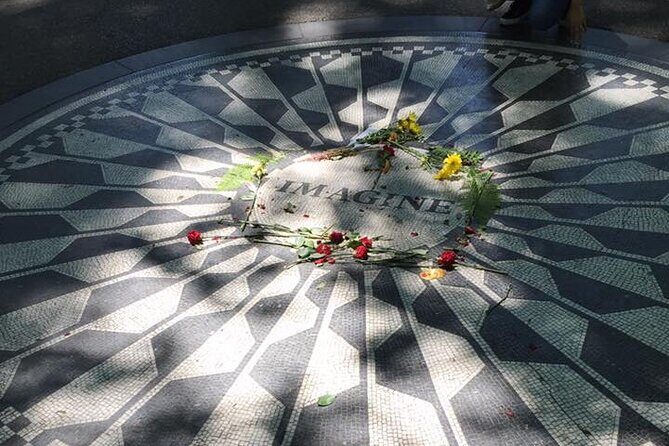
The tour concludes at Strawberry Fields, dedicated to John Lennon. You’ll see the Imagine mosaic, and the atmosphere shifts into something more reflective than the earlier photo-heavy stops.
This ending works well for first-timers because it doesn’t just dump you somewhere random. It closes the loop of the tour’s idea: Central Park isn’t only a park with famous scenery; it’s also a public space shaped by art, music, and memory.
How the route feels in real time (and why mornings work)
This experience is scheduled for a morning start at 9:30 am, and it typically lasts about 3 hours. That timing is a big deal because it keeps the rest of your day open for museums, shopping, or a second round of sightseeing at your own pace.
The itinerary also has a logical flow: you move from the park’s entrance area toward the heart of the lake landmarks, then end in the quieter memorial zone. That’s the kind of structure that reduces the mental load of navigating 840+ acres.
If you’re someone who gets tired of walking but still wants the key sights, the good news is that this tour keeps stops frequent enough to reset you. The walking segments are short, but the route still feels like you accomplished something meaningful by the time you finish.
Price and value: What $39 buys on this kind of Central Park day
At $39 per person, you’re paying for a guided experience rather than individual admission fees. The tour includes live commentary from a local, professional guide, a guided walk (listed as about 2.5 hours), and 14+ photo stops.
That mix is the value play. Central Park is free, but the “free” part doesn’t come with a plan, a story thread, or help choosing which viewpoints actually make sense. Paying for a guide here can turn a sightseeing day into a clearer, more satisfying one—especially if you like understanding how iconic places got their reputation.
One more timing detail to consider: this tour is commonly booked in advance (around 42 days on average). If your dates are firm, it’s wise to lock it in early so you’re not hunting for a last-minute slot.
Who should book this walking tour (and who might want another plan)
This is a strong choice if you want:
- The major South and Central Park highlights connected by explanation, not random wandering
- A small-group format that stays personal
- A morning plan that doesn’t eat your whole day
- Lots of photo-ready moments without having to research each stop first
It may feel less ideal if you prefer long, unstructured time inside the park or you want to linger at specific attractions for long stretches. Also, if your schedule is tight, remember you’re on a route with multiple timed stops, so flexibility matters.
Should you book this Central Park tour?
If you’re visiting Central Park for the first time and you want the iconic sights in a route that makes sense, this is an easy yes. The guide-led context and the small-group size do a lot of the heavy lifting, and the ending at Strawberry Fields gives the day a thoughtful finish.
If you already know Central Park well and you mainly want time to roam, you might get more value by building your own loop. But for most people, especially first-timers, this tour is a practical way to see the best parts without turning your day into a navigation test.
FAQ
How long is the Central Park walk?
The tour runs for about 3 hours (approx.). It’s set up as a morning experience starting at 9:30 am.
Where does the tour start and end?
It starts at Grand Army Plaza, New York, NY 10019 and ends at Strawberry Fields, New York, NY 10023.
What’s included in the $39 price?
You get a live commentary guide, a guided walk through Central Park highlights, and 14+ photo stops. You’ll also receive a mobile ticket.
Are there admission fees at the stops?
The listed stops show admission as free, and the tour ticket is the main cost. You still follow the tour’s schedule from one area to the next.
How big is the group?
The tour is capped at 15 travelers, so it stays small.
Can I cancel for a full refund?
Yes. You can cancel up to 24 hours in advance for a full refund. If you cancel less than 24 hours before the start time, the amount paid isn’t refunded.